
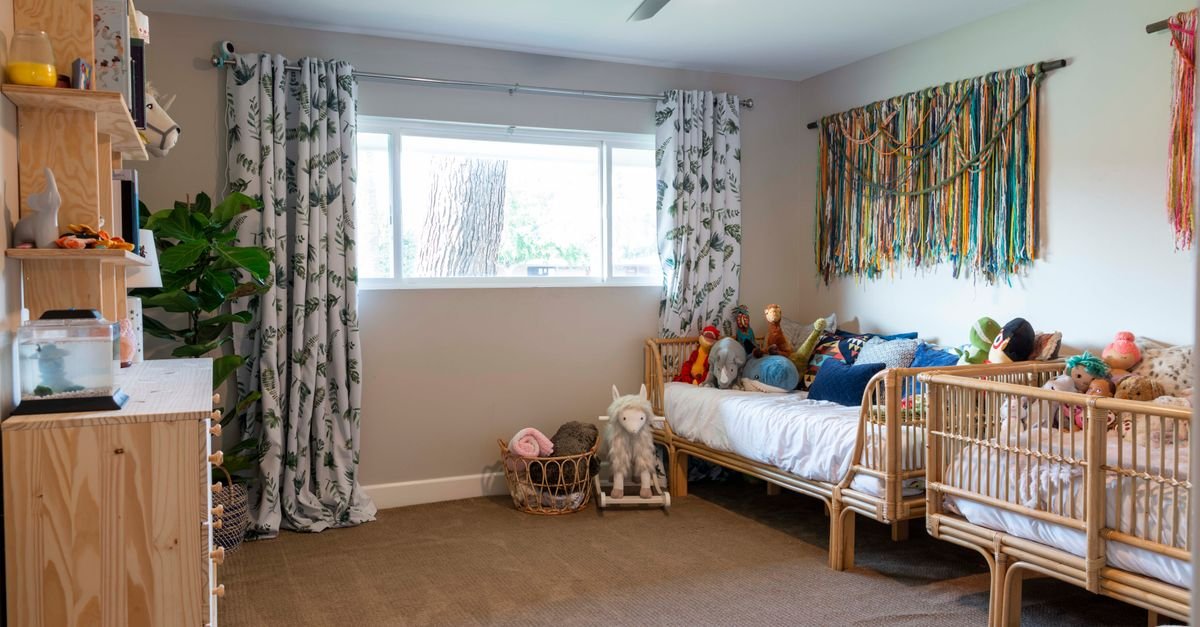
A great toddler room is designed for what toddlers actually do — climb, reach, empty, and assert independence — so the winning formula is: safety anchored first (furniture, outlets, cords, window), independence built in at their height (low bed, reachable wardrobe, open shelves), and calm by default (fewer things out, soft light, defined zones for sleep, play, and books). Get those three layers right and the room works from the crib-escape era to the preschool years without another overhaul.
Also Read



This is the complete toddler room guide: the crib-to-bed transition, the Montessori-inspired independence layer (taken practically, not religiously), the zone layout, safety as architecture, and the storage that survives a two-year-old’s curiosity.
Key Takeaways
- Design for the climb: every dresser, shelf, and bookcase anchored to studs BEFORE the toddler era begins — furniture tip-overs are this age’s signature hazard.
- Floor beds and toddler beds trade the crib’s containment for independence — transition when climbing out starts, and childproof the whole room as the new “crib.”
- The independence layer is the Montessori idea worth stealing: a low wardrobe with two outfit choices, open toy shelves, a self-serve book display, and hooks they can actually reach.
- Zone the room — sleep, play, read, dress — so the space itself teaches what happens where.
- Less out means more sleep AND more play: toy rotation and closed storage keep the room calm at 7 p.m. when it matters.
- The door line matters: once the child roams at night, the room’s safety boundary is the doorway, secured by a gate or knob strategy you choose deliberately.
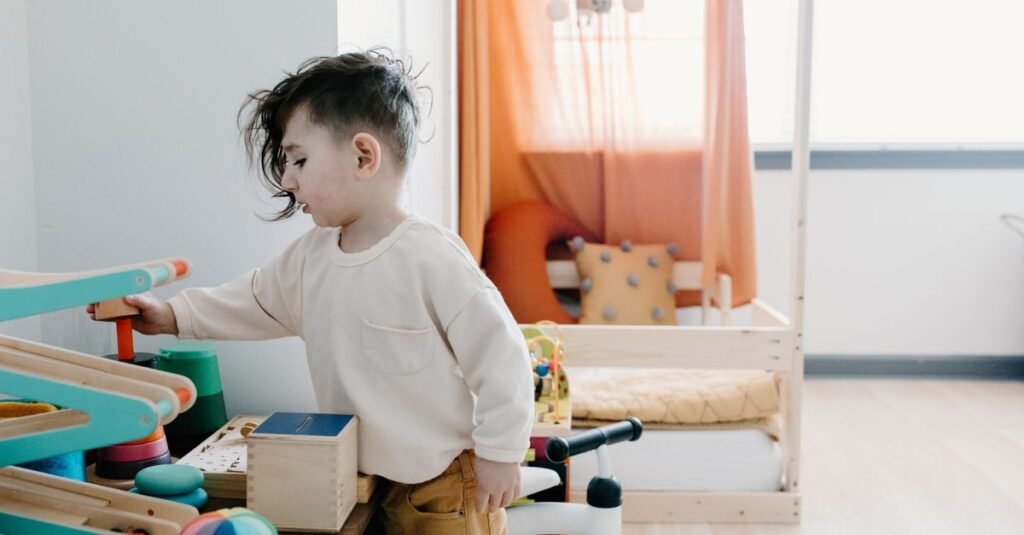
The Transition Moment (When the Crib Era Ends)
The move happens for one of three reasons: the climb-out (the safety clock starts the first time they land a jailbreak — transition promptly), the height marker (chest at the rail per crib guidance), or a sibling inheriting the crib. Most families land somewhere between eighteen months and three years; readiness beats calendar.
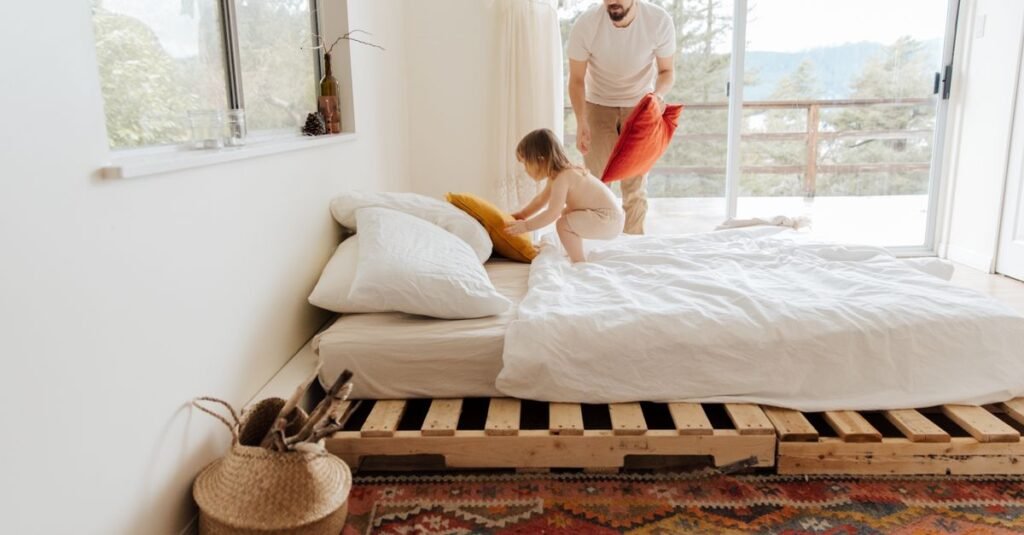
The destination fork: a toddler bed (crib-mattress-sized, railed, low — often the crib converts), a floor bed (the Montessori classic — mattress low or on the floor, freedom by design), or straight to a twin with a rail (economical long-game, bigger jump). All three work; what decides is the second question — because whichever bed you choose, the room becomes the crib: once the child can leave the bed, the entire room must be safe for an unsupervised 2 a.m. explorer.
Transition tactics that smooth the week: same corner as the crib stood (geography is comfort), same bedtime ritual, ceremonial “big kid bed” framing, and a rug beside the bed for the rolling-out era. Expect a few weeks of jack-in-the-box bedtimes; boring consistency wins.
Safety as Architecture (The Non-Negotiable Layer)
The toddler room safety sweep, run BEFORE the freedom era: furniture anchored to studs (the dresser they will climb, the bookcase they will scale — anti-tip straps on everything, the number-one rule of our room-by-room childproofing guide), window cords eliminated (cordless blinds — corded window coverings and toddlers are a documented strangulation hazard) and windows limited to a safe opening, outlets covered, heavy or breakable decor promoted above the reach line, small-parts toys retired until the mouthing era ends, and the radiator or vent guarded where relevant.
The door-line decision: a gate at the doorway (room stays the safe zone), a monitored-roaming policy (the hall and its hazards join the audit), or door-knob covers (with the fire-safety consideration that adults must operate them instantly). Choose deliberately; the 2 a.m. wanderer will reveal any policy you didn’t make.
The reward for this unglamorous layer: everything else in the room — the independence, the play, the calm — gets to exist without a hovering adult, which is the entire point of a toddler room.
The Montessori toddler bedroom tour above (Hapa Family) shows the floor bed, low wardrobe, and reach-line thinking in a real home — the visual companion to everything below.

The Independence Layer (Montessori, Taken Practically)
You don’t need the full philosophy to steal its best furniture idea: build the room at the child’s height and they start doing things themselves — which toddlers desperately want anyway.
The low wardrobe: a reachable rail or two open cubbies holding TWO outfit choices (choice satisfies autonomy; two prevents the fashion-show hour). The rest of the wardrobe lives up high with you.
The self-serve book display: front-facing ledges or a small rack at floor level, ten books out, rotated — covers-out doubles independent reading, the same librarian trick from our toy storage system.
The open toy shelf: one low unit, a handful of options displayed (rotation handles the rest), everything returnable by the child — shallow bins, photo labels, reachable rows.
The care-of-self corner: hooks at their height (pajamas, tomorrow’s coat), a small mirror (safety-backed) at their eye level, a step stool that travels to the bathroom, and a small hamper they can hit — toddlers LOVE throwing laundry in; harvest the enthusiasm early.
What to skip from the catalog version: expensive branded “Montessori” furniture (a low IKEA shelf performs identically), perfection about materials, and any setup that makes YOU anxious — a gate at the door plus a floor bed is a system; a floor bed without the safety layer is just a low mattress in an unlocked museum.
The Zone Layout (The Room Teaches the Routine)
Sleep zone: bed against a wall (rolling-out insurance), blackout curtains (cordless), sound machine and dim lamp on a shelf OUT of reach, and deliberately boring — the fewer toys visible from the pillow, the faster the surrender.
Play zone: the open shelf, a washable rug that defines the territory, floor space kept clear — toddler play is floor play; the space IS the toy.
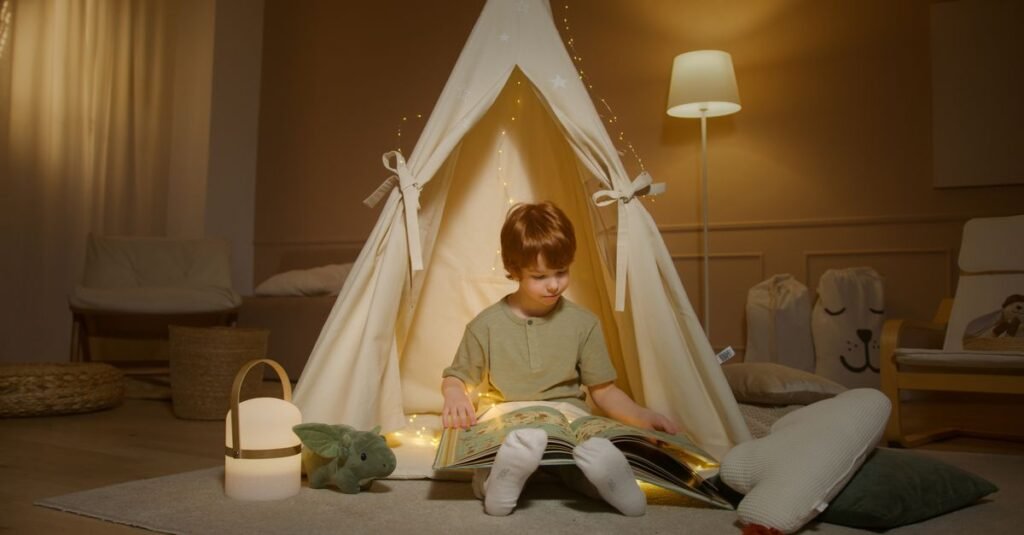
Reading zone: the book display plus one soft landing — cushion, mini armchair, or teepee corner with a battery lamp — positioned away from the bed so wind-down has somewhere to happen before bed does.
Dressing zone: the low wardrobe, mirror, hamper, and hooks in one corner near the door.
Small rooms run the same map in miniature — zones can be a rug, a corner, and a wall each; the point is that each activity has an address, because toddlers navigate by ritual and geography long before rules.
Storage, Light, and the Calm Default
Storage doctrine, toddler edition: closed and up high for the bulk (rotation bins, next-size clothes, the small-parts embargo), open and low ONLY for the current picks — the same volume-control that keeps cleanup a two-minute game. The full method lives in the toy storage guide; the room-level rule is simply that at bedtime, the visible toy count approaches zero.
Light in layers: blackout base, a warm dim lamp for the ritual, a plug-in amber night-light for navigation, and daylight welcomed for play hours. Avoid blue-bright fixtures at bedtime hours — the sleep-hygiene rules apply harder to people who nap.
Decor at two heights: the art and identity pieces the CHILD enjoys at their eye line (peel-and-stick decals, their own creations in cheap frames, the wooden name sign), the breakables and heirlooms at yours. Paint and textiles carry the personality safely — and a calm palette with one joyful accent outlasts every licensed-character phase, which is why the full-theme room repaints in eighteen months and the accent room just swaps pillowcases. Style guidance for the whole house lives in our home styling hub, and the room’s babyhood predecessor in the nursery organization guide.
One Note for the Hard Weeks (Regressions and Reversals)
Every toddler room hosts a few famous regressions — the bed refusal at two, the 5 a.m. era, the sudden dark-fear season — and the room’s design is quietly part of the response: the reading-corner lamp becomes the monster-check tool, the floor cushion hosts the temporary parent shift, and the boring sleep zone earns its blandness on exactly these nights. Hold the ritual, adjust the night-light, and resist redesigning the room mid-regression — novelty feeds the resistance. The phases pass; the anchored furniture and the routine outlast them all.
Frequently Asked Questions
When should I move my toddler from a crib to a bed?
At the first successful climb-out, when chest height passes the rail, or when readiness clearly arrives — typically between eighteen months and three years. Once they can leave the bed, childproof the whole room as the new containment.
Are floor beds a good idea for toddlers?
Yes, IF the room is fully childproofed and the door line is secured — the floor bed trades containment for independence, and the room becomes the crib. Anchored furniture, cordless windows, covered outlets, and a gate policy come first.
What makes a toddler room Montessori?
The practical core: everything at child height — low bed, reachable two-choice wardrobe, open toy shelf, front-facing books, hooks and mirror at their level — so the child does things independently. No branded furniture required; a low shelf and intention do the job.
How do I keep a toddler room from becoming toy chaos?
Rotation (most toys stored away), one low shelf of current picks in shallow labeled bins, closed high storage for everything else, and a nightly reset the child helps run. At bedtime the visible toy count should approach zero — calm rooms sleep better.
What are the biggest toddler room safety risks?
Furniture tip-overs (anchor everything to studs), corded window blinds (go cordless), reachable outlets and cords, small-parts toys, and the unsecured doorway once night-roaming starts. The safety sweep precedes the design fun — then never needs thinking about again.
Should the toddler room have a theme?
Keep the permanent layer calm (paint, furniture, big textiles) and carry the passions in swappable pieces — bedding, art, decals. Character phases turn over every eighteen months; accent-swap rooms keep up for the cost of a pillowcase.
The Budget Build (The Whole Room for Less Than One Catalog Bed)
The toddler room rewards thrift better than any room in the house, because its stars are low, simple, and outgrown on schedule. The floor bed: a quality crib mattress you already own, on a slatted base or low frame — the “Montessori bed” premium buys shape, not function. The low shelf: the entry-level cube unit or a thrifted bookcase laid HORIZONTAL, anchored — instantly the right height with a display top.
The wardrobe: two wall hooks and a floor basket satisfy the two-choice rule before any furniture does; a hanging rod in the closet’s lower half finishes it free. The reading corner: a crib mattress’s old sheet over floor cushions beats the boutique teepee for softness-per-dollar — and survives being jumped on.
Where NOT to save: the anchoring hardware (buy rated straps, hit studs), the cordless blinds (safety spend, full stop), and the mattress itself if buying new. Where saving is pure win: decor (their artwork, peel-and-stick decals, painted frames), toys (rotation makes fewer feel like more), and every “toddler-branded” item whose adult version is identical but cheaper — step stools, hampers, baskets, hooks.
The honest total: safety hardware plus paint plus thrift finds runs a fraction of one catalog room — and the toddler, a famously unsentimental critic, cannot tell the difference.
Sharing the Room (Sibling and Small-Space Editions)
The toddler-plus-baby shared room runs on schedule engineering: the toddler’s zone and the crib zone at opposite walls, blackout and white noise doing the acoustic separation, and staggered bedtimes so the room receives one child at a time. The toddler’s small-parts embargo extends as long as the baby crawls — the shelf’s bottom rows go big-piece only, and the choking-hazard tier lives high or elsewhere.
The toddler-plus-big-kid pairing inverts the problem: the older child needs a defended zone (a desk or top-bunk realm the toddler cannot reach) and a “precious things” shelf above the climb line — most sibling-room conflict is toddler access to big-kid treasures, solved by altitude.
The room-in-a-corner version (studio and one-bedroom families): the zone map compresses to a rug, a low shelf, and a curtain or bookcase boundary — and the calm-by-default rule matters MOST here, because the toddler’s sleep zone is also the household’s evening living space. Rotation storage moves to closets and under-beds; the visible footprint stays one rug wide; and the ritual, not the walls, defines the room.
The Bottom Line
A toddler room is three layers in strict order: anchored, cord-safe architecture; independence built at their height; and calm enforced by rotation and zones.
Build it that way once and the room grows with them for years — teaching, containing, and calming in equal measure, while looking like it belongs in your home. The toddler will test every inch of it. That was the design brief all along.

I'm Nasir Uddin Khan, founder of HomeNeeds24 and a senior IT consultant with 18+ years' experience in Oracle database administration, enterprise infrastructure and ERP system design. I write the buying guides here and I build every calculator on the site myself, from published engineering standards rather than opinion. My research is structured rather than lab-based: manufacturer specifications, safety and efficiency standards, and the trade-offs that repeat across large volumes of verified customer reviews. Where I have direct hands-on experience — smart home, networking, energy and anything computer-adjacent — I say so in the guide.