

A homework station is a system with three moving parts: a consistent PLACE matched to your child’s age (kitchen-adjacent for the young, bedroom desk for tweens), a stocked SUPPLY hub so no session starts with a scavenger hunt, and a paper WORKFLOW (in-tray, out-tray, parent-signature spot) that ends the crumpled-backpack economy. Furniture is the smallest part — the family that nails place, supplies, and flow does homework in half the drama at any budget.
Also Read



With back-to-school landing, this is the complete build guide: the station by age, the supply caddy list, the paper-flow system teachers wish every family ran, the launch-pad connection (backpacks, mornings), and the routines that keep September’s setup alive in February.
Key Takeaways
- Young kids (roughly under ten) usually work best NEAR a parent — a kitchen-adjacent station beats a lonely bedroom desk for focus and help.
- The portable caddy is the station’s heart: everything a session needs, carried to wherever homework happens tonight.
- Paper flow needs three slots: IN (tonight’s work), OUT (finished, packed), SIGN (the parent pile) — the missing-permission-slip cure.
- The station pairs with a launch pad: backpack hook, shoe spot, and tomorrow’s stack by the door — homework ends when the bag is packed, not when the pencil drops.
- Distraction design beats discipline: screens out of reach, siblings’ play out of sightline, and a visible timer for the wiggle-prone.
- The Sunday ten-minute reset (child-driven) is what separates year-long systems from September photos.
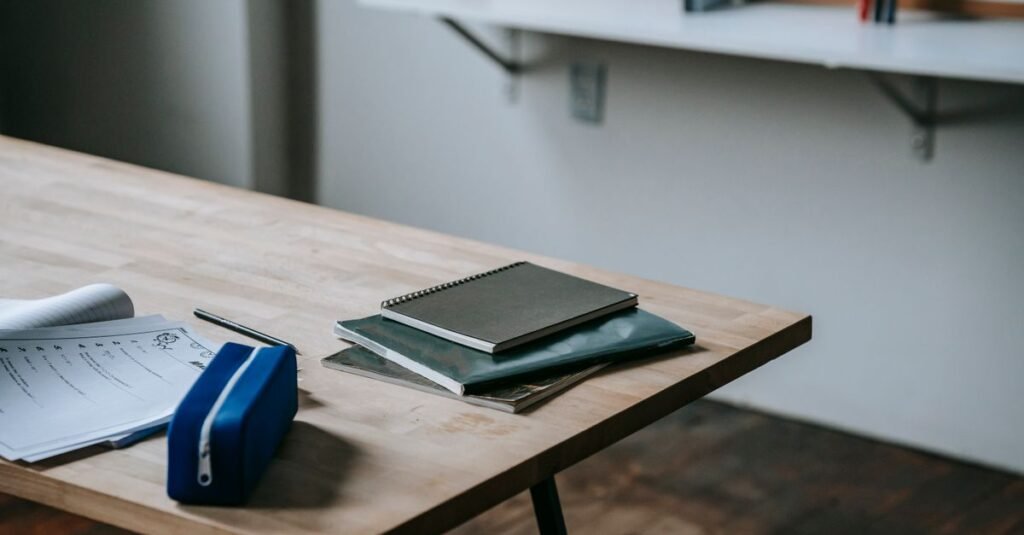
Place First (The Age-Honest Location Guide)
Ages 5–9: the kitchen table or a nook within parent-earshot wins — young kids need help-on-demand and quiet supervision more than they need silence. The trick is making the shared space WORK like a station: the caddy arrives, the placemat-desk zone is claimed, the TV is off, and dinner prep noise is the productive background hum it has always been.
Ages 10–13: the transition years — a real desk enters (the fit-and-light rules live in our kids desk guide), but many kids still drift kitchen-ward for company; let them, with the caddy making both locations first-class.
Ages 14+: the bedroom workstation takes over, and the parent’s job shifts from presence to infrastructure — good chair, good light, charging rules, and the occasional supply restock.
The multi-kid household runs a hub-and-spokes model: one central supply hub, one caddy per child, stations wherever each child genuinely focuses — and headphones as the shared-table peace treaty.
The Supply Hub (Never Hunt Mid-Session Again)
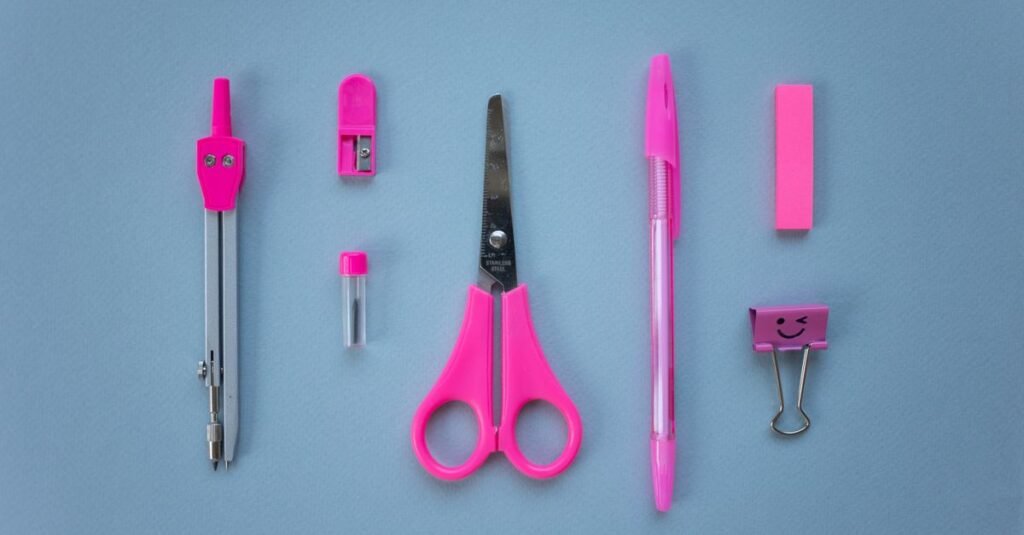
The caddy — a handled basket or rolling cart tray — carries the session: pencils sharpened (plus the sharpener), erasers, glue stick, scissors, ruler, markers/crayons by age, sticky notes, index cards, and a calculator past fourth grade. One caddy per child, restocked Sundays, and the “borrowed forever” pencil economy collapses overnight.
The backstock shelf behind it: the sale-season stockpile (glue sticks and pencils vanish like socks), printer paper, the poster-board stash that saves the 9 p.m. project-due-tomorrow run, and the printer itself if homework regularly demands one.
The label rule from our toy storage system applies wholesale: labeled slots turn restocking into a child’s job, and the caddy’s photo-label lets even the youngest audit their own kit.
The homework-station tour above shows caddies, paper flow, and small-space stations built in real homes — the visual companion to this guide.
The Paper Flow (Three Trays That End the Chaos)
Homework’s real failure point is rarely the work — it’s the paper: the worksheet that never came home, the finished page that never went back, the permission slip discovered fossilized in June. The fix is a three-slot flow at the station:
IN: the backpack empties here at arrival — tonight’s work, notices, everything. The unload-on-arrival habit is the system’s keystone; it takes ninety seconds and surfaces every surprise before dinner instead of at bedtime.
OUT: finished work goes here, and here only — then into the backpack at pack-up. No finished-work-on-the-couch archaeology.
SIGN: the parent tray — slips, forms, tests to acknowledge — cleared by the adult nightly with the same ruthlessness as email. A wall file with three labeled pockets does the whole job in one square foot.
Add the family command strip above it — a week-view calendar, the practice-schedule grid, and a “big projects” countdown — and the station quietly becomes the household’s air-traffic control.
Distraction Design (Engineering Beats Nagging)
The sightline rule: the working child should not face the TV, the toy shelf, or the sibling’s game — angle the seat toward wall, window-side, or the calm corner. The screen rule: phones dock OUT of arm’s reach (a charging basket by the SIGN tray works socially — everyone’s phone rests together), and homework devices run with notifications quieted.
The timer trick for the wiggle-prone: visible countdown timers (sand or dial) make “twenty focused minutes” concrete, and short work-break cycles beat marathon standoffs at every age below high school.
The sibling treaty: staggered start times where ages allow, headphones where they don’t, and the youngest’s “homework” (coloring at the same table) honored as real — imitation is how the habit transmits.
The Launch Pad (Where Homework Actually Ends)
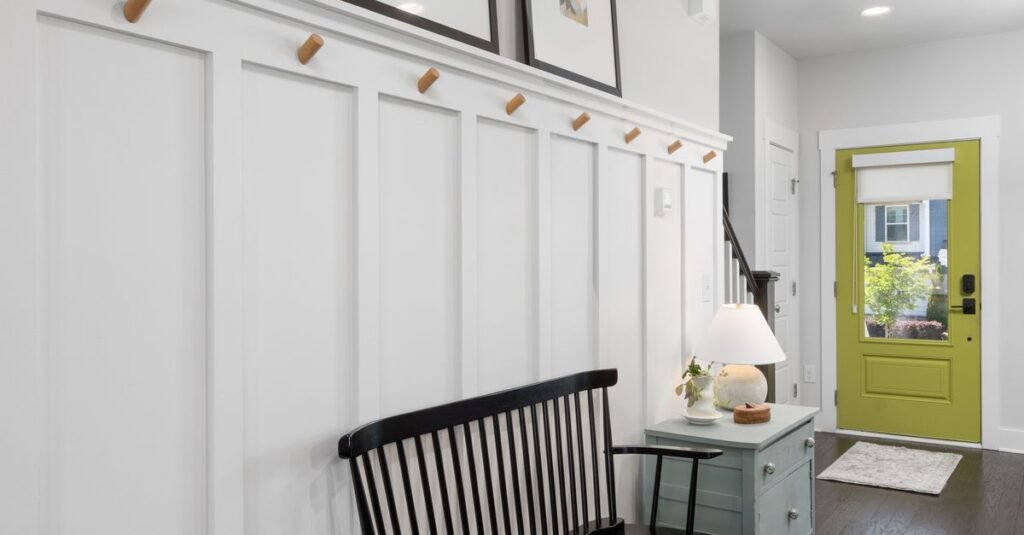
Homework ends when tomorrow is READY, so the station pairs with a launch pad at the exit door: a hook per child (backpack, jacket), the shoe spot beneath, and the packed-bag rule — OUT-tray contents into the bag at session end, bag onto its hook, sports gear staged beside it.
The morning dividend is the whole point: no 7:40 a.m. worksheet hunts, no forgotten cleats, no signature ambushes at the bus horn. Families that run the launch pad report the mornings changed more than the evenings — the station’s best work happens twelve hours after homework ends.
Small-space version: one wall, three hooks, one bench-with-bins, and the three-tray file mounted above — the entire system in four square feet of entryway, exactly the kind of move our styling playbook calls function dressed as decor.
Keeping It Alive (September Systems, February Reality)
The Sunday reset, child-driven, ten minutes: caddy restocked, trays cleared, pencils sharpened, next week’s calendar glanced. Ownership is the maintenance secret — kids maintain systems they run, and abandon ones run at them.
The monthly audit, parent-driven, five minutes: is the location still working (kids change mid-year), is the caddy walking away (a second caddy beats a border war), and has the paper flow developed leaks (the SIGN tray tells all).
And the grace note the genre owes every family: some nights collapse into couch-homework chaos anyway, and the system’s job is making the NEXT night easy to restart — not making any single night perfect. A station you can rebuild in ninety seconds after a bad week is the one that lasts the year.
The Homework Rhythm (When and How Long, By Age)
The station’s furniture matters less than its schedule. The timing that works for most families: a snack-and-decompress buffer after school (15–30 minutes — kids arriving home run on empty), then homework BEFORE screens open — the sequencing rule that prevents the nightly negotiation more reliably than any consequence system.
Session math by age: elementary kids run in 15–25 minute focused blocks with real movement breaks between; middle schoolers stretch to 30–45; and the visible timer makes blocks concrete for everyone. Total-load honesty: the widely used ten-minutes-per-grade rule of thumb means a second-grader’s twenty minutes is NORMAL — a station is not a study hall, and drowning young kids in desk hours poisons the habit the station exists to build.
The parent’s station role, one line per age: sit nearby for the youngest, be interruptible for the middle years, and be the infrastructure department for teens. The consistency — same time, same place, same trays — is what compounds; the station just makes consistency easy to keep.

Frequently Asked Questions
Where should kids do homework?
By age and temperament: most kids under ten focus better within parent-earshot (kitchen-adjacent stations), tweens transition to bedroom desks, and the honest answer is wherever YOUR child genuinely works — made first-class with a portable caddy and good light.
What goes in a homework caddy?
Sharpened pencils and sharpener, erasers, glue, scissors, ruler, markers or crayons by age, sticky notes, and a calculator past fourth grade — one caddy per child, restocked Sundays from a backstock shelf.
How do I stop losing school papers and permission slips?
The three-tray flow: IN (backpack empties on arrival), OUT (finished work, packed at session end), SIGN (the parent pile, cleared nightly). The unload-on-arrival habit surfaces every surprise before dinner.
How do I keep kids focused during homework?
Engineer instead of nagging: seat angled away from TV and toys, phones docked out of reach, a visible timer for short focused cycles, and sibling schedules staggered or headphoned. Environment beats willpower at every age.
What is a launch pad and do we need one?
The exit-door station — hooks, shoe spot, packed bags — where homework officially ends. It converts evening effort into calm mornings, which is where most school-day chaos actually lives.
How do I make the homework station last past September?
A child-driven ten-minute Sunday reset (restock, clear trays, sharpen), a monthly parent audit of location and leaks, and the rule that bad weeks just mean restarting — a station rebuildable in ninety seconds survives the school year.
The Project-Season Protocol (When Homework Gets Big)
The station handles dailies; PROJECTS need the expansion pack. The supplies tier: the poster-board stash, a glue-gun kit, and a “project box” of the recurring demands (markers that work, real scissors, tape varieties) — stocked in August, restocked at winter break, and the 9 p.m. store run retires forever.
The workspace tier: projects claim the kitchen table by treaty — a plastic tablecloth (the cleanup insurance), a project-in-progress tray that lifts the whole mess off at dinner, and the family calendar’s countdown entry the day the assignment lands, because project drama is 90% timeline denial.
The parent’s project role, calibrated: logistics director (supplies, timeline, workspace) yes; co-author, no — the teacher can tell, and so can the child. The station system’s deepest lesson generalizes here: infrastructure beats intervention, at every scale of homework.
The Reluctant-Starter Playbook
For the child who orbits the station without landing: the five-minute launch (agree to just five minutes — starting is the whole battle; momentum does the rest), the first-task menu (let them CHOOSE which assignment opens the session — autonomy converts resistance), body-first starts (snack eaten, bathroom done, one lap of the yard for the wiggle-loaded), and the parallel-work trick — a parent doing their own quiet paperwork at the same table normalizes the session better than supervision ever does.
What doesn’t work, reliably: homework as punishment framing, marathon catch-up sessions after meltdowns, and rewards-per-worksheet economies that turn learning into wage labor. The station’s calm sameness — same time, same trays, same expectations — is itself the intervention; give it three consistent weeks before judging it.
The Digital Homework Layer (Portals, Passwords, and Printouts)
Modern homework is half-online, and the station absorbs it with three moves: the login card — every portal, username, and password on ONE laminated card in the SIGN tray’s pocket (the 8 p.m. password reset is the new lost worksheet), the printer protocol — ink and paper stocked with the backstock shelf, because the portal’s “print and complete” assignment always lands the night the cartridge dies, and the device charging rule — school tablets and laptops dock AT the station overnight, arriving charged the way pencils arrive sharpened.
The screen-vs-paper truce: online assignments happen at the station under the same rules (notifications off, timer visible), and the “I’m doing homework” browser tab audit stays a calm parental walk-by rather than surveillance theater. Infrastructure, as ever, beats interrogation.
And the encouragement the season deserves: the station doesn’t need to be photogenic — it needs to answer three questions nightly: where do I work, where are my supplies, where does the paper go. Answer those in any corner of any home, and September is already won.
Same trays, same time, same calm — that is the entire system, nightly.
The Bottom Line
A homework station is place plus supplies plus paper flow — the caddy that travels, the trays that sort, the launch pad that ends each day ready for the next.
Build it in an afternoon for less than a takeout dinner, hand the reset ritual to the kids, and September’s calm quietly becomes the whole year’s — mornings included.

I'm Nasir Uddin Khan, founder of HomeNeeds24 and a senior IT consultant with 18+ years' experience in Oracle database administration, enterprise infrastructure and ERP system design. I write the buying guides here and I build every calculator on the site myself, from published engineering standards rather than opinion. My research is structured rather than lab-based: manufacturer specifications, safety and efficiency standards, and the trade-offs that repeat across large volumes of verified customer reviews. Where I have direct hands-on experience — smart home, networking, energy and anything computer-adjacent — I say so in the guide.