
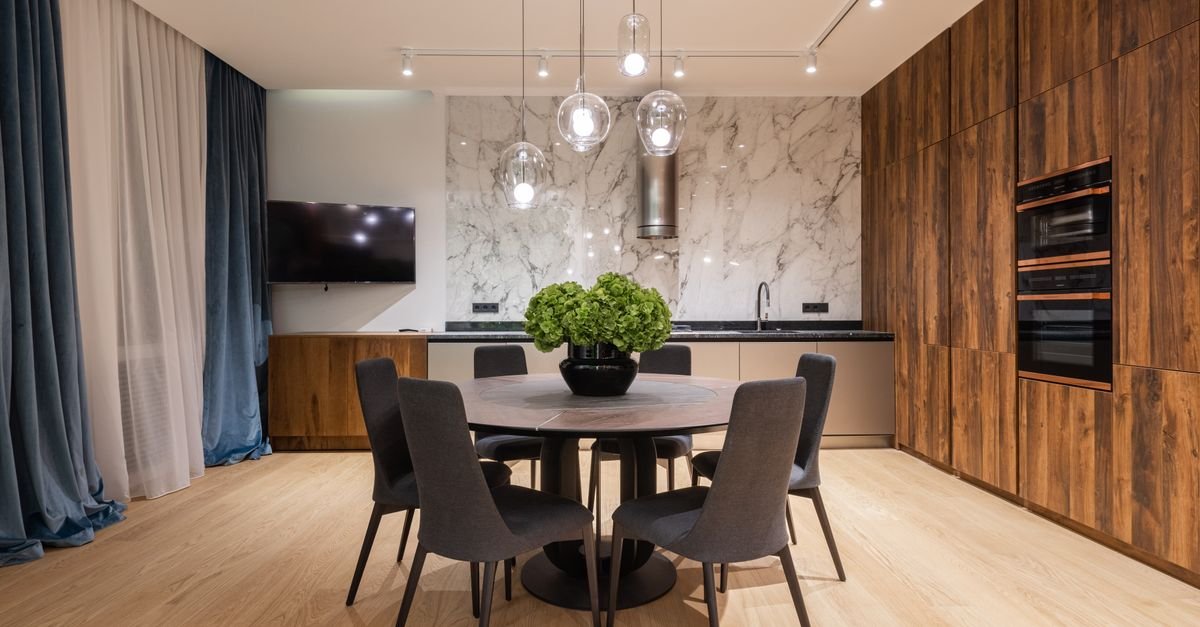
Lighting a room well comes down to one rule: layer three types of light — ambient (the general glow), task (light where work happens), and accent (light that flatters the room) — instead of asking one ceiling fixture to do everything. Aim for multiple light sources at multiple heights, warm bulbs (2700K–3000K) in living spaces, and dimmers wherever the room changes mood by hour — and the “big light” becomes what it should have been all along: one layer of several, not the whole system.
Also Read


This is the complete room-lighting guide: the three layers explained, the color-temperature cheat sheet, room-by-room recipes, the no-rewiring toolkit for renters, and the mistakes that make even expensive rooms feel like waiting rooms.
Key Takeaways
- Three layers, every room: ambient for overall glow, task for reading and work, accent for depth and drama — one overhead fixture alone flattens everything.
- The rule of three sources: most rooms need at least three points of light at different heights before they feel “designed.”
- Warm wins at home: 2700K–3000K in living rooms and bedrooms; save 3500K–4000K for kitchens, garages, and task zones.
- Dimmers are the cheapest transformation in lighting — one switch turns a single fixture into five moods.
- A floor lamp is the fastest fix: it adds a whole layer in one plug, no electrician, no landlord conversation.
- Match the bulbs: mixed color temperatures in one room read as visual static — pick one warmth per space and standardize.
What Are the Three Layers of Lighting?
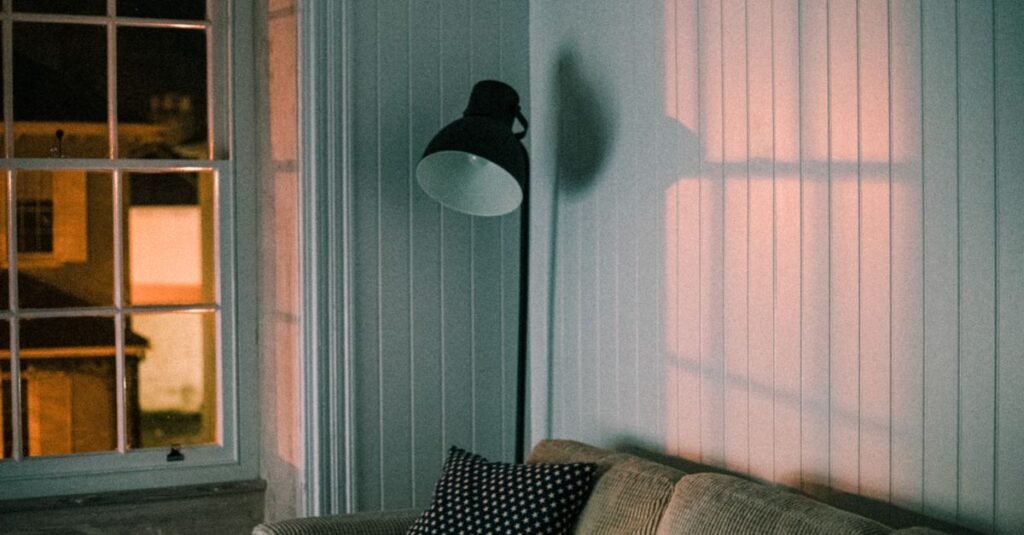
AMBIENT is the base coat: the general illumination that lets you cross the room without incident — ceiling fixtures, recessed cans, or (better in living spaces) the collective glow of several lamps. The design secret is that ambient doesn’t have to come from the ceiling at all: three lamps bouncing warm light off walls produce a softer, more flattering base than any single overhead ever will.
TASK is light with a job: the reading lamp beside the chair, the desk lamp on the workstation, the under-cabinet strip over the cutting board, the vanity lights at the mirror. Task light is brighter, more focused, and positioned to land ON the work without glare in the eyes — which is why it lives at shoulder-and-below heights, not overhead.
ACCENT is the flattery layer: the picture light on the art, the LED strip behind the shelf, the uplight in the plant corner, the candle-warm table lamp that exists mostly to make the room glow in the evening. Accent lighting adds the depth and shadow that make a room photograph like a magazine — flat, even light is the definition of institutional.
The test for any room: turn on ONLY the ceiling fixture and look around. If the room feels like a rental listing photo — evenly bright, shadowless, charmless — you’re living on one layer, and the sections below are the repair plan.
Andrea’s layered-lighting walkthrough above shows the three layers built up one at a time in a real room — the before/after at each layer is the whole argument in ninety seconds.
What Color Temperature Should Room Lighting Be?
The Kelvin number on the bulb box decides the room’s personality more than the fixture does. The cheat sheet: 2200K–2700K is candlelight-to-incandescent warm — bedrooms, living rooms, dining, anywhere evenings happen. 3000K is warm-neutral — the safe universal for most homes. 3500K–4000K is crisp and businesslike — kitchens, laundry, garages, home offices where alertness matters. 5000K+ is daylight-clinical — workshops and garages only; in a living room it reads as an interrogation.
The non-negotiable: one temperature per room. A 2700K table lamp beside a 4000K ceiling fixture creates a visual argument the eye never stops noticing. Standardize every bulb in the space — the twenty-minute bulb audit is the single cheapest upgrade in this entire guide.
Brightness is the second number: lumens, not watts. Rough targets — a living room wants 1,500–3,000 total lumens spread across sources; a kitchen 3,000–4,000 with task zones brighter; a bedroom 1,000–2,000 with the reading lamp doing the precision work. Spread across three sources beats concentrated in one, every time.
Room-by-Room: The Recipes
LIVING ROOM: ambient from a ceiling fixture on a dimmer OR three perimeter lamps; task from a reading lamp at the main seat; accent from a shelf light or plant uplight. The classic trio — one floor lamp, two table lamps, triangulated across the room — is the layout that makes every designer room glow (the same triangle logic as the whole-home styling playbook applies here to light).
BEDROOM: warm ambient (2700K, dimmed low), symmetrical bedside task lamps (switchable WITHOUT getting up — the non-negotiable), and accent from a closet light or LED strip behind the headboard. Overhead-only bedrooms are why nobody’s bedroom feels like a hotel.
KITCHEN: bright neutral ambient (3000K–3500K), under-cabinet task strips over every counter run (the upgrade cooks rave about most per dollar), and pendant accents over the island dimmed for the evening-snack hour.
HOME OFFICE: neutral ambient, a proper desk task lamp positioned OPPOSITE the writing hand (shadow physics), and the screen never the brightest thing in the room — a bias light behind the monitor ends the eye-strain headache cycle.
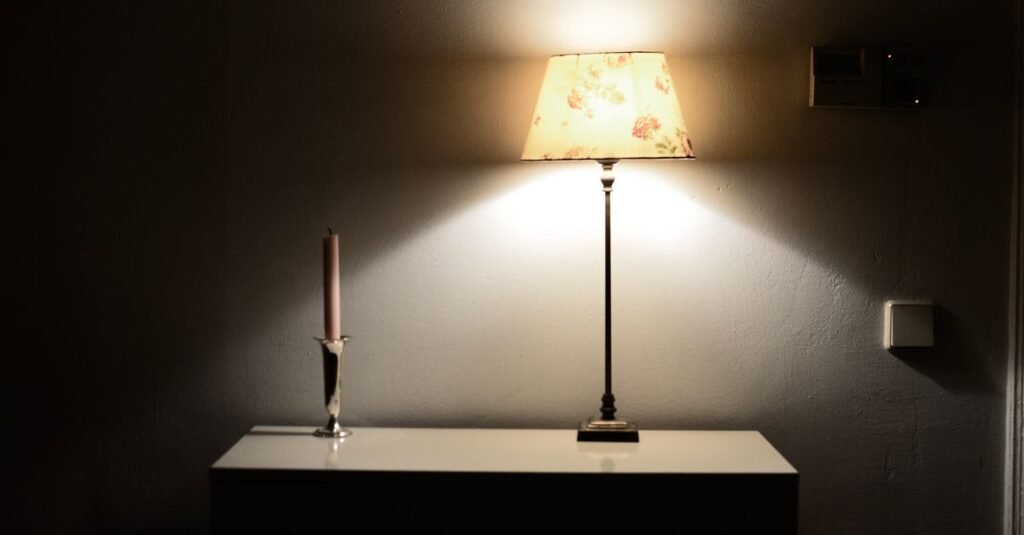
ENTRY AND HALLS: one warm ambient source plus a table-lamp moment if a console exists — the lamp-on-at-dusk entry is the cheapest “someone lives here beautifully” signal a home sends (and it pairs with the exterior lighting plan at the threshold).
Why Is a Floor Lamp the Fastest Fix?
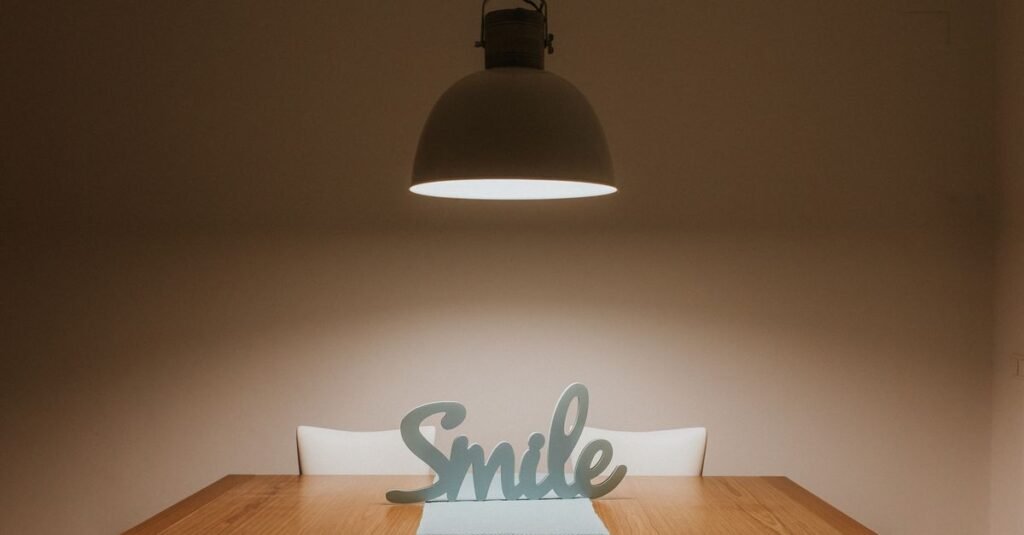
Because it’s a whole lighting layer in one plug: no electrician, no landlord permission, no ceiling box — carried into the dark corner tonight and glowing by dinner. A well-placed floor lamp performs ambient duty (bounced off the ceiling via a torchiere or up-shade), task duty (arced over the reading chair), or accent duty (glowing in the dead corner every room has), which makes it the most versatile instrument in the entire lighting toolkit.
Placement does the real work: the dark corner DIAGONAL from the door (deepens the whole room), beside-and-slightly-behind the main seat (reading geometry), or behind the sofa arcing overhead (the sculptural move). Our full floor lamp buying guide breaks down the styles — arc, torchiere, tripod, shelf-lamp hybrids — and which rooms each one serves best.
What About Dimmers and Smart Bulbs?
The dimmer is lighting’s best-kept economy: one inexpensive switch (or plug-in dial for lamps) turns a single fixture into every mood from work-bright to movie-dim. If a room changes function by hour — and living rooms, dining rooms, and bedrooms all do — it should dim.
Smart bulbs make the whole system renter-proof: warmth and brightness tuned from a phone, schedules that fade the house warm at sunset, and scenes (“movie,” “dinner,” “reading”) that reset three lamps in one tap. The practical build: smart bulbs in the three main lamps first — the scene-setting power lives there, not in the ceiling.
The automation sweet spot is the sunset fade: lights that drift from neutral afternoon to candle-warm evening track the body’s own clock — the single smart-lighting feature owners keep using years later.
What Are the Most Common Lighting Mistakes?
THE BIG-LIGHT DEPENDENCY: one ceiling fixture as the only source — flat, shadowless, and unflattering to rooms and faces alike. The fix is this entire guide.
MIXED TEMPERATURES: the 2700K/4000K argument in one room — the twenty-minute bulb audit ends it.
GLARE AT EYE LEVEL: bare bulbs visible from seated height — shades, frosted bulbs, or repositioning; the eye should see glow, never filament.
LIGHTING THE FLOOR INSTEAD OF THE ROOM: recessed cans that pour light straight down make ceilings feel low and walls disappear — wall-washing and lamp layers restore the volume.
SKIPPING THE CORNERS: dark corners shrink rooms; one corner lamp visually adds square footage — the cheapest “bigger room” trick in decorating (the fall-decor cozy playbook leans on exactly this glow-in-the-corner move).
FORGETTING THE FIFTH WALL: pendants and fixtures are jewelry — a dated boob-light swap is a fifteen-minute project that re-styles the whole ceiling.
How Do Renters Light a Room Without Rewiring?
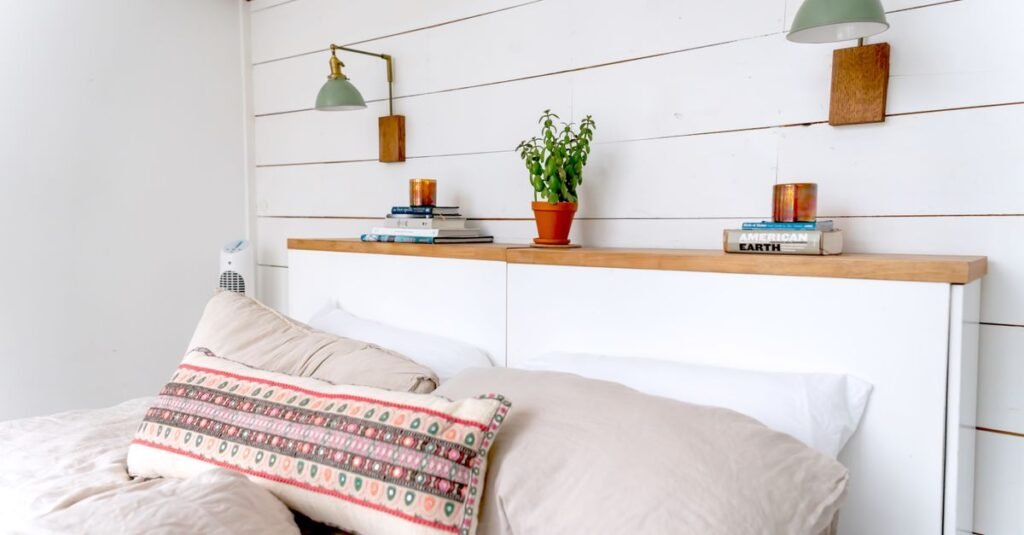
The entire layered system installs without a single wire: floor and table lamps carry ambient and task; plug-in wall sconces (hung on one picture hook, cord channeled neatly) deliver the “built-in” look beside beds and reading chairs; plug-in pendants swag from a ceiling hook for the over-table moment; LED strips and puck lights handle under-cabinet and shelf accents with adhesive backs; and smart bulbs supply the dimming that wall switches won’t.
The renter’s build order: one good floor lamp for the dead corner, two table lamps for the triangle, plug-in sconces at the bed, strip under the kitchen cabinets, smart bulbs in all of it — a complete three-layer system, fully deposit-safe, that moves out when you do.
Frequently Asked Questions
How do you properly light a room?
Layer three types: ambient (general glow), task (light where work happens), and accent (depth and drama) — from at least three sources at different heights, in one consistent warmth (2700K–3000K for living spaces), with dimming wherever the room changes mood by hour.
How many lamps should a living room have?
Three sources minimum — the classic triangle is one floor lamp plus two table lamps spread across the room, so light comes from multiple directions and no corner goes dead. Add the ceiling fixture on a dimmer as the fourth, optional layer.
What color light is best for a living room?
Warm white, 2700K–3000K — it flatters skin, wood, and textiles and signals evening-relax to the body. Keep every bulb in the room the same temperature; mixing warmths is the most common lighting mistake in real homes.
Why does my room feel dark even with the light on?
One overhead source lights the floor and leaves walls and corners dim, so the room reads dark regardless of lumens. Add perimeter sources — a corner floor lamp and a table lamp usually solve it — and bounce light off walls instead of pouring it down.
Are smart bulbs worth it?
For the main lamps, yes: tunable warmth, scheduled sunset fades, and one-tap scenes replace both dimmers and bulb swaps, with no wiring — the renter-proof version of a whole-home lighting system. Start with three bulbs in the living-room triangle.
How do I add light to a room without wiring?
Floor and table lamps, plug-in wall sconces on picture hooks, plug-in swag pendants, adhesive LED strips, and battery puck lights — a complete layered system with zero electrician and zero landlord involvement.
How Do You Light Small, Dark, or North-Facing Rooms?
Dark rooms need the layered system MORE, plus three amplifiers. BOUNCE EVERYTHING: torchieres and up-shaded lamps aimed at the ceiling return light as soft ambient, and pale walls multiply every lumen — the same fixture reads twice as bright in a white room as a charcoal one. RAISE THE LUMEN BUDGET: a dim room wants the top of every range in the cheat sheet, delivered across more sources, not one blazing overhead that creates a bright island in a dark sea.
MIRRORS ARE FIXTURES here: one large mirror opposite or beside the strongest light source — window or lamp — effectively doubles it, the oldest trick in small-space decorating because it keeps working. And keep the palette honest: in a genuinely dark room, warm 3000K at generous brightness beats moody 2200K, which flattens into gloom without daylight to contrast against.
Basement rooms and windowless offices add one more layer: a daylight-mimicking lamp run during working hours (cooler, brighter, aimed at the wall you face) with the warm system taking over at evening — the two-shift schedule that keeps a below-grade room from feeling like one.
What About Natural Light? (The Free Layer)
Daylight is the fourth layer and the only free one, and most rooms waste it at the window: curtains that eat the frame’s edges get rehung wider — panels clearing the glass entirely when open — and heavy valances give way to light-filtering sheers that trade privacy for glow instead of choosing between them. The hardware move costs twenty dollars and returns a visibly brighter room by lunch.
Then protect the path: the sightline from window to the room’s heart stays unblocked (the tall bookcase beside the window is a common thief), glossy and pale surfaces near the window relay the light deeper, and the window itself gets washed seasonally — the least glamorous sentence in this guide and among the most effective.
The design payoff of managed daylight is rhythm: a room that runs bright and neutral by day and drops to warm lamplight at dusk follows the body’s clock — which is the real reason layered rooms feel good and single-source rooms never quite do.
The Bottom Line
Light a room in layers: ambient, task, accent — three sources, three heights, one warmth, dimmed to the hour. The big light was never the villain; it was just never meant to work alone.
Start with one floor lamp in the darkest corner tonight. The room will explain the rest.

I'm Nasir Uddin Khan, founder of HomeNeeds24 and a senior IT consultant with 18+ years' experience in Oracle database administration, enterprise infrastructure and ERP system design. I write the buying guides here and I build every calculator on the site myself, from published engineering standards rather than opinion. My research is structured rather than lab-based: manufacturer specifications, safety and efficiency standards, and the trade-offs that repeat across large volumes of verified customer reviews. Where I have direct hands-on experience — smart home, networking, energy and anything computer-adjacent — I say so in the guide.