
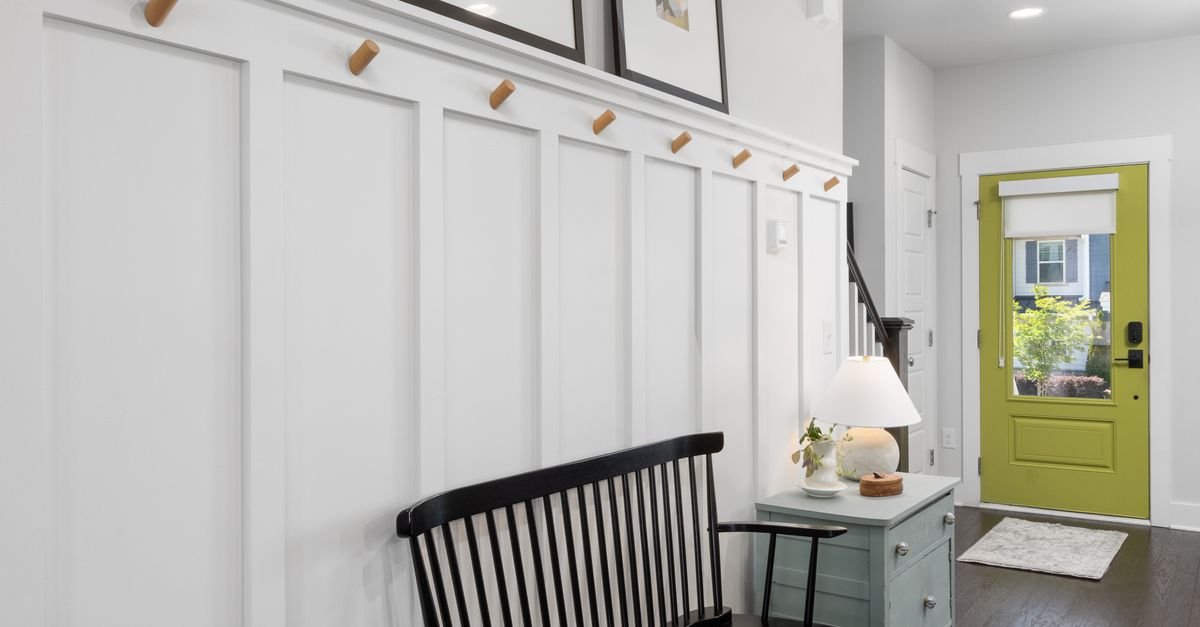
A mudroom is a workflow, not a room: the place where shoes stop, coats land, bags stage, and the outside gets peeled off before it reaches the sofa — and its anatomy (bench, hooks, shoe zone, catch-all, mat) installs in any transitional four feet: a real mudroom, a garage entry, a hallway wall, or a corner behind the front door. Build the five parts where your household actually enters, and the whole house gets cleaner, mornings get faster, and the floor by the door stops being a shoe graveyard.
Also Read



With back-to-school traffic incoming, this is the complete drop-zone guide: the five-part anatomy, builds by entry type, the per-person system that ends the pileup, seasonal rotation, and the materials that survive wet boots and real family life.
Key Takeaways
- Mudrooms follow the REAL entrance — build where the household actually comes in (usually the garage or side door), not where guests do.
- The five-part anatomy: a sit-down bench, hooks at two heights, a shoe zone with a boundary, one catch-all tray or basket, and a serious mat.
- Per-person beats communal: one hook, one cubby or bin, one shoe slot per family member — labeled — or the pileup returns in a week.
- Hooks outperform closets for daily wear: a coat that takes one motion to hang gets hung; a hanger’s three motions lose to the chair.
- Wet-season materials matter: wipeable paint, a boot tray that actually contains water, and washable rugs — the mudroom is a weather interface.
- The launch-pad layer (bags staged, tomorrow ready) is the mudroom’s highest function — mornings are won here the night before.
Place It Where Life Enters (The Honest Door)
The classic mudroom mistake is building for the front door while the family floods through the garage. Watch a normal Tuesday: whichever door receives the backpacks, the groceries, and the muddy cleats is the mudroom’s address — the front entry can keep its styled welcome for guests.
Space math by entry type: a TRUE mudroom or rear hall takes the full built-in treatment; the GARAGE ENTRY takes the hardest-working version (and shrugs at drips — the garage-side wall before the house door is the family favorite for exactly that); the HALLWAY WALL takes the vertical build (hooks, wall cubbies, slim bench); and the APARTMENT DOOR takes the corner edition — a bench-with-bins, an over-door rack, and a tray, all lease-safe.
Whatever the address, the zone needs a BOUNDARY — a rug edge, a paint change, a wall of board-and-batten — because drop zones without visual borders creep down the hallway one shoe at a time.
The Five-Part Anatomy
THE BENCH: sitting to remove shoes is the behavior that makes everything else work — a bench with storage beneath (cubbies, bins, or a flip lid) earns double, and the entryway furniture roundup covers the workhorses. Wall-mounted fold-downs serve the narrowest halls.
THE HOOKS: two rails — adult height and kid height — with more hooks than people (guests, second jackets, the dog’s leash). Heavy-duty singles into studs for the backpack tier; a one-motion hook beats every hanger for daily wear, which is why the coat closet stays half-empty while the chair grows a coat mountain in hookless homes.
THE SHOE ZONE: a boot tray with raised edges for the wet tier, a low shelf or cubby bench for the daily pairs, and the one-pair-out rule per person (the rest live in closets) — the shoe pile is a volume problem before it’s a storage problem, exactly like every clutter genre.
THE CATCH-ALL: one tray or wall pocket for keys, sunglasses, and the pocket-dump — singular by design; two catch-alls become six. Mail gets its own slot or it colonizes.
THE MAT: the unsung hero — a coarse scraper mat outside PLUS an absorbent washable mat inside stops most of the mud story at the threshold, which is the entire etymology of the room.
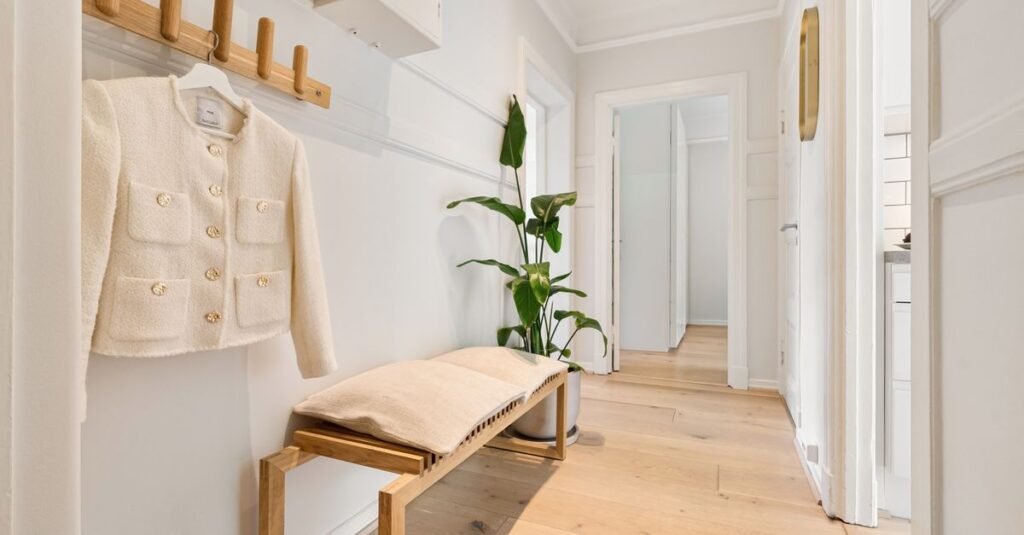
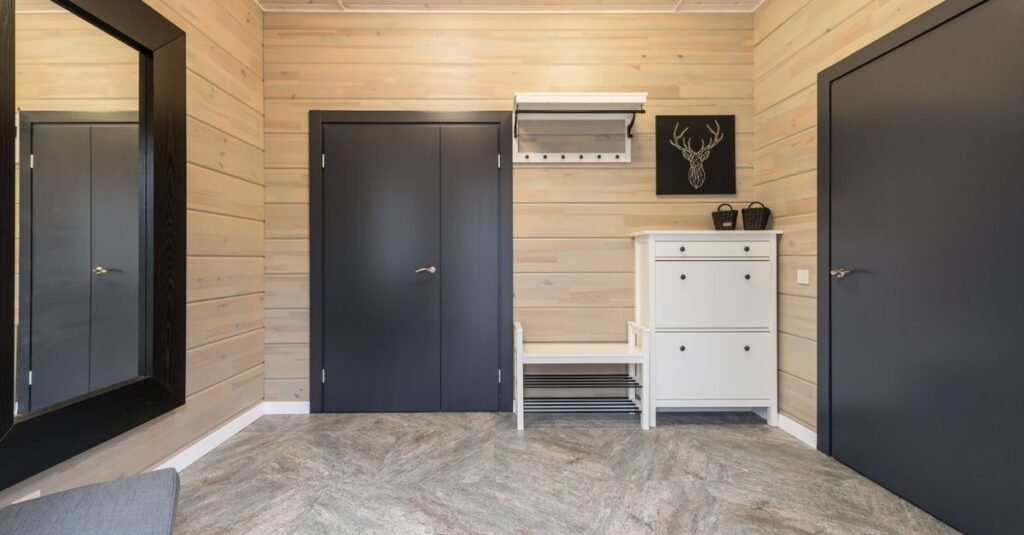
The five drop-zone designs above show the anatomy adapted across real homes and budgets — the visual companion to every build below.
The Per-Person System (What Actually Ends the Pileup)
Communal storage fails families; assigned storage runs them. The formula per member: one hook (labeled or color-coded — kids defend THEIR hook with surprising loyalty), one cubby or bin for the hat-glove-sunscreen tier, one daily shoe slot, and — school-age — one bag stage where the packed backpack waits for morning, wired directly into the homework station’s launch-pad rhythm.
The kid-height rule does the heavy lifting: children use storage they can reach and ignore storage they can’t — the low rail, the floor-level cubby, and the reachable bin turn “hang your coat” from a nag into a reflex by week two. (The same reach principle that runs the toddler room and the toy shelves runs the mudroom; small people, low hardware, forever.)
The adult version of the discipline: the pocket-dump tray emptied weekly, the “donate” bag hanging on the last hook (outgrown coats exit the moment they’re noticed), and the one-in-one-out rule at the shoe zone every time a new pair enters the house.
Materials and Weatherproofing (The Wet-Season Build)
The mudroom is a weather interface and gets specified like one: scrubbable paint or paneling on the splash wall (board-and-batten earns its popularity — pretty AND wipeable), hard flooring or LVP where drips land (carpet in a mudroom is a science experiment), washable rugs only, and the boot tray sized for the real family fleet plus one guest pair.
The winter upgrades staged now: a drip zone deep enough for snow boots, hook capacity for the parka tier (heavier coats, sturdier hooks), a basket for the hat-and-glove explosion, and — the luxury that costs little — a small fan or airflow gap so wet gear dries instead of festering. Umbrella stand by the door, and the safety guide’s anchoring rule for any tall cabinet in the zone.
The nose test applies here as much as any pet zone: a mudroom that smells is a drying problem — wet gear stacked airless — and the fix is airflow and rotation, never fragrance.

The Seasonal Rotation (Twenty Minutes, Four Times a Year)
The mudroom holds ONE season at a time: current-season gear at the hooks and cubbies, everything else stored elsewhere — the closet, the garage’s archive tier, the under-bed bins. The quarterly swap (same weekend as the garage rotation) keeps the zone from becoming the four-season landslide that buries most entry halls.
The back-to-school edition of the swap is the year’s biggest: summer gear out, backpack stations live, the label refresh for whoever’s hooks changed height over the summer, and the morning dry-run before the first school day — the five-minute rehearsal that finds the missing lunchbox BEFORE 7:40 a.m. does.
Holiday-season note for the hosting months: guests need somewhere too — the last two hooks stay empty by policy, and a folding rack appears for the party-coat overflow, which beats the bed-mountain tradition by every measure.

Frequently Asked Questions
What does a mudroom need?
Five parts: a bench to sit on, hooks at adult and kid heights, a contained shoe zone with a boot tray, one catch-all tray for pocket contents, and serious matting inside and out. Everything else is finish.
How do I make a mudroom without a mudroom?
Claim four transitional feet at the door the family ACTUALLY uses: a storage bench, two hook rails, a boot tray, and a wall-mounted organizer — hallway walls, garage entries, and apartment corners all run the full system lease-safe.
How do I stop shoes piling up at the door?
The one-pair-out rule per person (dailies at the door, the rest in closets), a bounded shoe zone with a tray, and per-person slots — the pile is a volume-and-assignment problem, and communal storage always loses to labeled storage.
Hooks or a coat closet?
Hooks for the daily tier — one motion wins the behavior war every time; the closet keeps the occasional and off-season coats. Two-height rails put kids’ cooperation within reach, literally.
What flooring and materials survive a mudroom?
Hard surfaces (tile, LVP) with washable rugs, scrubbable paint or paneling on the splash wall, and a rimmed boot tray for the wet fleet. Carpet and delicate finishes don’t belong at a weather interface.
How do I set up a mudroom for back to school?
Per-child hook, cubby, and bag stage at their height, wired to the evening pack-up habit; the seasonal swap done before the first bell; and one morning dry-run to surface the missing-lunchbox tier early. Mornings are won at this wall the night before.
The Pet Wing (The Mudroom’s Fourth Resident)
The household’s muddiest members enter here too, and the zone absorbs them with one column: the leash-and-harness hook at adult height (grab-and-go, and the walk actually happens), the towel hook below it (the paw-wipe station BEFORE the hallway, which is the entire mud battle won at the border), the treat jar for recall bribery, and the waste-bag roll clipped to the leash hook — the four-item kit that makes the door the dog’s station too.
Wet-dog protocol for the rainy season: a designated dog towel per week (washed with the pet bedding load), the absorbent mat doubling as the shake-off zone, and — households with garage entries — the paw-wash setup living garage-side where drips don’t matter. The mudroom’s pet wing is the cheapest insurance the hallway carpet will ever buy.
The Style Layer (Function That Photographs)
The mudroom earns decor exactly where function allows it: the mirror above the bench (last-look utility plus light-bouncing space), the board-and-batten or peg-rail wall treatment (the working wall as the feature wall — the one room where hooks ARE the decor), a runner with pattern (mud-forgiving by design, the same busy-pattern logic as the outdoor rug), and the basket family unified in one material so even the clutter containers read curated.
The seasonal wreath-and-print swap gives the zone its calendar (the fall doormat from the decor guide starts HERE at the family door), and the color note: mudrooms wear deep, scrubbable colors beautifully — the navy or forest wall hides the scuff economy while the hooks and bench pop against it. Function dressed well is the whole hn24 doctrine, and no room proves it cheaper than this one.
The Bag Economy (Purses, Backpacks, Gym Bags, and the Grocery Fleet)
Bags are the mudroom’s heaviest commuters and deserve their own policy: the DAILY bags (work tote, school backpacks) get the sturdy hooks at their owner’s height — loaded bags are heavy, and this is where the stud-mounted hardware earns its lag bolts; the GYM bag lives on a hook only between wash cycles (a fermenting gym bag is a mudroom’s nose test failure); and the GROCERY fleet — the reusable bags that multiply like hangers — compresses into ONE bag-of-bags on one hook, culled quarterly, with two bags living in the car where the actual groceries happen.
The purse-and-keys protocol pairs with the catch-all: one landing spot, always the same, because the morning hunt for keys is a placement problem masquerading as a memory problem — and the hook-plus-tray combination retires it in a week of habit.
The seasonal bag swap rides the quarterly rotation: beach bags summer, tote-of-blankets fall, the boot bag winter — one hook’s tenant changes; the system doesn’t.
The Small-Budget Big-Impact Build Order
If the mudroom budget is one purchase per month, the order that front-loads the impact: MONTH ONE, the hook rails (two heights, stud-mounted — the behavior change is immediate); MONTH TWO, the boot tray and mats (the floor war won); MONTH THREE, the bench (the sit-down luxury that completes the anatomy); MONTH FOUR, the per-person bins and labels (the pileup’s final defeat); MONTH FIVE, the style layer — mirror, runner, wall treatment — funded by five months of not replacing anything the system already saved.
Renters run the same order in lease-safe hardware: over-door racks, freestanding hall trees, adhesive hooks rated honestly for coat weight, and the bench that moves out with you. The anatomy never changes; only the fasteners do.
And the two-week promise: every mudroom system feels performative for ten days and invisible by twenty — hold the per-person rules through the awkward stretch, and the wall quietly becomes how the household simply works.
The Bottom Line
A mudroom is five parts at the honest door: bench, two-height hooks, bounded shoes, one catch-all, real mats — assigned per person and rotated per season.
Build it in a weekend on any budget, teach it for two weeks, and the entry chaos that colonized the whole house retreats to four managed feet — which was always the room’s whole job, whatever square footage it got.

I'm Nasir Uddin Khan, founder of HomeNeeds24 and a senior IT consultant with 18+ years' experience in Oracle database administration, enterprise infrastructure and ERP system design. I write the buying guides here and I build every calculator on the site myself, from published engineering standards rather than opinion. My research is structured rather than lab-based: manufacturer specifications, safety and efficiency standards, and the trade-offs that repeat across large volumes of verified customer reviews. Where I have direct hands-on experience — smart home, networking, energy and anything computer-adjacent — I say so in the guide.