

A litter box area that works obeys three rules cats refuse to negotiate: location they approve (quiet, escape-routed, never beside food or appliances), the right count (one box per cat plus one), and hygiene on a schedule (scooped daily, deep-cleaned regularly). Solve those three and THEN make it beautiful — hidden in furniture, tucked into closets, styled into laundry rooms — because a gorgeous setup a cat rejects is just an expensive protest site.
Also Read



This is the complete litter area guide: placement rules from cat behavior science, the honest verdict on hiding furniture, setup ideas by home size, and the odor system that makes guests forget you have a cat.
Key Takeaways
- Cats need to see exits while vulnerable — corners with sightlines beat enclosed dead-ends, whatever the furniture catalog says.
- The plus-one formula (cats + 1 = boxes) prevents most territorial protest accidents in multi-cat homes.
- Never place boxes beside food, water, or loud appliances — the classic washing-machine placement causes the classic avoidance problem.
- Litter furniture and hidden setups work IF ventilation, size, and a cat-approved entrance come first.
- Odor control is scooping frequency plus litter depth plus box washing — never scent cover-ups, which cats often reject.
- Sudden litter box avoidance is a medical red flag first, a behavior question second — vet before furniture rearranging.
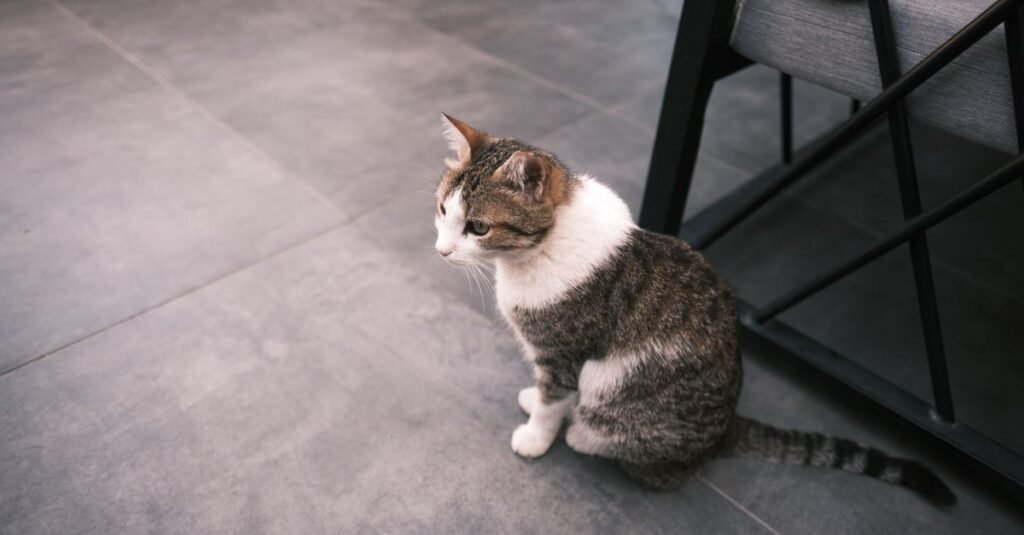
Think Like the Cat First (The Non-Negotiables)
Cat behaviorist Jackson Galaxy’s core insight — demonstrated in the video below — is that a litter box is territory, and a cat mid-use is at its most vulnerable. Every placement rule follows from that vulnerability.
Sightlines and escape routes: the cat wants to see the room and reach an exit without being cornered. A box jammed in a dead-end closet with one blocked approach FEELS like a trap — especially in multi-pet homes where ambushes (dog, sibling cat, toddler) are real.
Quiet, but not exiled: low-traffic beats high-traffic, but a basement three floors from the cat’s living zone fails the convenience test — senior cats especially will file their objection on your rug. One box per floor of the home the cat uses is the standing rule.
Never beside: food and water (cats refuse to eliminate near meals — hard-wired), the furnace or washing machine (one mid-cycle spin scare can create a permanent avoidance), or the busiest door in the house.
And the count: one per cat, plus one, spread across locations rather than lined in a row (a row reads as ONE territory to cats — the spare box across the house is the real insurance).
The Setup Ideas, By Home (The Style Section)
The Hidden-in-Furniture Setup
Litter enclosures disguised as cabinets, benches, and side tables have earned their popularity — with a checklist before buying: interior big enough for the box PLUS head clearance (cats stand tall to finish), an entrance hole the cat’s size at the cat’s preferred side, real ventilation (odor trapped in a sealed cabinet concentrates — drilled vents or louvered doors matter), and easy human access for daily scooping, because any lid you dread lifting will not get lifted daily.
A quality enclosure doubles as actual furniture — entry bench, plant stand, lamp table — which is exactly how a litter station disappears into a styled home.
The Closet Conversion
A lower closet section with the door retrofitted — cat flap, cutout, or louvered replacement — makes the cleanest hidden setup in the house. Add a motion light inside (cats appreciate it; you will too at scoop time), a mat at the threshold, and keep the vacuum handy shelf-side.
The Laundry or Bathroom Station
Workable with two caveats: appliance noise (position the box away from the machine, and never where a spin cycle startles) and door policy (a door closed once by a guest equals an accident somewhere else — a cat flap or doorstop solves the single point of failure).
The Small-Apartment Reality
No spare closet, no laundry room: a corner enclosure bench in the living room, a bathroom corner with a privacy screen, or the under-console setup — plus top-entry boxes, which contain litter scatter dramatically in tight quarters (young, mobile cats only; seniors need low entries).

The Odor System (Guests Should Never Know)
Litter odor is a maintenance schedule wearing a product costume. The hierarchy that works: scoop daily (the single biggest factor, full stop), litter at proper depth (two to three inches — too shallow smells, too deep gets flung), full litter change plus a mild-soap box wash on the litter type’s schedule (clumping monthly-ish, non-clumping weekly), and the box itself replaced yearly — scratched plastic holds odor permanently.
The supporting cast: a mat that catches tracked litter at the exit, baking soda thin-layered under fresh litter (cat-safe, genuinely absorbent), an air purifier nearby for the airborne fraction, and ventilation for enclosed setups.
The traps: scented litters and perfume sprays (many cats reject them — you trade odor for accidents), litter liners (most cats shred them), and “odor-sealing” sealed enclosures with no airflow (a concentrate jar you open daily). The full-house version of this battle lives in our pet odor manual.
The Litter Itself (A One-Paragraph Buying Guide)
Most cats prefer unscented, fine-grain clumping litter — preference research keeps landing there. Switch litters gradually (mixed over a week) or risk protest; lightweight formulas fling farther; and specialty litters (pellet, crystal, corn) each trade something for their party trick. When a cat is happy, changing litters is a solution looking for a problem.
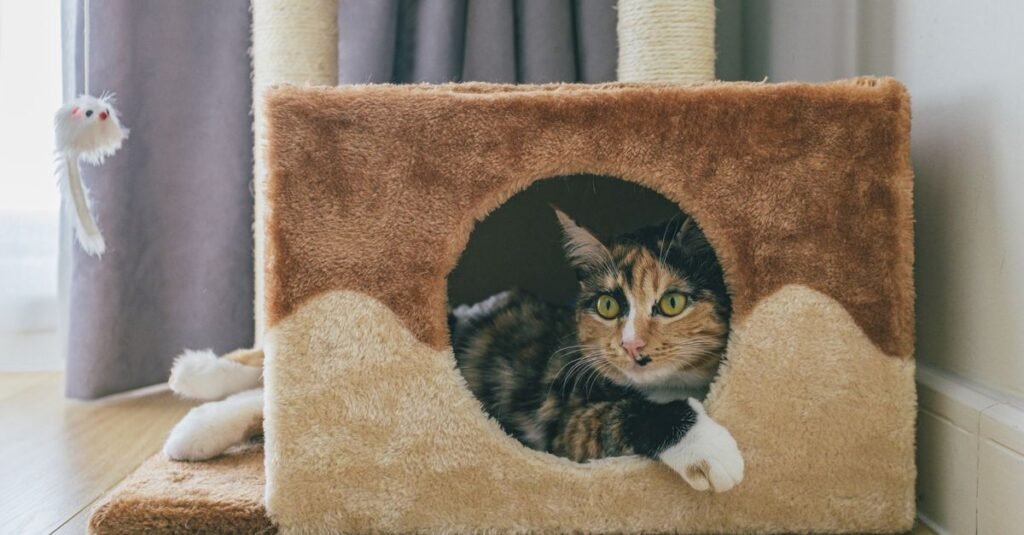
Placement Troubleshooting (The Protest Decoder)
Going right beside the box: usually box or litter aversion — too dirty, too scented, liner annoyance, or a scratched old box. Scoop more, unscent, replace.
Going in one distant spot repeatedly: territory message — often that spot needs its own box (the plus-one formula speaking), especially in multi-cat homes or multi-floor layouts.
Going near doors and windows: often outdoor-cat stress marking — a different problem (block the sightline to the yard visitor; consult the behavior playbook).
Suddenly avoiding a long-accepted box: MEDICAL FIRST — urinary infections, crystals, and arthritis (box walls too high now) are the classic causes, and urinary blockages in male cats are emergencies. The vet visit outranks every furniture idea in this article. Once health is cleared, retrace the checklist: count, location, cleanliness, litter change, new stressor.
And the golden retraining rule: never punish accidents (it teaches hiding, not stopping) — clean with enzymes so the spot stops advertising, and fix the setup the accident was reporting. More safety context in our pet safety guide and the full setup philosophy in the pet-friendly home pillar.
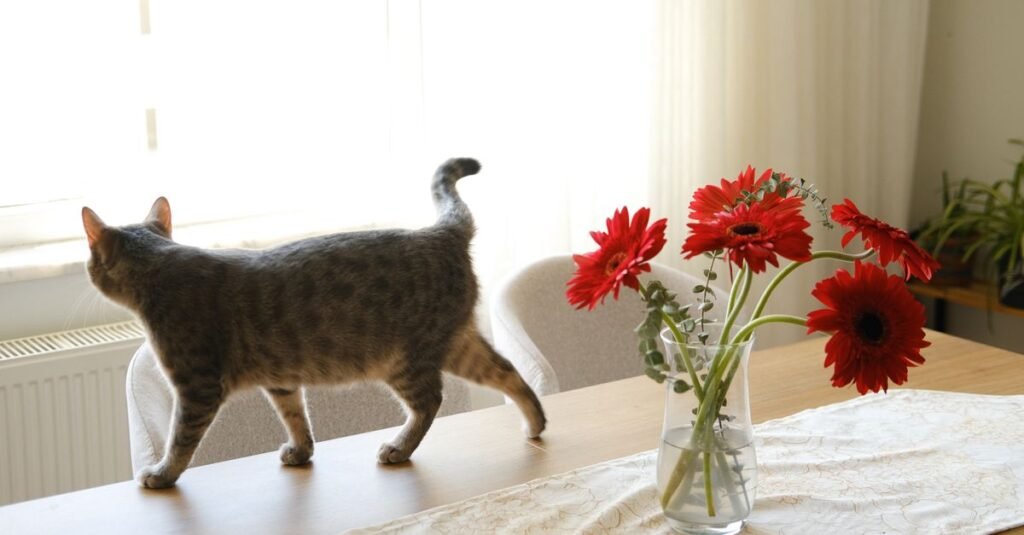
The Multi-Cat Household (Territory Math in Practice)
Two-plus cats turn litter logistics into diplomacy, and the failures are predictable: boxes clustered in one “litter room” (one territory, contested), a dominant cat ambushing the timid one’s only route (the timid one files protests on the carpet), and one box secretly serving three cats because the humans liked the furniture arrangement.
The working formula, applied literally: three cats, four boxes, in at least three separate locations across the home’s floors — each with its own escape geometry, so no single cat can guard them all. Watch the actual usage for two weeks: a box nobody uses is a location vote, not a litter vote; move it before removing it.
Feeding-station separation matters double here too — food in one zone, boxes in others, and the timid cat’s resources on a route the dominant cat doesn’t control. Most “spite” accidents in multi-cat homes are territory arithmetic, and the plus-one formula is the whole equation.
The Setup, Assembled (A Shopping-Trip Checklist)
The core: right-count boxes (large — a box should be 1.5× the cat’s length; most sold boxes run small), unscented clumping litter, a metal scoop (plastic snaps), a lidded disposal pail beside the station, and a litter mat.
The upgrades: the enclosure or closet conversion once the cat approves the location, motion lighting, the purifier, and a handheld vacuum stationed within reach.
The order of operations matters: run the boxes plainly in the chosen spots for two approving weeks FIRST, then add the furniture and styling around proven locations. Cats vote with their bladders; win the election before building the palace.
Frequently Asked Questions
Where is the best place to put a litter box?
A quiet, low-traffic corner where the cat can see the room and reach an exit — never beside food, water, or loud appliances, and at least one box per floor the cat uses. Escape routes and sightlines matter more to cats than hiddenness matters to you.
How many litter boxes do I need?
One per cat plus one, spread across different locations — not lined up in a row, which cats read as a single territory. The spare across the house prevents most multi-cat protest accidents.
Do litter box enclosures and furniture actually work?
Yes, when the cat’s rules come first: interior space with standing headroom, a right-sized entrance, real ventilation, and easy scoop access. Prove the location with a plain box for two weeks before buying the furniture.
How do I keep the litter area from smelling?
Daily scooping, two-to-three-inch litter depth, scheduled full changes with a box wash, and a yearly box replacement — plus ventilation for enclosures. Skip scented litters and sprays; cats often reject them and register their objection elsewhere.
Why did my cat suddenly stop using the litter box?
See the vet first — urinary infections, crystals, and arthritis are the classic causes, and blockages in male cats are emergencies. Once cleared, audit the basics: cleanliness, box count, location stress, litter changes, or a new ambush source near the station.
What litter do cats actually prefer?
Unscented, fine-grain clumping litter wins most preference tests. Change types gradually if you must change at all — and if your cat is happy, don’t.
The Deep-Clean Protocol (Monthly, Fifteen Minutes)
Scooping maintains; the monthly reset is what guests’ noses actually notice. The sequence: empty the litter entirely (bag-lined boxes dump clean), wash the box with hot water and MILD dish soap — never bleach or ammonia products (harsh residue smells drive avoidance, and ammonia reads as urine to cats), dry fully in sunlight if available (UV is a free deodorizer), then refill to the two-to-three-inch line.
While the box dries, service the zone: mat shaken and washed, enclosure interior wiped with the mild solution and VENTILATED dry, floor beneath mopped, and the scoop itself scrubbed — the most-touched, least-washed tool in the station.
The annual audit rides the same ritual: run a fingertip across the box floor — deep scratches mean permanent odor residence and a replacement box (they cost little; scratched plastic costs daily). Enclosure filters, if yours has them, replace on their schedule or become the smell they promised to prevent.
Multi-box homes: stagger the deep cleans across weeks rather than one heroic litter day — cats always have a familiar box in service, and you never face four boxes at once.
Litter Tracking (The Scatter War, Won in Layers)
The second-most-Googled litter complaint after smell is the gravel migration, and it surrenders to layered defense. Layer one: the mat — textured, larger than instinct suggests, positioned at the exit path (watch where the cat actually leaves; mats catch nothing beside the box the cat exits the other way).
Layer two: box design — high sides contain kickers, top-entry boxes end scatter almost entirely for able-bodied cats (paws pass the grated lid on exit), and enclosure furniture adds a contained porch where litter falls INSIDE the cabinet.
Layer three: the litter itself — heavier, larger-grain litters travel less than fine lightweight formulas (the trade: some cats prefer fine grain; the cat wins all ties in this article).
Layer four: placement geometry — boxes on hard flooring wipe clean; boxes on carpet turn every stray grain into an archaeology site; a hallway-adjacent hard-floor corner beats the carpeted spare room for maintenance every time.
The handheld vacuum parked within reach converts whatever survives all four layers into a fifteen-second daily flick — and the war, though never officially over, goes quiet.
The Two-Week Verdict
Every change in this guide gets judged by the same jury: two weeks of consistent use, observed. New location, new box, new litter, new enclosure — the cat votes daily, attendance is the ballot, and the rug files the dissents. Set it up, hold it steady for fourteen days, and let the vote — not the furniture catalog — certify the result.
The Bottom Line
The perfect litter area is diplomacy: the cat’s non-negotiables (sightlines, count, cleanliness) satisfied first, your aesthetics (enclosures, closets, styling) layered after, and the odor schedule holding the peace daily.
Win the cat’s vote and the rest is interior design — lose it, and no cabinet on earth hides the outcome.

I'm Nasir Uddin Khan, founder of HomeNeeds24 and a senior IT consultant with 18+ years' experience in Oracle database administration, enterprise infrastructure and ERP system design. I write the buying guides here and I build every calculator on the site myself, from published engineering standards rather than opinion. My research is structured rather than lab-based: manufacturer specifications, safety and efficiency standards, and the trade-offs that repeat across large volumes of verified customer reviews. Where I have direct hands-on experience — smart home, networking, energy and anything computer-adjacent — I say so in the guide.