
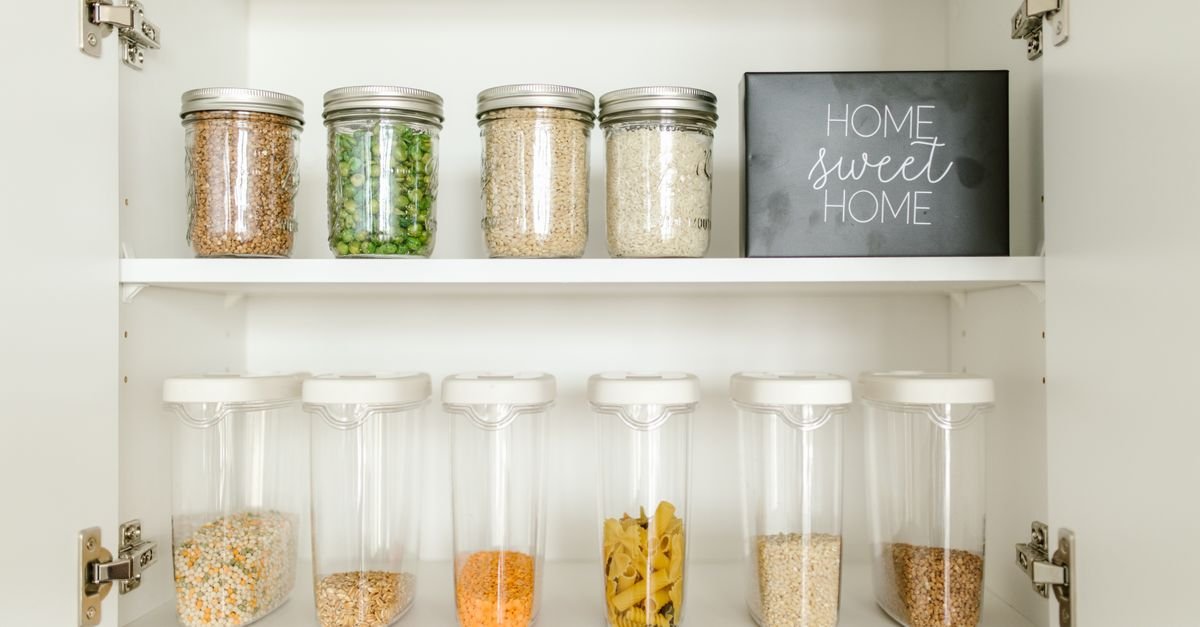
Pantry organization that survives real grocery hauls runs on four rules: zones by meal logic (breakfast, baking, dinner-building, snacks), decanting only what earns it (flour yes, one-off boxes no), containment for every category (bins make shelves grab-and-go), and a first-in-first-out habit that ends the expired-can archaeology. The container haul is optional; the system is not — and the system works in a walk-in, a cabinet, or one sad rental shelf equally well.
Also Read



This is the complete pantry playbook: the zone map, the decant-or-don’t decision, containers ranked by actual usefulness, the deep-clean reset, and the maintenance rhythm that keeps week forty looking like week one.
Key Takeaways
- Zone by how you cook, not by food taxonomy: breakfast zone, dinner-building zone, baking zone, snack zone, backstock up high.
- Eye-level real estate goes to daily-use items; kids’ snacks go at KID eye level (deliberately or you’ll re-shelve hourly).
- Decant selectively: staples you buy repeatedly (flour, rice, pasta, cereal) earn airtight jars; single-recipe items stay in their boxes inside bins.
- Bins beat bare shelves: a labeled bin is a drawer you can pull down — and the back of the shelf stops being a graveyard.
- Turntables solve corners and condiments; shelf risers double flat space; door racks add a whole wall of small-item storage.
- The FIFO rule (new stock behind old) plus a monthly eyes-on-expiry pass ends food waste better than any container.
Empty First (The Reset That Makes Everything Possible)
Every lasting pantry starts with the full excavation: everything out onto the counter, shelves wiped, and the honest triage — expired out, duplicates united (the three open cinnamons merge), donate-pile for the regretted purchases still in date, and a genuine look at what you ACTUALLY stock, because the system gets designed around your real groceries, not a magazine’s.
The audit teaches the two numbers that size the whole project: how many categories you genuinely hold (usually 8–12), and where the volume lives (most homes: snacks, canned goods, and breakfast dwarf everything). Design for those proportions — the beautiful pantry that assigns one shelf each to twelve equal categories fails by Thursday because snacks needed three.
The Zone Map (Meal Logic Beats Food Taxonomy)
Zones work when they mirror movement: the BREAKFAST zone (cereal, oats, coffee filters, the honey) at easy reach near where mornings happen; the DINNER-BUILDING zone (pasta, rice, sauces, canned tomatoes, stock) at prime eye level — it’s the most-visited district; the BAKING zone (flour, sugars, chips, extracts) grouped in one carriable bin or shelf since baking happens in sessions; the SNACK zone placed politically — kid-approved items at kid height in self-serve bins, parent-tier items above the sightline; and BACKSTOCK (the warehouse-club multiples) up top, feeding the working zones as they empty.
The heavy-and-low rule rounds it out: bottled water, bulk oils, and appliances live at floor level — knees beat shoulders for weight, per every space-planning principle in the book.
The pantry walkthrough above demonstrates zones, bins, and the maximizing hardware on real shelves — the visual pass of everything here.
Decant or Don’t (The Honest Container Decision)
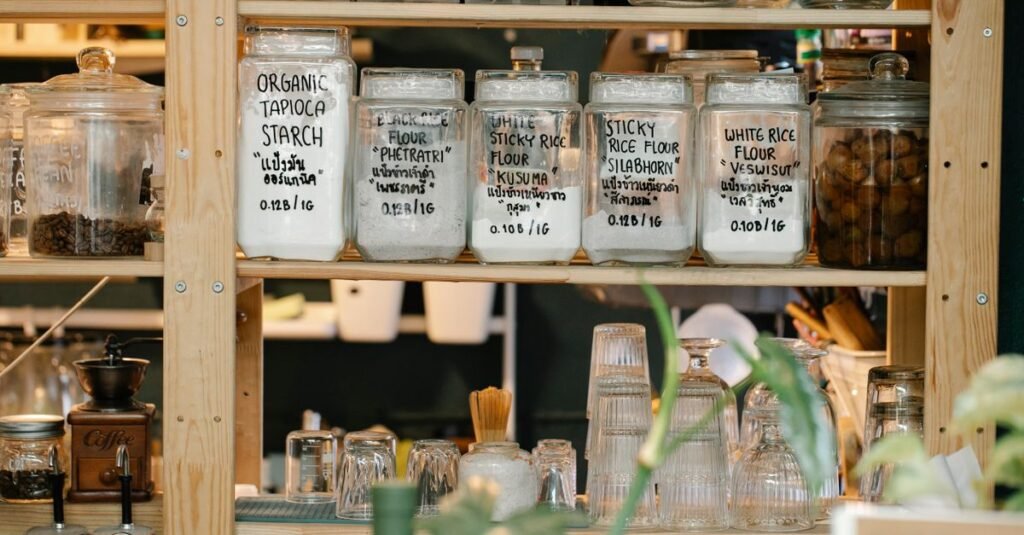
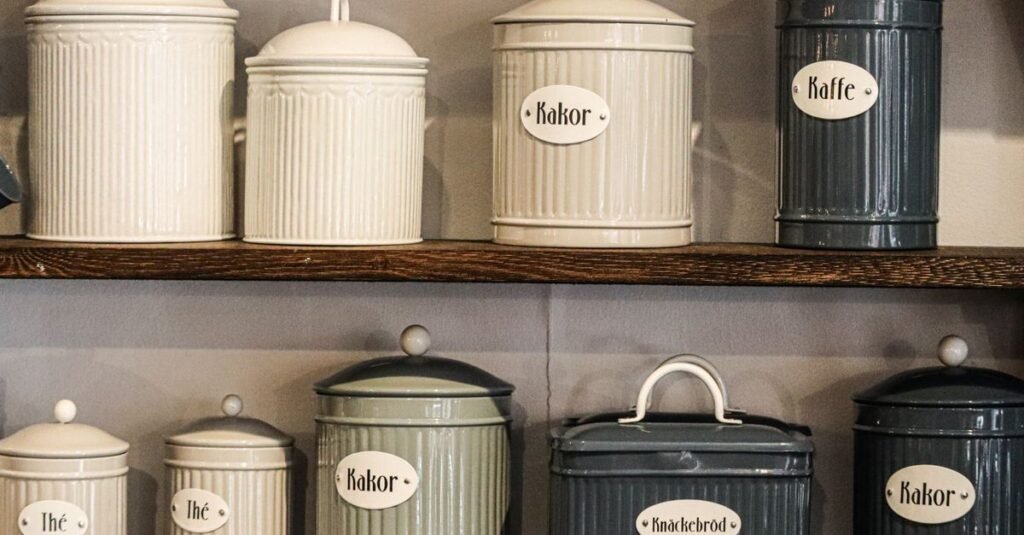
Decanting — pouring goods into matching airtight jars — is half genuine function, half aesthetics, and knowing which half is which saves real money. EARNS the jar: flour, sugar, rice, pasta, cereal, oats, coffee — staples bought repeatedly (the jar outlives dozens of bags), prone to staleness or pests, and used in scoops. The airtight seal is real function: pantry moths and humidity lose their entry point, and our pet food storage rule — bag inside the bin — has a pantry cousin: keep the cut instruction panel taped to the jar lid’s underside for the items with cooking directions.
STAYS in the box: single-recipe purchases, heavily-dated items (decanting deletes expiry dates — write them on tape if you must decant), oddly-shaped goods, and anything you buy once a year. Those live in labeled category bins — contained without the transfer ceremony.
The label layer binds it all: bins labeled by category, jars by contents, and the label maker optional — tape and marker run the same system at a tenth the aesthetic budget.
The Hardware, Ranked by Usefulness
Tier one, buy first: clear or labeled BINS (the pull-down drawer effect — the single biggest upgrade per dollar), TURNTABLES for corners and condiment clusters (the reach-around problem, solved), and SHELF RISERS that double flat space for cans and jars.
Tier two, by pantry shape: door-mounted racks (a whole bonus wall for spices, wraps, and small bottles), under-shelf hanging baskets (the dead air between shelves, harvested), and can dispensers for the canned-goods-heavy household.
Tier three, situational: drawer systems for deep pantries (deep shelves without pull-outs are where food goes to expire), and the rolling cart that turns a pantry-less kitchen into a pantry-on-wheels — the renter’s classic.
The skip tier: rigid custom systems sized to someone else’s groceries, single-purpose gadget organizers (banana hammocks et al.), and any container set purchased before the audit — buying storage before knowing your categories is how containers end up needing containers.

Small-Pantry and No-Pantry Editions
The cabinet pantry runs the identical system compressed: zones become shelf-halves, risers and door racks do double duty, and the turntable earns MVP status in deep corner cabinets. The one-shelf rental version: three bins (breakfast / dinner / snacks), one riser, done — the system scales down to a single labeled meter.
The no-pantry kitchen borrows space honestly: a rolling cart as the snack-and-breakfast station, a nearby closet shelf as backstock (dry goods travel fine), and the counter canister trio for the daily staples. Style it deliberately — matching jars on open shelves are decor that feeds you, exactly the function-as-styling move our styling playbook keeps recommending.
Whatever the size: leave 15% empty. The pantry that arrives home from a grocery haul with nowhere to put things collapses back to chaos in one unpacking — slack space IS part of the system.
The Maintenance Rhythm (Five Minutes That Protect the Afternoon)
Weekly, at unpacking: new stock goes BEHIND old (the FIFO habit — thirty seconds that ends expiry waste), and bins nudge back to their zones.
Monthly: the two-minute expiry scan of the working zones, the wipe of the busiest shelf, and the snack-bin refill from backstock.
Quarterly: the mini-reset — one shelf at a time, no full excavation needed if the weekly habit held. And the annual grace: systems drift with life changes (new diets, new kids, new bulk-store memberships) — redesign the zones when the groceries change, because the pantry serves the shopping list, never the reverse.
Frequently Asked Questions
How do I organize a pantry step by step?
Empty everything, purge expired and duplicates, then zone by meal logic — breakfast, dinner-building, baking, snacks, backstock high — and contain each category in labeled bins with risers and turntables where shape demands. Restock with new-behind-old and keep 15% slack.
Should I decant everything into containers?
No — decant repeat-purchase staples (flour, rice, pasta, cereal) into airtight jars for freshness and pests, and keep single-recipe or heavily-dated items boxed inside category bins. Selective decanting gets the function without the ceremony.
What are the best pantry organizers to buy first?
Labeled bins (the pull-down drawer effect), turntables for corners and condiments, and shelf risers — the three highest-value pieces. Buy AFTER the audit so containers match your actual categories.
How do I organize a small or cabinet pantry?
Same zones, compressed: bins as shelf-halves, a door rack for the bonus wall, risers doubling every flat surface, and a turntable in the deep corner. One shelf can run the whole system with three bins.
How do I keep the pantry organized long-term?
The weekly new-behind-old habit at unpacking, a monthly expiry scan, and 15% empty space so grocery hauls have somewhere to land. Systems fail at restock, not at setup — the habits are the system.
How do I stop pantry moths?
Airtight containers for grains and flours (their favorite targets), a bay leaf in the jars if you like the folk assist, and prompt disposal plus a shelf-wipe if you ever see webbing — the airtight decant tier is the real defense.
The Snack-Zone Constitution (The District That Decides Everything)
Snacks are the pantry’s highest-traffic district and its most political, so they get their own law. The self-serve tier: kid-approved snacks in open bins at kid height — grab-without-asking by design, which ends the pantry-door negotiations and teaches portion independence with pre-portioned packs or small containers. The gatekeeper tier: the parent-controlled snacks above the sightline, boring-binned (visibility drives snacking more than hunger does — the cookie in an opaque bin outlives the cookie in glass by days).
The school-lunch assembly line rides the same shelf: one bin holding everything lunch-packable, restocked Sundays — and suddenly the 7 a.m. lunch build is a single-bin operation, the pantry cousin of the homework caddy.
The after-school surge protocol: a “first snack” landing spot (fruit bowl, the open bin) at the pantry’s front, because the hungriest hour of the day takes the first thing it sees — make the first thing the right thing, and the nutrition argument wins itself without a word.
Troubleshooting the Pantry That Keeps Relapsing
Relapse pattern one — the doorstep pile: groceries land in front of the pantry instead of in it → the shelves are full; run the purge and the 15% slack rule, because a full pantry rejects new stock physically.
Relapse pattern two — the zone drift: dinner items migrating into breakfast → the zones don’t match your actual cooking; redraw them around the real menu, not the aspirational one.
Relapse pattern three — the bin abandonment: bins present, contents loose → the bins are wrong-sized or unlabeled; a bin that fights the item loses to the shelf every time.
Relapse pattern four — the household mutiny: one organized member, four entropy engines → labels bigger, zones simpler, and the system explained ONCE at dinner; pantries run by treaty, not enforcement. Every relapse is information — the pantry is telling you where the design fought the family, and the family always wins that war.
The Deep-Shelf Problem (And Every Known Cure)
Standard pantry shelves run deep, and depth without access is where food expires: the back eight inches of every shelf is a graveyard by default. The cures, cheapest first: BINS AS DRAWERS (the front-facing pull handles turn the whole depth into one retrievable unit — the reason bins lead every recommendation list), the TWO-ROW rule with risers (short items front, tall behind, nothing hidden), TURNTABLES in the corners where even bins fail, and roll-out drawer retrofits for the committed (aftermarket glides transform builder-basic shelving for less than one custom-pantry consult).
The audit trick for your own graveyard: pull everything from the back eight inches of each shelf this Saturday — the collection of forgotten purchases IS the case for whichever cure fits your budget. Most households fund the entire bin fleet with what the graveyard teaches them to stop re-buying.
The Household Onboarding (One Dinner, One Tour)
Systems survive when everyone runs them, and the handover takes one dinner: the ninety-second tour (zones named, bins shown, the new-behind-old rule demonstrated once), the labels doing the enforcement afterward (readable-from-the-door type sizes — the system should explain itself to a hungry teenager at a glance), and the one rule for everyone: empty containers go ON the list, not back on the shelf — the phantom-cereal-box economy ends by treaty.
Kids get their zone explicitly (the self-serve bin is THEIRS to manage — ownership beats rules), partners get consulted on the zone map (the cook’s workflow outranks the organizer’s aesthetic where they conflict), and the system takes its two-week settling period before any redesign — drift in week one is adjustment; drift in week six is data.
The One-Hour Starter Version
No free Saturday? The compressed reset still moves the needle: one hour, one shelf tier at a time — the eye-level shelf purged and zoned first (it does the most daily work), three bins drafted from around the house as placeholders, and the FIFO habit started TONIGHT at the next unpacking. The full excavation can wait for the weekend that shows up; the system’s keystone habits don’t need it to begin — and a pantry improved one shelf at a time still arrives, just politely.
And the quiet payoff arrives at dinnertime: a pantry that answers “what can I make tonight?” at a glance is meal planning’s cheapest upgrade — the zones were never about tidiness; they were about seeing dinner before you shop for it twice.
The Bottom Line
A working pantry is meal-logic zones, selective decanting, bins that pull down like drawers, and the new-behind-old habit — sized to your real groceries with slack left for Tuesday’s haul.
The containers are the visible part; the system is the part that still works in November — build the second, and the first becomes worth photographing.

I'm Nasir Uddin Khan, founder of HomeNeeds24 and a senior IT consultant with 18+ years' experience in Oracle database administration, enterprise infrastructure and ERP system design. I write the buying guides here and I build every calculator on the site myself, from published engineering standards rather than opinion. My research is structured rather than lab-based: manufacturer specifications, safety and efficiency standards, and the trade-offs that repeat across large volumes of verified customer reviews. Where I have direct hands-on experience — smart home, networking, energy and anything computer-adjacent — I say so in the guide.