
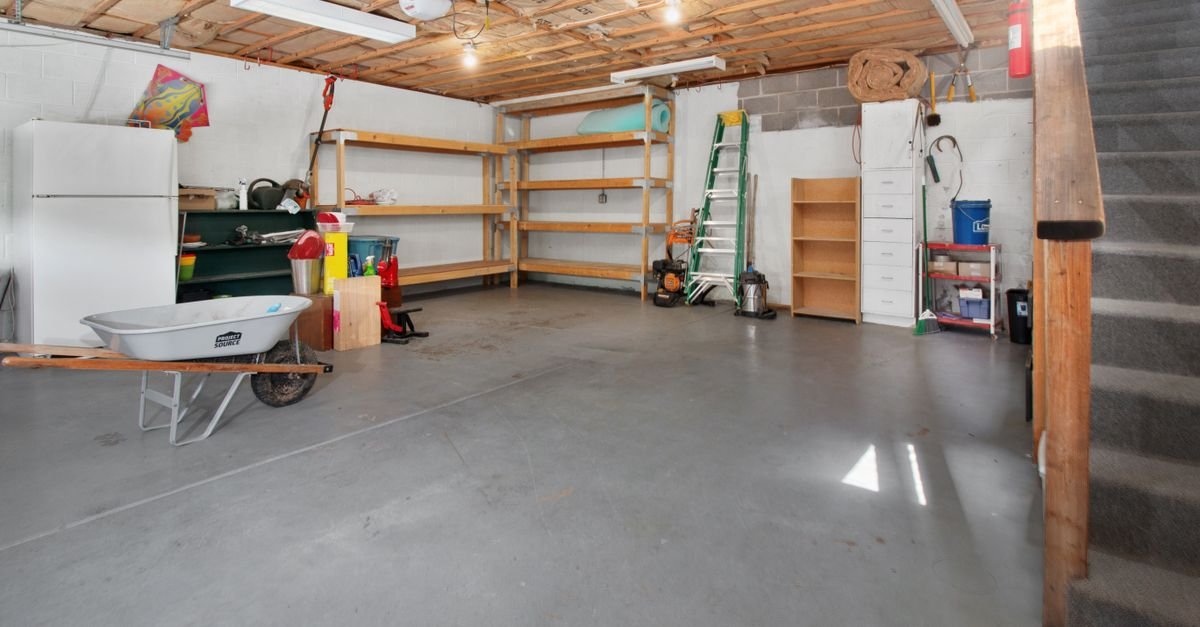
Garage storage that finally works is a walls-and-ceiling project, not a floor project: heavy-duty shelving for the bin fleet, wall systems (track, slatwall, or pegboard) for tools and gear, ceiling racks for the seasonal tier — and the floor reserved for what drives, rolls, or walks. Pick the system by what you actually store, install in the cabinets-shelves-hooks order, and the two-car garage that fits zero cars becomes the best-organized room on the property.
Also Read



This is the complete garage storage guide: the systems compared honestly (shelves vs. track vs. slatwall vs. pegboard vs. ceiling), the zone map, the install weekend, bins and labeling doctrine, and the seasonal rotation that keeps the floor visible year-round.
Key Takeaways
- The floor rule rules everything: if it doesn’t drive, roll, or get used daily, it goes UP — walls and ceiling are the garage’s real square footage.
- Heavy-duty shelving (steel or serious resin) is the backbone: one bay of 48-inch shelves swallows a wall of floor clutter.
- Track systems beat pegboard for heavy gear (bikes, ladders, trimmers); pegboard wins for hand-tool walls; slatwall is the premium do-both.
- Ceiling racks own the seasonal tier — holiday bins, camping gear, roof boxes — over the hood zone where cars don’t reach.
- Uniform lidded bins + big labels + a printed index taped inside the door = finding anything in under a minute.
- Anchor into studs, respect weight ratings, and keep chemicals locked and high — the garage is the house’s most safety-sensitive storage room.

The Purge-and-Zone Weekend (Before Any Purchase)
Garages fail from volume before they fail from systems, so the reset comes first: everything visible (driveway staging on a dry Saturday is the classic), the four-pile triage (keep / donate / dump / “belongs in the house”), and the honesty round on the heirlooms of postponement — the broken mower awaiting repair since 2023, the paint cans from the previous owner’s previous owner (dried paint and chemicals go to hazardous-waste collection, not the bin).
Then zone by frequency and function: the DAILY zone by the house door (the drop-and-grab tier — and where the garage-mudroom setup lives if yours enters through here), the PROJECT zone around the workbench, the SPORTS-AND-SEASON zone reachable but not prime, the ARCHIVE tier overhead, and the automotive strip along the car’s own wall. Chalk the zones on the floor before installing anything — the map is the shopping list, exactly as it was in the planning stage of every good storage project.
The Systems, Compared Honestly
Heavy-Duty Shelving: The Backbone
Steel-frame or commercial resin shelving, 48 inches wide, rated in the hundreds of pounds per shelf — the bin fleet’s home and the first purchase in nearly every garage plan. Buy uniform units (they gang together and share bin sizes), assemble tallest-to-the-corner, and anchor tall units to studs — the anti-tip rule follows you from the nursery to the garage forever.
Track Systems: The Heavy-Gear Wall
A horizontal steel rail lag-bolted to studs, hanging rated hooks and brackets for the big awkward tier: bikes, ladders, wheelbarrows, string trimmers, hose reels. Strengths: serious weight ratings, rearrangeable hooks, fast install. This is the system most garages actually need first for the wall clutter that isn’t hand tools.
Pegboard: The Tool Wall Classic
Over the workbench, nothing beats it for visibility and one-motion access — modern metal and polypropylene boards carry real weight, and the shadow-outline trick (trace each tool’s home) keeps the wall self-enforcing. Its limit is the heavy tier; pair it with track rather than stretching it.
Slatwall: The Premium Unifier
Full-wall horizontal slats accepting hooks, baskets, and shelves anywhere — the showroom look with track-class capacity. Costs the most, looks the best, and earns it in garages doubling as workshops or gyms where the whole wall works.
Ceiling Racks: The Archive Attic
Overhead platforms in the dead air above the hood: holiday bins, camping duffels, luggage, the kayak. Rules of the overhead tier: rated racks lag-bolted into joists, clearance for the garage door’s travel checked BEFORE mounting, nothing you need monthly, and nothing that suffers in heat — the garage ceiling is the property’s hottest storage in July.
The garage makeover above shows a full system install — shelving, wall storage, and the transformation math of doing it yourself.

Bins, Labels, and the Findability Doctrine
The bin fleet rules: UNIFORM sizes (they stack, they fit the shelving, they trade places), LIDDED (garage dust is relentless), semi-clear or boldly labeled (both is best), and sized to the lift — the giant tote full of books is a back injury with a handle. Label the SHORT side (the one facing out on shelves) in letters readable from across the garage.
The index trick that finishes the system: a printed one-page list — bin number, contents, shelf location — taped inside the house door, updated in pencil. It sounds bureaucratic; it retrieves the pump for the air mattress in forty seconds flat next Thanksgiving, and it is the difference between storage and archaeology.
The seasonal rotation rides the index: twice a year (the same weekends as the maintenance checklist), the outgoing season’s gear swaps up to the archive tier and the incoming season’s comes down to reachable — twenty minutes with a step ladder, and the garage always serves the current quarter.
Safety (The Garage’s Non-Negotiables)
Weight discipline: every rack and shelf has a rating — respect it, anchor into studs (never drywall alone), and load heavy-low, light-high on shelving. Chemical custody: fuels, solvents, fertilizers, and pool chemicals locked or high, in original containers, away from the water heater’s pilot and any ignition source — and propane lives OUTSIDE enclosed garages entirely.
The kid-and-pet audit: sharp tools above reach or behind doors, cords and chains hung not coiled on the floor, and the button for the garage door out of small-hand height — the childproofing room-by-room guide counts the garage as its most-skipped chapter for a reason. And the fire lane: the path from car to house door stays clear width always — the one aisle that never gets colonized, whatever the season.
The Install Weekend (The Order That Works)
Saturday morning: purge staged, zones chalked, stud lines marked with painter’s tape floor-to-ceiling (find them once, use them all day). Saturday afternoon: the BIG bones in size order — shelving assembled and anchored, track rails or slatwall lag-bolted level, ceiling racks mounted with door clearance verified.
Sunday morning: the detail layer — pegboard over the bench, hooks distributed to the track, the mudroom corner’s hooks and bench if the house-door zone gets one. Sunday afternoon: the bin fleet loaded by zone, labels out-facing, index printed and taped, and the floor swept as the ribbon-cutting — a garage floor you can sweep corner-to-corner is the whole project’s visible receipt.
Budget honesty across the weekend: the shelving-track-pegboard combination covers most two-car garages for a few hundred dollars; slatwall multiplies that for looks and flexibility; and every tier beats the storage-unit rental it replaces within months — the garage was always the cheapest square footage you own, waiting for walls that work.

Frequently Asked Questions
What is the best garage storage system?
By load: heavy-duty shelving as the backbone for bins, a track system for heavy wall gear (bikes, ladders), pegboard for the hand-tool wall, and ceiling racks for seasonal archives. Slatwall unifies wall storage at a premium. Most garages want the first three together.
How do I organize a garage cheaply?
Purge first (volume is the real problem), then one shelving bay, one track rail with hooks, and pegboard over the bench — a few hundred dollars covers most two-car garages. Uniform labeled bins and the taped index list finish the findability for pennies.
What should not be stored in a garage?
Anything heat-and-humidity sensitive (photos, electronics, candles), propane tanks (outside only), pet and human food (pests), and paint through freezing winters. Chemicals stay locked, high, and in original containers away from ignition sources.
How do ceiling storage racks work and are they safe?
Rated platforms lag-bolted into ceiling joists holding the seasonal tier over the hood zone — safe when the rating is respected, the joists are hit, and the garage door’s travel is checked before mounting. Nothing needed monthly goes up there.
How do I find things in the garage after organizing?
Uniform bins labeled on the out-facing side plus a one-page printed index (bin, contents, location) taped inside the house door. Update in pencil at each seasonal rotation — retrieval drops under a minute for anything you own.
Track system vs pegboard vs slatwall — which wall system?
Track for the heavy awkward tier, pegboard for visible hand tools over the bench, slatwall when budget wants one premium system doing both across the whole wall. Mixed systems zoned by load beat one system stretched past its class.
The Workbench Zone (The Garage’s Working Heart)
Storage serves projects, and the bench zone is where they happen: a solid surface at forearm height (buy, build from a solid-core door on cabinets, or fold down from the wall in tight bays), the pegboard tool wall above with shadow outlines, task lighting overhead (the single bulb garage is where thumbs get hit — an LED shop light over the bench changes everything), and power within reach (a mounted strip beats the extension-cord fishing trip every session).
The bench discipline that keeps it a bench: the surface stores NOTHING between projects — the project-in-progress tray (one tray, per the homework station’s rule) holds the active work, and everything else returns to its zone at session end. A bench that stores becomes a shelf that frustrates; the empty surface is the tool.
The consumables corner rounds out the zone: fasteners in a labeled small-parts organizer (the jar-lid wall of grandad’s garage, industrialized), tape and glue in one bin, sandpaper filed flat — and the shop vacuum parked adjacent, because cleanup that takes one motion actually happens.
Climate and the Garage (What the Temperature Does to Storage)
The garage runs the house’s harshest climate, and storage plans around it: freeze-thaw kills paint, adhesives, and anything water-based (winter them indoors or accept the loss), summer heat cooks electronics, candles, photos, and pressurized cans (the archive tier above the cars hits the garage’s hottest air — heat-sensitive things live in the house), and humidity rusts the tool wall (a silica tub in the fastener drawers, oil-wipe the hand tools seasonally, and mind the dehumidifier conversation in wet climates).
Pest honesty completes the climate file: pet food, birdseed, and grass seed in galvanized cans with lids (rodents treat plastic bins as packaging), no cardboard on the floor (the classic nesting stock), and the door sweep replaced when daylight shows — the garage’s storage integrity starts at its weather seal, exactly like the house it serves.
The Specialty Storage Problems (Solved One Each)
BIKES: vertical wall hooks for the weekly riders (track-mounted, wheel-hung), horizontal or ceiling hoists for the seasonal fleet — and the kid-bike growth economy stores best standing in a rack corral, since they rotate too fast for wall ceremony.
LADDERS: horizontal on track hooks along the wall’s dead top strip — never leaning (the falling-ladder genre of garage injury is entirely preventable).
SEASONAL TIRES: stacked flat or racked vertical on the wall, dated with chalk — and the sidewall-crack check at each rotation is the free safety audit.
SPORTS GEAR: the ball corral (one big bin beats every rack sold), stick-and-bat tubes from PVC offcuts, and the seasonal duffel system feeding the archive tier.
HOLIDAY BINS: the ceiling rack’s signature cargo — uniform red-and-green bins, the index listing which holds lights versus ornaments, and the January 2nd swap slot pre-reserved.
YARD CHEMICALS AND FUEL: the locked cabinet’s domain, per the safety chapter — and gas cans dated, because stale fuel is the small-engine killer nobody suspects.
The Maintenance Rhythm (Keeping the Weekend’s Work)
The garage regresses by default — every project, season, and haul deposits entropy — so the system carries its own upkeep: the TEN-MINUTE FRIDAY (bench cleared to its tray, floor swept, strays re-zoned — the week’s entropy paid weekly), the SEASONAL SWAP (archive tier rotated, per the calendar shared with the mudroom and maintenance checklist), and the ANNUAL RE-INDEX (the taped list reprinted from its pencil edits, the purge pass over the “repair someday” shelf, and the weight-rating walk — sagging shelves and drooping ceiling racks announce themselves a season before they fail).
The relapse insurance is the same as every system in this library: labels big enough to shame, zones simple enough to explain once, and the one non-negotiable aisle — car to door — that never gets colonized no matter what December delivers.
The Bottom Line
The garage organizes upward: shelving for the bins, track and pegboard for the walls, racks for the ceiling — installed big-to-small into studs, loaded by zone, and indexed on one taped page.
One purge, one weekend, a few hundred dollars — and the most abused room on the property becomes the one that finds anything in under a minute, with room left over for the actual car.

I'm Nasir Uddin Khan, founder of HomeNeeds24 and a senior IT consultant with 18+ years' experience in Oracle database administration, enterprise infrastructure and ERP system design. I write the buying guides here and I build every calculator on the site myself, from published engineering standards rather than opinion. My research is structured rather than lab-based: manufacturer specifications, safety and efficiency standards, and the trade-offs that repeat across large volumes of verified customer reviews. Where I have direct hands-on experience — smart home, networking, energy and anything computer-adjacent — I say so in the guide.