

The best ceiling fan is one sized correctly to your room – roughly a 52-inch blade span for a standard bedroom or living room – with an efficient DC motor and a reversible direction switch for year-round use. Getting the size and mounting height right matters most. Here are the best ceiling fans for 2026 by use case, plus how to choose and install one.
Also Read



See Top-Rated Ceiling Fans on Amazon →
Key Takeaways
- Size first: match blade span to the room – about 52 inches for most rooms.
- DC motors are quieter and use less energy than older AC motors.
- Mounting height: keep blades about 8-9 feet off the floor for best airflow.
- Reverse it: counterclockwise cools in summer, clockwise warms in winter.
- Fans cool people, not rooms – turn them off when you leave to save energy.
How we picked these ceiling fans
We focused on what actually keeps a room comfortable and efficient.
That means correct sizing for the room, efficient and quiet motors, good airflow, reversible operation, and useful features like lights and remotes. We also weighed indoor/outdoor ratings and value.
Rather than name products that change constantly, we’ve grouped picks by how you’ll use them so you can match a fan to your space.
How to choose a ceiling fan
Choosing a ceiling fan starts with room size and ceiling height.
Match the blade span to the room, pick a motor type, and check the mounting height and features you want. The Lamps Plus buying-guide video below is a helpful primer.
With size and mounting sorted, the use-case picks below make it easy.
The best ceiling fans by use case
Here are our top ceiling fan picks for 2026, grouped by what you need.
Best overall: DC-motor fan with light and remote
A DC-motor ceiling fan with an integrated light and remote is the best all-round choice.
The efficient, quiet DC motor moves plenty of air, the light saves adding a separate fixture, and the remote makes speed and direction easy. Choose the right blade span for your room.
If you’re not sure what to buy, start here.
Check DC-Motor Ceiling Fans on Amazon →
Best budget: standard AC-motor fan
For a wallet-friendly option, a standard AC-motor fan does the job.
These cost less up front and still move air well, though they use a bit more energy and can be slightly louder than DC models. A solid, affordable pick.
Great for spare rooms and tight budgets.
See Budget Ceiling Fans on Amazon →
Best for large rooms: large blade-span fan
Cooling a big living room or open space calls for a large fan.
A blade span of 56 inches or more (or a larger high-airflow fan) keeps air moving across a bigger room. Don’t undersize here, or you’ll barely feel the breeze.
Ideal for great rooms and large primary bedrooms.
Check Large Ceiling Fans on Amazon →
Best for small rooms: flush-mount hugger fan
Low ceiling or small room? A flush-mount (hugger) fan sits close to the ceiling.
It maximizes headroom and safety in rooms with ceilings under about 8 feet, with a smaller blade span to suit the space. Perfect where a downrod would hang too low.
Great for bedrooms, kids’ rooms and low ceilings.
See Flush-Mount Ceiling Fans on Amazon →
Best with light: fan with integrated LED
To combine airflow and lighting, a fan with an integrated LED is efficient and tidy.
A built-in LED light gives room lighting and a breeze in one fixture, often dimmable via remote. Great where you have one ceiling box for both.
Ideal for bedrooms and living rooms that need light too.
Check Ceiling Fans with Lights on Amazon →
Best smart: Wi-Fi and voice-control fan
For hands-free control, a smart ceiling fan connects to your phone and voice assistant.
Wi-Fi lets you set schedules, adjust speed and control the light by voice or app. Pair it with other energy-saving smart devices.
Great for a connected, convenient home.
See Smart Ceiling Fans on Amazon →
Best outdoor: damp or wet-rated fan
For a porch, patio or covered deck, choose a fan rated for the outdoors.
Damp-rated fans suit covered areas, while wet-rated fans handle direct exposure to rain. Both use weather-resistant materials indoor fans lack.
Perfect for porches and outdoor living spaces.
Check Outdoor Ceiling Fans on Amazon →
Best for bedrooms: quiet ceiling fan
For sleeping, a quiet fan makes all the difference.
DC-motor fans run especially quietly, and a reversible remote lets you fine-tune the breeze without getting up. Look for smooth, wobble-free operation.
Ideal for restful, low-noise bedrooms.
See Quiet Ceiling Fans on Amazon →

What size ceiling fan do you need?
Sizing by blade span is the key to feeling the breeze.
As a guide, a small room (up to ~100 sq ft) suits a 42-44 inch fan, a standard bedroom or living room (up to ~225 sq ft) a 52-inch fan, and a large room a 56-inch or bigger fan.
An undersized fan barely moves air, while an oversized one can overwhelm a small room, so match the span to your square footage.
DC vs AC motor ceiling fans
The motor type affects noise, efficiency and price.
- DC motor: quieter, more energy-efficient, lighter and often with more speed settings; costs a bit more.
- AC motor: the traditional type, cheaper up front, reliable, but uses more energy and can be slightly louder.
DC is the better long-term choice for efficiency and quiet; AC wins on up-front price.
How high should a ceiling fan hang?
Mounting height affects both airflow and safety.
Aim for the blades to sit about 8-9 feet above the floor, and at least 7 feet for safety. On higher ceilings, use a longer downrod to bring the fan down into that ideal range.
Blades that are too high push less air where you feel it; too low is a hazard.
Flush mount vs downrod vs sloped ceilings
How you mount the fan depends on your ceiling.
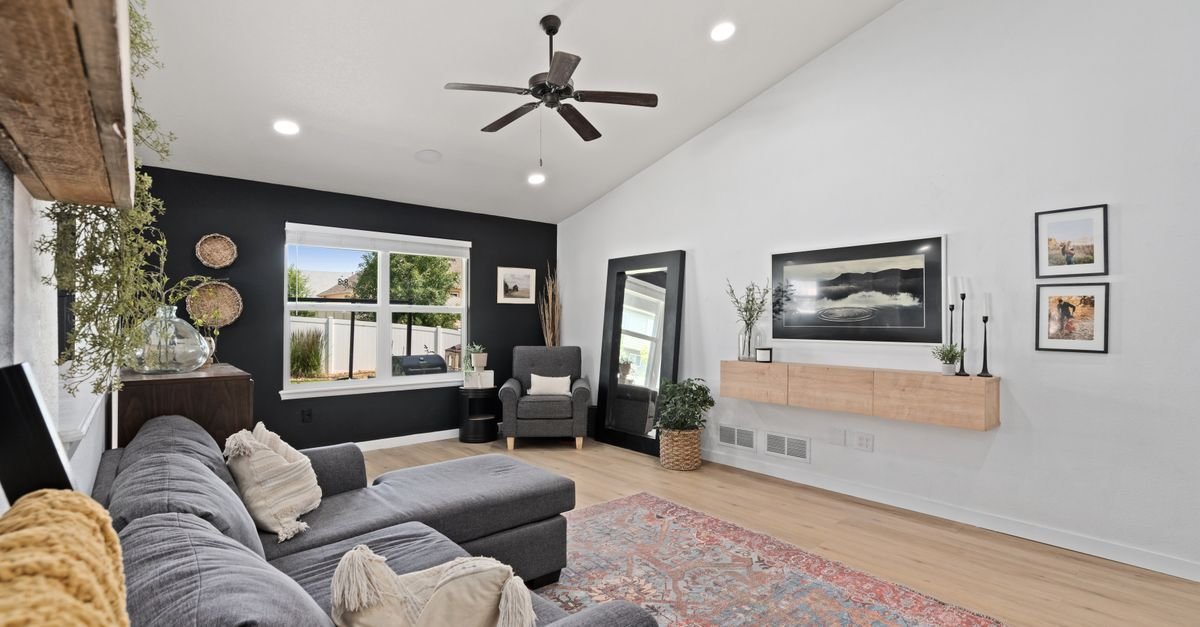
Use a flush (hugger) mount for ceilings under 8 feet, a downrod for standard and high ceilings to reach the ideal height, and a sloped-ceiling adapter for angled ceilings. Match the mount to your ceiling type before buying.
The right mount keeps the fan at the correct, safe height for good airflow.
How many blades does a ceiling fan need?
Blade count is more about looks than performance.
Within reason, the number of blades has little effect on airflow – motor power and blade pitch matter far more. More blades can run a touch quieter and look more traditional; fewer blades look modern.
Choose the blade count you like the look of, and judge performance by the motor and airflow rating.
Do ceiling fans with lights make sense?
A fan-and-light combo is practical where you have one ceiling box.
An integrated LED gives you lighting and a breeze from a single fixture, which is efficient and tidy. If you want brighter or separate lighting, a light-free fan plus other fixtures can work better.
For most bedrooms and living rooms, the combo is a convenient, space-saving choice.
Indoor vs outdoor ceiling fans
Outdoor fans are built to survive the weather.
Damp-rated fans suit covered porches and patios out of direct rain, while wet-rated fans handle direct exposure. They use rust- and moisture-resistant materials that indoor fans don’t.
Never use an indoor fan outside – the materials won’t hold up to humidity and rain.
Do ceiling fans save energy?
Ceiling fans can save energy, but only when used correctly.
Fans cool people, not the air, by creating a wind-chill effect – so they let you raise the thermostat a few degrees while staying comfortable, easing your AC’s workload. In winter, reversing them pushes warm air down.
The catch: a fan only helps when someone’s in the room, so turn it off when you leave.

Summer vs winter fan direction
That little reverse switch is genuinely useful year-round.
In summer, run the fan counterclockwise to push air down and create a cooling breeze. In winter, run it clockwise on low to gently pull cool air up and push warm air down from the ceiling.
Flipping the direction each season helps your heating and cooling work less.
Key features to look for
A few features make a ceiling fan nicer to live with.
- The right blade span for your room.
- A quiet, efficient motor (DC if budget allows).
- A reversible switch for summer and winter.
- A remote or smart control.
- An integrated light if you need it.
Correct sizing and a quiet motor matter more than any single extra feature.
Smart and remote-control ceiling fans
Controls have come a long way from a pull chain.
Remotes make speed, direction and light adjustments effortless, and smart fans add app scheduling and voice control. This is especially handy for high ceilings where a chain is out of reach.
If convenience matters, a remote is a small upgrade with big everyday payoff.
Ceiling fan mistakes to avoid
- Wrong size. Match blade span to the room – too small barely moves air.
- Mounting too high or too low. Aim for blades 8-9 feet off the floor.
- Ignoring the reverse switch. Flip it each season to save energy.
- Indoor fan outdoors. Use damp- or wet-rated fans outside.
- Leaving it running in empty rooms. Fans cool people, not spaces.
How much should you spend on a ceiling fan?
There’s a good fan at every price.
Basic AC-motor fans are affordable, mid-range DC-motor fans with remotes and lights offer the best balance, and large or designer smart fans sit at the top.
For most people, a mid-range DC-motor fan with a light and remote is the best value – quiet, efficient comfort without overspending.
Can you install a ceiling fan yourself?
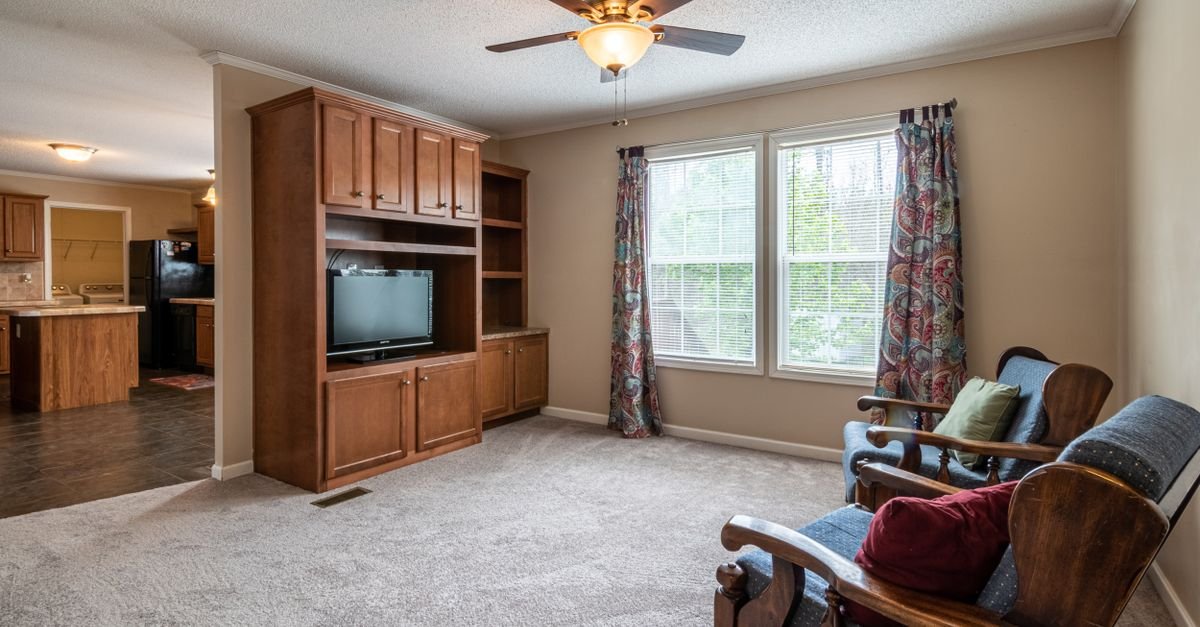
A confident DIYer can often install a fan where a light fixture already exists.
You’ll need a fan-rated ceiling box (regular light boxes aren’t strong enough), and you must turn off the power at the breaker first. Replacing an existing fan is easier than running new wiring.
If there’s no existing wiring or box, or you’re unsure, hire a licensed electrician – it’s about safety, not just skill.
How to clean and maintain a ceiling fan
A little upkeep keeps a fan quiet and effective.
Dust the blades regularly (a pillowcase slipped over each blade catches the dust), and check that mounting screws are snug to prevent wobble. Wobble usually means loose screws or unbalanced blades.
Keeping blades clean and balanced is the simplest way to avoid noise and keep airflow strong.
Looking for recommendations? See our picks in Best Ceiling Fans for 2026: 10 Top Picks by Room & Budget.
Frequently Asked Questions
What is the best ceiling fan to buy?
The best ceiling fan is sized correctly to your room – about a 52-inch blade span for a standard bedroom or living room – with an efficient, quiet DC motor and a reversible switch. A model with an integrated light and remote is the most convenient all-round choice for most homes.
What size ceiling fan do I need?
As a guide, use a 42-44 inch fan for a small room, a 52-inch fan for a standard bedroom or living room, and a 56-inch or larger fan for a big room. Match the blade span to your square footage so you actually feel the breeze.
Are DC or AC motor ceiling fans better?
DC-motor fans are quieter, more energy-efficient and often have more speed settings, though they cost a bit more. AC-motor fans are cheaper up front and reliable but use more energy. DC is the better long-term choice; AC wins on price.
Which direction should a ceiling fan spin?
Run it counterclockwise in summer to push air down and create a cooling breeze, and clockwise on low in winter to circulate warm air down from the ceiling. Most fans have a small reverse switch or remote setting for this.
Do ceiling fans actually save money?
Yes, when used correctly. Fans cool people rather than air, so you can raise the thermostat a few degrees and stay comfortable, easing your AC’s workload. Because they only help occupied rooms, turn them off when you leave.
How high should a ceiling fan be mounted?
Aim for the blades to sit about 8-9 feet above the floor, and at least 7 feet for safety. On higher ceilings, use a longer downrod to bring the fan into that ideal range; on low ceilings, use a flush (hugger) mount.
Does the number of blades matter?
Not much for performance – motor power and blade pitch affect airflow far more than blade count. More blades can run slightly quieter and look traditional, while fewer blades look modern. Choose the look you prefer and judge airflow by the motor.
Can I install a ceiling fan myself?
Often yes, if you’re replacing an existing fixture and use a fan-rated ceiling box, always shutting off power at the breaker first. If there’s no existing wiring or suitable box, or you’re unsure, hire a licensed electrician for safety.
The bottom line
A well-chosen ceiling fan keeps you comfortable year-round and can trim your energy bills.
For most people a mid-range DC-motor fan sized to the room, with a light and remote, is the sweet spot; go flush-mount for low ceilings and wet-rated for outdoors.
Size it right, mount it at the correct height, and flip the direction each season. For summer cooling see our portable air conditioners guide, and for winter, our best space heaters.

I'm Nasir Uddin Khan, founder of HomeNeeds24 and a senior IT consultant with 18+ years' experience in Oracle database administration, enterprise infrastructure and ERP system design. I write the buying guides here and I build every calculator on the site myself, from published engineering standards rather than opinion. My research is structured rather than lab-based: manufacturer specifications, safety and efficiency standards, and the trade-offs that repeat across large volumes of verified customer reviews. Where I have direct hands-on experience — smart home, networking, energy and anything computer-adjacent — I say so in the guide.