
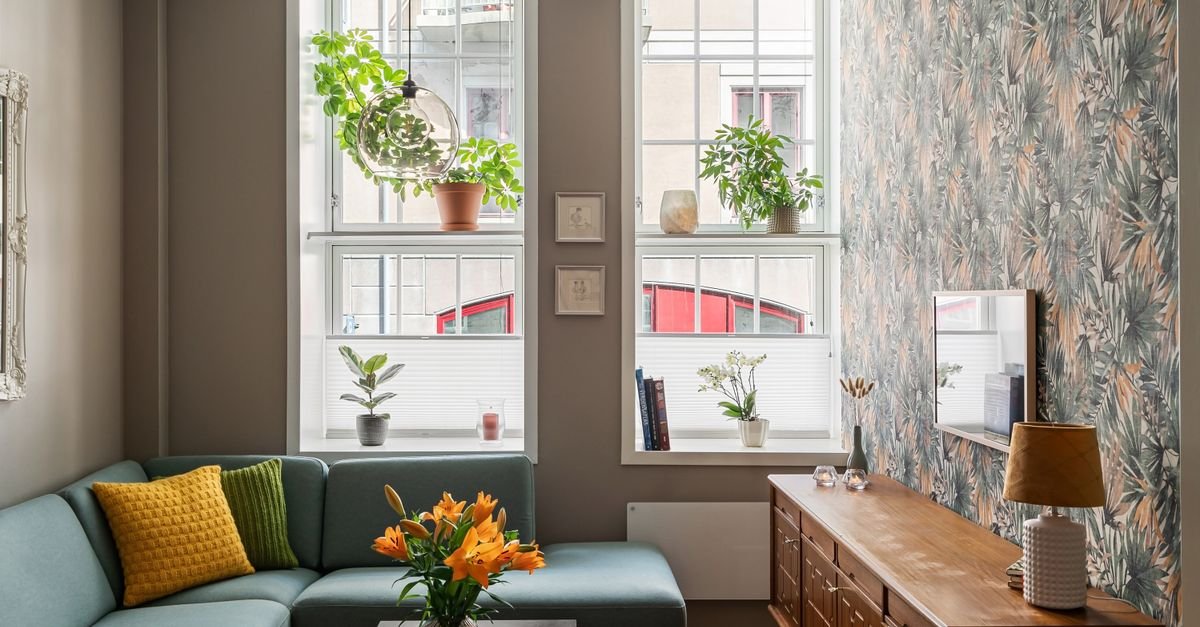
Here’s a comforting secret from the design world: some of the most enviable rooms on Pinterest are tiny. They just don’t read tiny — because their owners know that perceived size is a trick of light, line, and scale.
Also Read

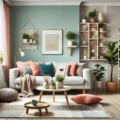
You can’t move walls. But you can absolutely move the feeling of them — this weekend, mostly with things you already own.
Quick answer: To make a small room look bigger: maximize light (sheer curtains hung high and wide), add a large mirror opposite or beside a window, keep the floor as visible as possible (leggy furniture, one large rug), paint walls and trim in light unified colors, scale furniture down in count but up in size, and ruthlessly control clutter. Rooms read bigger when the eye travels farther without interruption — every trick below serves that one principle.
Key Takeaways
- The master rule: the farther the eye travels uninterrupted, the bigger the room feels.
- Light is square footage: sheer curtains, clean windows, layered lamps — brightness reads as space.
- Mirrors double rooms when placed to reflect windows or long sightlines.
- Show the floor: furniture on legs, one properly sized large rug, nothing stranded in walkways.
- Fewer, bigger pieces beat many small ones — clutter shrinks rooms faster than walls do.
- Go vertical: curtains at the ceiling, tall shelves, low furniture — height you emphasize is size you gain.
Why Do Some Small Rooms Feel Big (and Some Big Rooms Feel Small)?
Perceived size isn’t square footage — it’s how far your eye can travel before something stops it.
Every visual interruption — a dark wall, a bulky sofa back, clutter on every surface, a rug island floating mid-floor — is a speed bump. Enough speed bumps and a decent-sized room feels like a storage unit.
Remove the interruptions — unify colors, clear sightlines, raise furniture onto legs, bounce light deeper into corners — and the same walls exhale.
Hold onto that principle and every tip below becomes obvious rather than arbitrary: you’re not decorating, you’re removing speed bumps.
How Does Light Make a Room Look Bigger?
Brightness and spaciousness are nearly the same perception — dim corners read as walls closing in; lit corners read as room continuing.
Free the windows
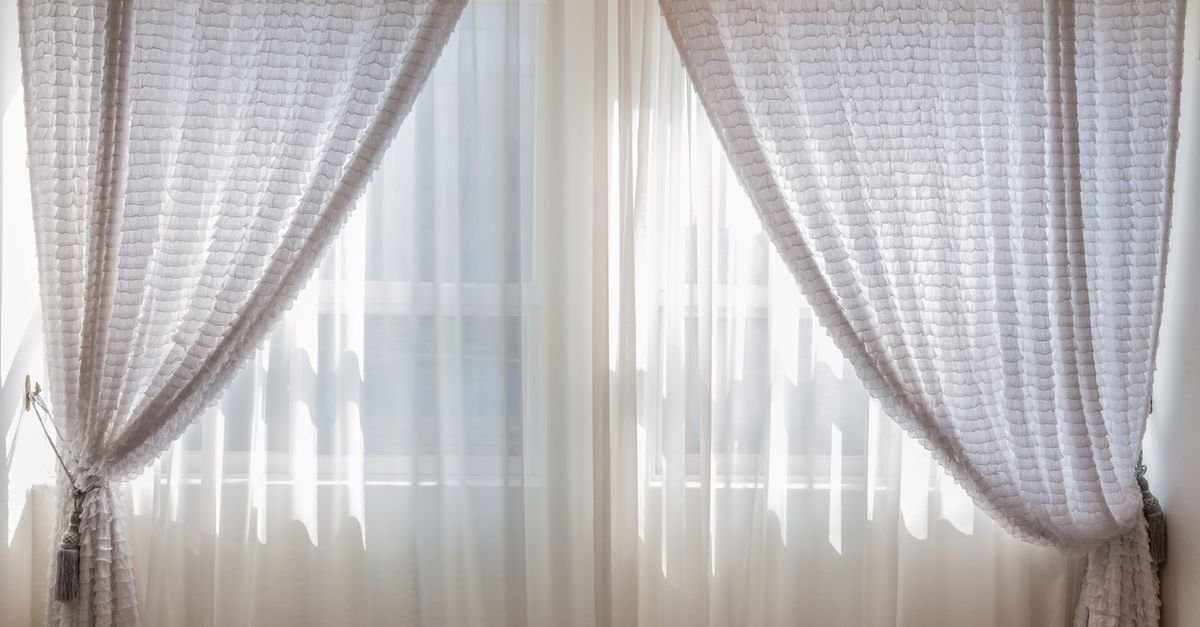
Heavy dark drapes eat both light and visual wall space. Swap in sheer or light-filtering curtains — and hang them high and wide: rod close to the ceiling, extending well past the window frame, so the window reads larger and the fabric never blocks glass. (The full math is in our guide to how long curtains should be — floor-kissing length, always.)
Layer three levels of lamp light
One ceiling fixture creates a bright center and shadowed edges — shrinking. Add a floor lamp in a dark corner and a table lamp at mid-height, and the room’s lit envelope expands to its true edges.
Aim light at surfaces
Uplights washing a wall or ceiling visually push those planes away. A cheap LED uplighter behind a plant throws growing shadows and makes the ceiling float.
Where Should Mirrors Go in a Small Room?
Mirrors are the closest thing decorating has to a cheat code — but placement decides whether you double a window or double a cluttered bookshelf.
The power position: opposite or perpendicular to a window. The mirror grabs daylight and a slice of outdoors, effectively cutting a second window into the wall.
Go large or go home. One big mirror (or a full-length leaner propped against the wall) beats a constellation of small decorative ones — small mirrors read as wall objects; large ones read as openings.
Reflect the long view. A mirror at the end of a sightline extends it — hallways and narrow rooms love this.
Mind what it doubles. A mirror facing clutter gives you twice the clutter. Audit the reflection before you commit the nail.
Mirrored or glass furniture — a glass coffee table, a mirrored side table — runs the same trick at knee height: the eye passes straight through, and floor stays visible.
What Colors Make a Room Look Bigger?
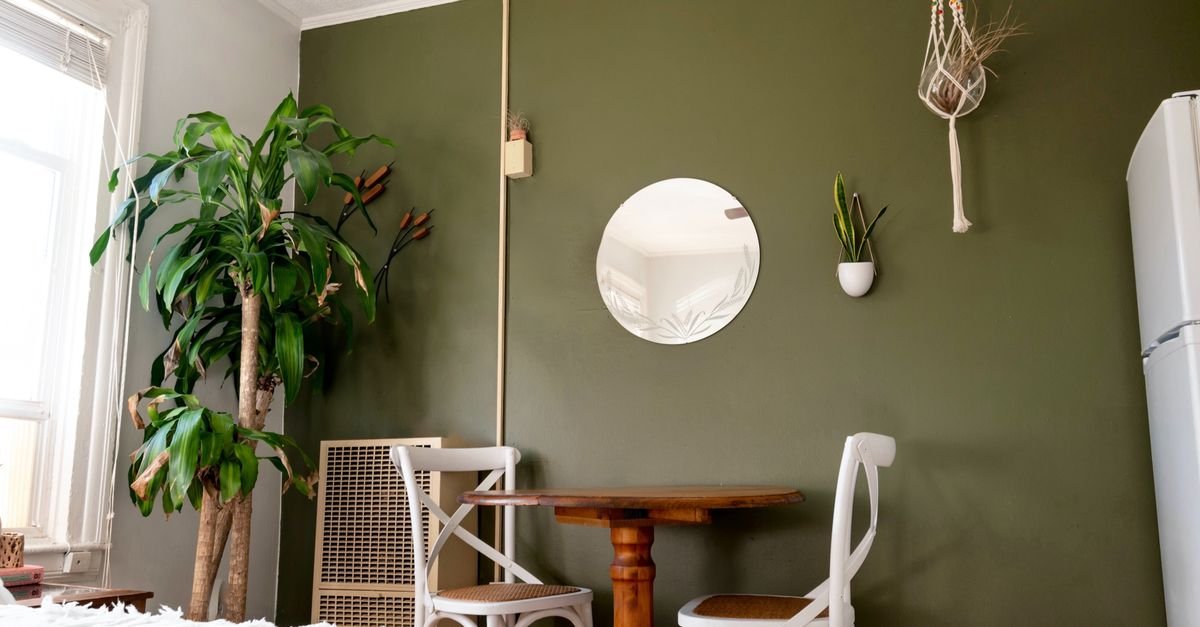
Light colors reflect light; dark colors absorb it — but the real magic is unity.
Walls, trim, and ceiling in the same light color (or close cousins) erase the boundaries the eye uses to measure a room. Paint the trim the wall color and walls seem taller; keep the ceiling white or lighter still.
Soft whites, warm creams, pale greiges, misty blues and sages are the reliable expanders. Cool undertones recede slightly more; warm ones cozy without closing in when kept light.
The 60-30-10 balance still applies — light dominant color, a gentle secondary, and your accent in small doses. Small rooms don’t require beige-only lives; they require the bold notes be accents, not walls.
Dark-room exception: in a genuinely light-starved den, embracing a deep moody color can flatter more than a dingy white — but that’s a cozy choice, not a bigger one. Know which effect you’re buying.
Continuity underfoot matters too: flooring that flows unbroken from room to room (or rugs close to the floor’s tone) keeps the eye traveling — hard transitions chop space into parcels.
How Should You Choose and Arrange Furniture?
Counterintuitive truth: a few larger pieces make a room feel bigger than many small ones. Six little chairs and three side tables read as clutter; one proper sofa and one generous coffee table read as calm.
Choose legs over skirts
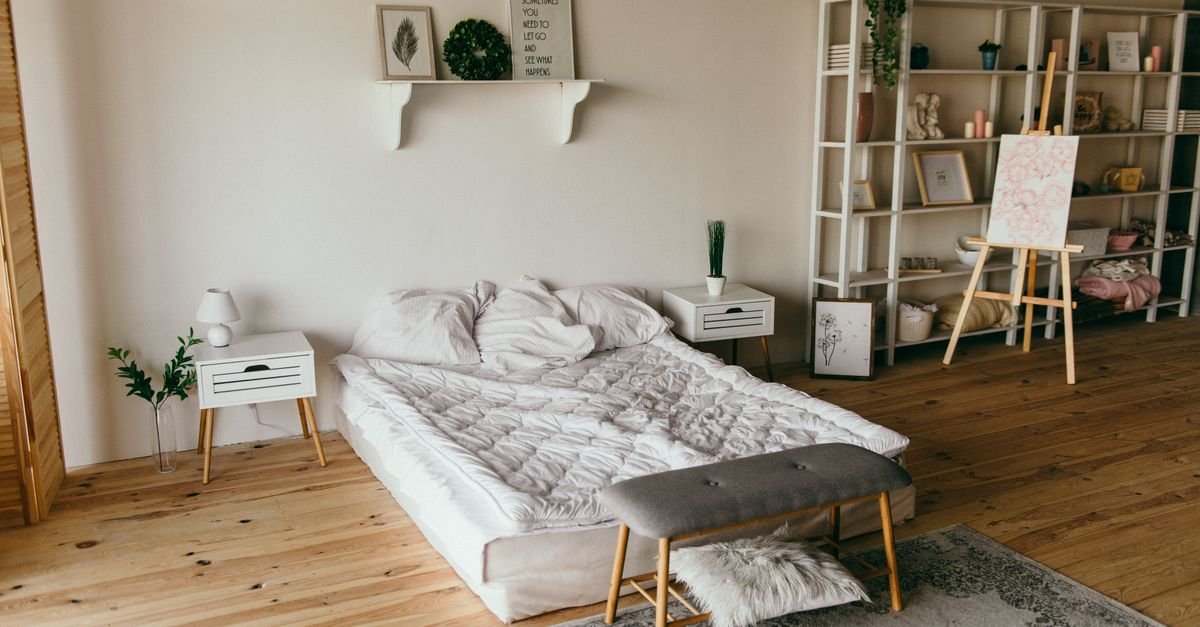
Furniture on visible legs — mid-century sofas, open-base beds, hairpin consoles — lets light and sightlines pass underneath. Visible floor is perceived square footage; skirted, boxy pieces sit like walls.
Keep backs low
Low-profile sofas and low headboards leave wall visible above them — and visible wall above furniture reads as airspace.
Float with a purpose — or hug the walls thoughtfully
In most small rooms, anchoring big pieces against walls preserves the central walkway. But pulling a sofa even 10cm off the wall creates a shadow line that suggests depth. Test both; the room votes.
Mind the walkways
Keep at least 60cm of clear path through the room, and never make anyone sidle sideways past furniture. A room you move through easily feels generous regardless of size.
Double-duty everything
Storage ottomans, nesting tables, a bench with baskets beneath — every piece that does two jobs replaces a piece you didn’t have to buy. Our roundup of tables for small spaces is built around exactly this.
What Size Rug Makes a Room Look Bigger?
Bigger than you think — this is the most common small-room mistake in existence.
A small rug floating in the middle of the floor chops the room into fragments: rug island, floor moat, furniture shore. Fragments read small.
The fix: one large rug that at least the front legs of every seating piece share. One unified zone, one long eye-line, one bigger-feeling room.
Light colors, subtle patterns, and low pile keep the expansion effect; a bold rug border acts like a drawn boundary — skip it in tight quarters. Full sizing rules (with the numbers) live in our rug size guide.
How Do You Use Vertical Space Without Clutter?
When floor space is finite, the ceiling is your growth market.
Curtains at the ceiling (not the window frame) — the single cheapest tall-room illusion in decorating.
One tall bookcase beats three low cabinets — same storage, one footprint, and the vertical line pulls the eye up. Style the top third sparsely so it doesn’t loom.
Wall-mount what you can: floating shelves, sconces instead of table lamps (freeing surface space), the TV on the wall instead of on a console’s worth of floor.
Vertical art arrangements — a tall, narrow gallery column or one large portrait-orientation piece — stretch walls upward. (Layout math in our gallery wall guide.)
The pattern: move storage and interest up, keep the floor plane open. Height is the small room’s renewable resource.
How Much Does Clutter Really Shrink a Room?
More than any paint color ever expanded one. Every object on a surface is a speed bump for the eye — twenty small objects can make a large room feel like a shoebox.
The achievable protocol for real humans:
- The 50% surface rule: every flat surface stays at least half empty. Style the rest deliberately (our coffee table formula scales down to any tabletop).
- Closed storage for the chaos: baskets, lidded boxes, cabinet doors. Visible organization still reads as stuff; hidden organization reads as space.
- One in, one out keeps the equilibrium after the big clear-out.
- Cable disappearance: few things shrink a wall like a waterfall of black cables. Raceways and clips cost pennies.
The space-expanding toolkit — solid Amazon searches:
Room-by-Room Quick Wins
Small bedroom: low bed frame, ceiling-height curtains, mirrored or slim wardrobe, wall-mounted reading lights instead of nightstand lamps, under-bed storage in matching boxes. Light bedding expands; our bed layering guide works at any room size.
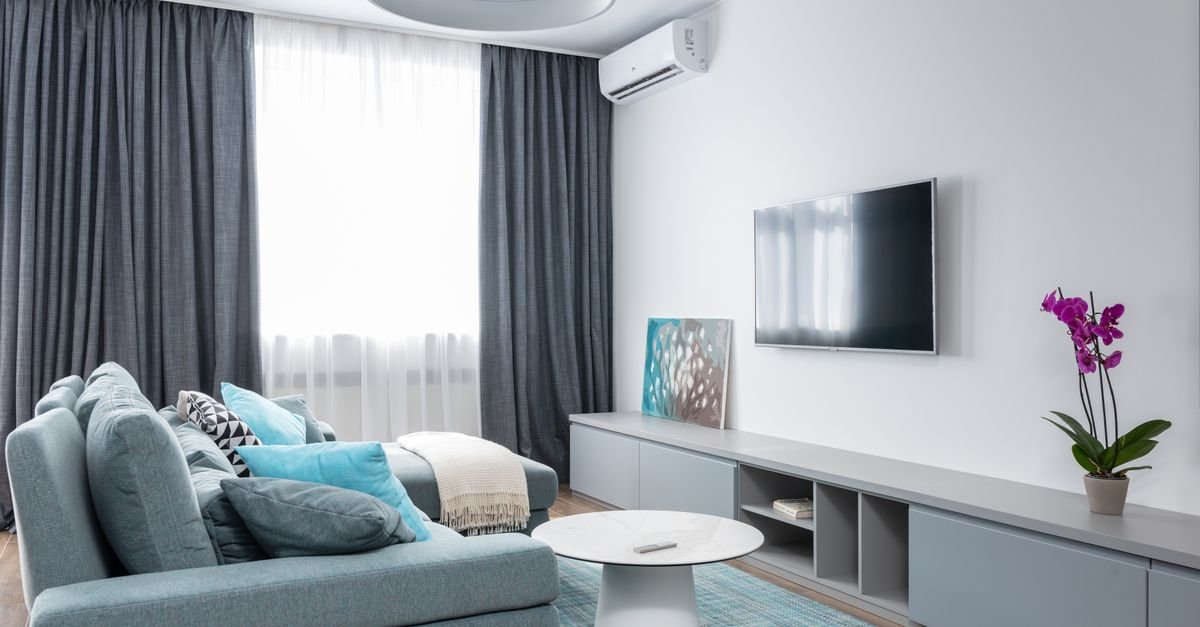
Small living room: leggy sofa, one big rug, glass or nesting coffee tables, TV on the wall, one tall plant in the corner the lamp doesn’t reach.
Small kitchen: clear the counters to the 50% rule, add under-cabinet lighting (shadowed counters read cramped), open one section of shelving to break up wall-to-wall cabinet mass.
Small bathroom: large frameless mirror, glass shower panel instead of a curtain, wall-hung storage, one continuous floor.
Small entryway: mirror + wall hooks + slim console with baskets beneath. The three-piece kit that makes every arrival feel less like squeezing in.
What Mistakes Make Small Rooms Feel Smaller?
Furniture that’s too small. The dollhouse effect: lots of tiny pieces read as clutter, not proportion. Scale up, count down.
Curtains hung at the window frame. Frame-height rods chop the wall and block glass. High and wide, always.
The rug island. Covered above — and worth repeating, because it’s in nine of ten small living rooms.
Dark heavy furniture against light walls. Maximum contrast makes each piece loom. Furniture near the wall tone melts into it.
Overfilled walls. Art on every wall equals visual noise. One well-placed statement (or one organized gallery) and some deliberate emptiness beats coverage.
Blocking the window with furniture. The room’s biggest light source and depth cue, half-eclipsed by a bookcase — undo this one first.
Do Ceiling Tricks Really Work?
The fifth wall is the most ignored expansion lever — and a few moves genuinely raise it:
Keep it lighter than the walls. A ceiling a shade or two lighter (or classic white) always reads taller; a dark ceiling lowers the lid — cozy in a bedroom, shrinking anywhere you want spacious.
Choose flush or semi-flush lighting. A long pendant in a low room is a visual head-bump. Save hanging fixtures for over tables, where the eye expects them lower.
Run verticals somewhere. Board-and-batten, tall wainscoting painted the wall color, vertical shiplap, or simply floor-to-ceiling curtains — any strong vertical line makes the eye measure the room in heights instead of widths.
Uplight it. One inexpensive uplighter washing the ceiling at night visually lifts it — the same trick restaurants use to make low rooms feel airy after dark.
Frequently Asked Questions
What colors make a small room look bigger?
Light, unified colors: soft whites, creams, pale greige, misty blue-greens — with walls, trim, and ceiling kept in the same light family so boundaries blur. Save bold, dark colors for accents rather than walls.
Do mirrors really make a room look bigger?
Yes — when placed to reflect a window or a long sightline, a large mirror functions like an extra opening in the wall. One big mirror works far better than several small ones, and never aim it at clutter.
What furniture makes a small room look bigger?
Fewer, appropriately large pieces on visible legs: a low-profile sofa, glass or nesting tables, wall-mounted storage. Visible floor beneath furniture and clear walkways matter more than any individual piece.
How high should curtains be hung in a small room?
As close to the ceiling as practical, with the rod extending well past the window’s sides, and fabric just kissing the floor. This makes both the window and the wall read dramatically taller.
Does a big rug make a room look bigger or smaller?
Bigger — one large rug that all seating shares unifies the floor into a single zone. It’s the small rug floating mid-room that fragments and shrinks the space.
How do I make a small room look bigger without painting?
Work the other levers: sheer curtains hung high, one large well-placed mirror, leggy furniture, a properly sized rug, three layers of lamp light, wall-mounted storage, and the 50% clear-surface rule. Paint is only one of the seven tricks.
Does decluttering actually make a room feel bigger?
More than any other single change. Every visible object interrupts the eye’s travel, and interruption is what “small” feels like. Half-empty surfaces and closed storage expand a room for free.
The bottom line
Square footage is fixed; perceived space is negotiable. Let light in high and wide, hang one serious mirror, put your furniture on legs and your seating on one big rug, send storage up the walls, and keep half of every surface empty. The walls won’t move — but this weekend, they’ll certainly seem to.

I'm Nasir Uddin Khan, founder of HomeNeeds24 and a senior IT consultant with 18+ years' experience in Oracle database administration, enterprise infrastructure and ERP system design. I write the buying guides here and I build every calculator on the site myself, from published engineering standards rather than opinion. My research is structured rather than lab-based: manufacturer specifications, safety and efficiency standards, and the trade-offs that repeat across large volumes of verified customer reviews. Where I have direct hands-on experience — smart home, networking, energy and anything computer-adjacent — I say so in the guide.