
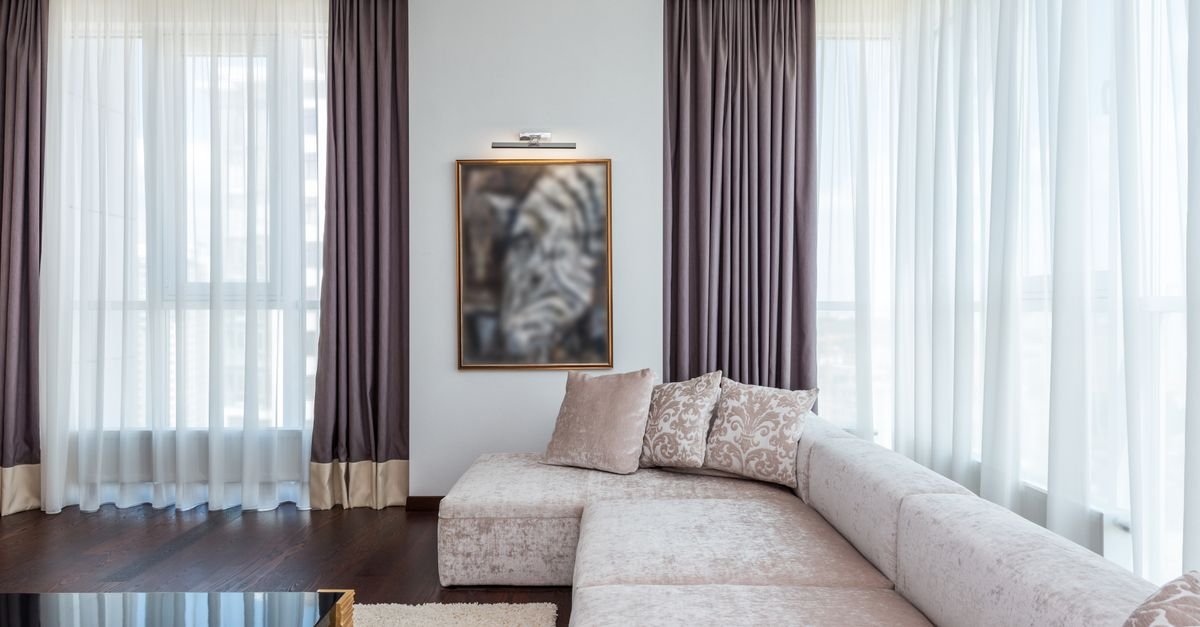
Curtains should end within half an inch of the floor (the “kiss”) or hover just above it (the “float”) for a tailored look — or extend 1–3 inches onto the floor for a romantic “puddle.” What they should never do is stop awkwardly mid-wall or flood high above the floor like high-water pants. Since most windows want 96-inch panels hung high and wide, here’s the complete sizing guide.
Also Read



Key Takeaways
- Floor-length is the rule — curtains should reach (or nearly reach) the floor.
- Three good endings: float (½” above), kiss (touching), puddle (1–3″ extra).
- Hang high and wide: rod 4–6″ above the frame, extending 8–12″ past each side.
- Standard lengths: 84″, 96″, 108″ — most 8-foot-ceiling rooms want 96″.
- Width = 2–2.5× the window for proper fullness.
How long should curtains be?
Long enough to reach the floor — that’s the designer consensus, and it changes rooms instantly.
Floor-length panels draw the eye down the full height of the wall, making ceilings feel taller and windows grander. Short curtains chop the wall and shrink everything around them.
The real question is how they should meet the floor — and there are three good answers.
The video below from a soft-furnishings specialist walks through the common lengths and where each works.
The float: tailored and practical
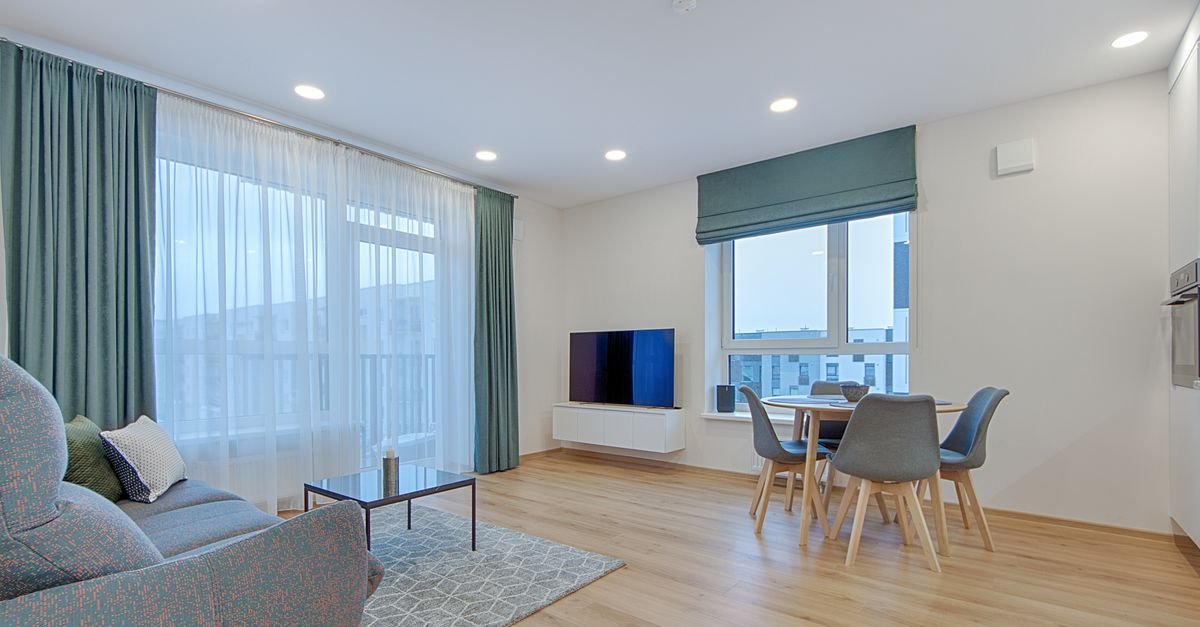
The float ends about half an inch above the floor.
It reads crisp and intentional, the hem stays clean, and curtains glide open without dragging — the default choice for busy rooms, kids’ rooms and anywhere with regular vacuuming traffic.
If you’re unsure, float. It’s the “white shirt” of curtain lengths.
The kiss: the designer favorite

The kiss touches the floor exactly — no gap, no excess.
It’s the most polished, custom-looking finish, and also the least forgiving: it demands precise measuring (and level floors).
Worth the effort in living rooms and bedrooms where the drapes are part of the design statement.
The puddle: romantic and dramatic
The puddle adds 1–3 inches of fabric pooling on the floor.
In heavy linen or velvet it looks luxurious and old-world — beautiful in formal spaces and bedrooms with panels that rarely move.
Honest trade-offs: it collects dust, tangles with robot vacuums, and confuses pets. Choose it for looks, knowingly.
The one length to avoid: the awkward hover
Curtains ending 4+ inches above the floor — or worse, at the windowsill’s ankle zone mid-wall — are the high-water pants of window treatments.
They make ceilings feel lower and windows smaller, and no fabric is pretty enough to fix the proportions.
If your current panels hover, you don’t need new windows — you need longer curtains or a lower rod (usually longer curtains).
When short curtains ARE correct
Every rule has its exceptions — here are the legitimate ones.
Sill-length (ending at the windowsill) suits kitchens and bathrooms, where floor-length fabric near water, crumbs or radiators is impractical.
Apron-length (a few inches below the sill) works when a radiator, window seat or countertop sits beneath the window.
Café curtains — covering just the lower half — are charming in kitchens and street-facing baths for privacy with light.
Standard curtain lengths decoded
Ready-made panels come in predictable sizes — here’s what each is really for.
- 63″: sill/apron territory — kitchens, baths, above radiators.
- 84″: only works with rods hung low on 8-ft ceilings — the most commonly mis-bought length.
- 96″: the sweet spot for 8–9-ft ceilings with a high-hung rod.
- 108″: 9–10-ft ceilings.
- 120″+: lofty rooms and dramatic puddles.
Notice the pattern: the “default” 84-inch panel disappoints in most modern rooms once you hang the rod properly high.
Hang high: the rod rule that changes everything
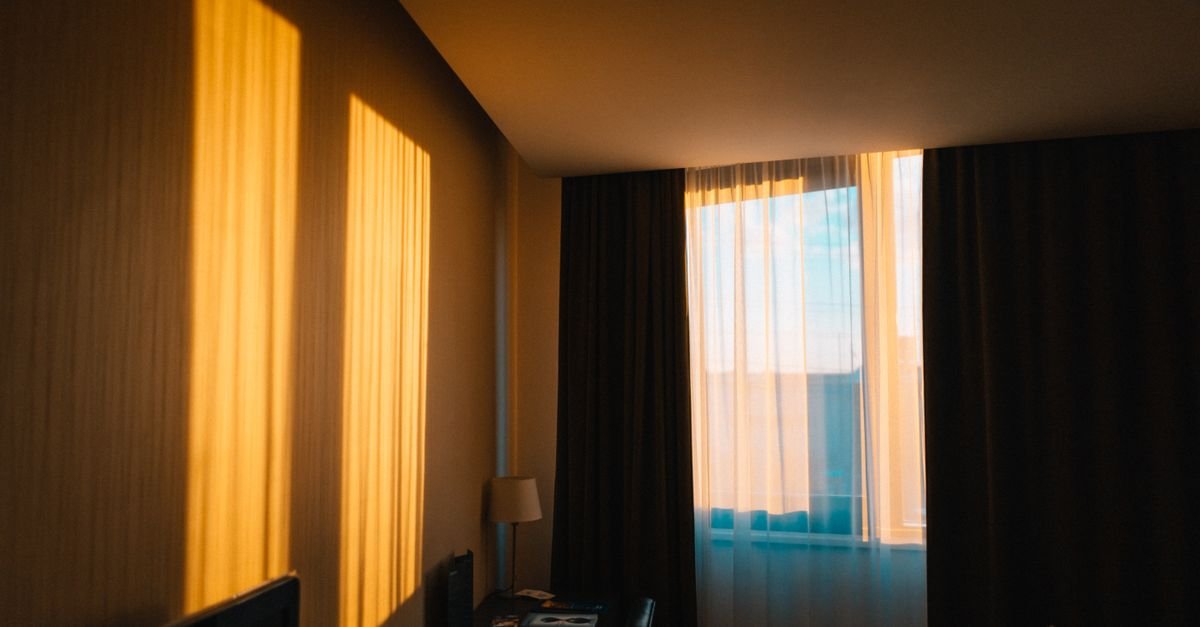
Curtain length only works with the right rod height.
Mount the rod 4–6 inches above the window frame — or even halfway to the ceiling in standard rooms. High rods stretch the window visually and make ceilings soar.
This is why measuring rod-to-floor (not window-to-floor) is the golden measuring rule below.
Hang wide: let the window breathe
Width placement is the second half of the pro look.
Extend the rod 8–12 inches past the frame on each side, so open curtains stack on the wall — not over the glass.
Your window looks bigger, and you keep every inch of daylight.
How to measure for curtain length (the right way)
- Install (or decide) the rod position first — high and wide, as above.
- Measure from the TOP of the rod to the floor.
- Adjust for the look: subtract ½” for a float, use exact for a kiss, add 1–3″ for a puddle.
- Check the heading: grommet and rod-pocket tops hang slightly below the rod top; ring-clips add an inch or two — measure from where fabric will actually start.
- Measure both ends of the window — floors are rarely level; fit the longer side for a float, shorter for a kiss.
How wide should curtain panels be?
Fullness is what separates drapes from hanging bedsheets.
Total panel width should be 2 to 2.5 times the rod’s covered width — so a 60-inch window with returns typically wants two panels of 50 inches or more each.
Skimpy width can’t be styled away; when in doubt, buy the extra panel.
Curtain length by room
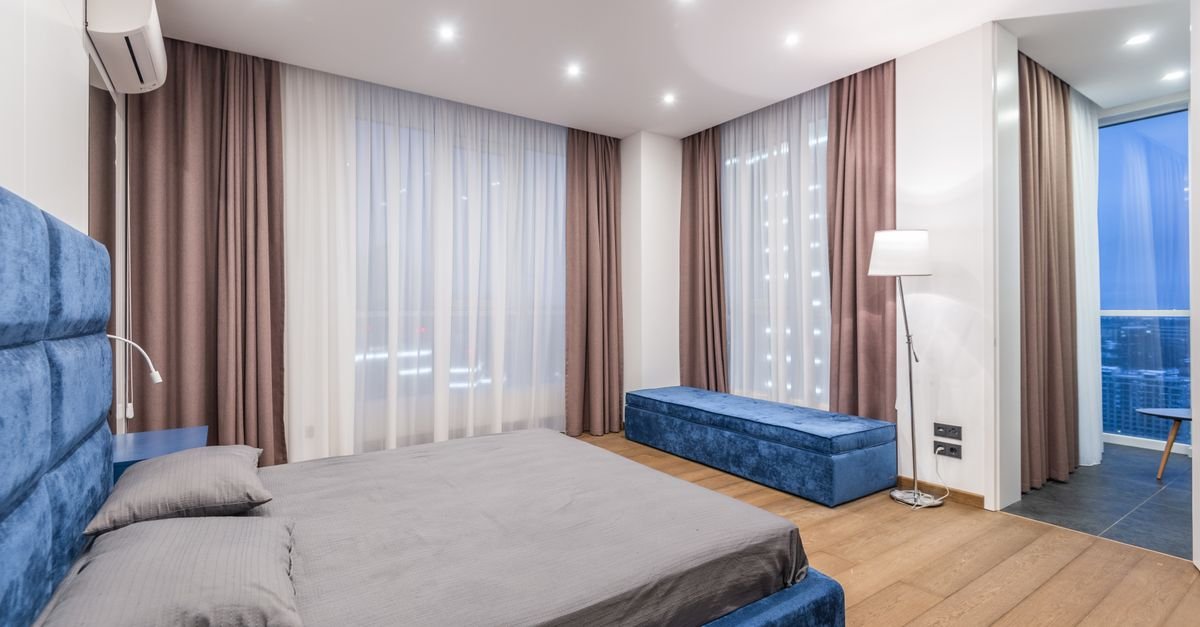
Quick answers for every door you’ll open today.
Living room: kiss or float, generous width — this is the showcase. Bedroom: float or kiss; blackout lining earns its keep (see our best blackout curtains). Dining: kiss or a modest puddle for drama. Kitchen/bath: sill or café. Kids’ rooms: float, always — nothing to trip on or yank.
More bedroom styling in our bedroom curtain ideas.
Sliding doors and extra-wide windows
Big glass follows the same rules, scaled up.
For sliders, hang the rod high, extend generously past the frame on the stacking side, and use a float so panels glide freely with daily use.
For wide picture windows, add center support brackets and consider three or four panels for balanced fullness.
What if my curtains are too long or too short?
Fixes exist for both directions — no repurchase required.
Too long: hem them (iron-on hem tape is renter-friendly and takes 20 minutes), or embrace a deliberate puddle if the fabric suits it.
Too short: lower the rod slightly if it was hung very high, add a coordinating fabric band to the hem (a real designer trick), or promote them to a shorter window and buy correct panels for the star wall.
Fabric changes the look of every length
The same length reads differently in different cloth.
Linen floats and kisses beautifully but wrinkles into a casual puddle; velvet puddles like royalty; airy sheers prefer a kiss or slight puddle since floats can look stranded.
Heavier fabrics also hang straighter, making precise lengths look even more tailored.
Curtains and the rest of the room
Length is proportion, and proportion is a team sport.
High-hung, floor-length curtains pair with a properly sized rug to frame the room top and bottom — our rug size guide handles the floor half.
And because fabric color shifts under different bulbs, check panels at night against your lighting — see warm white vs cool white.
Common curtain mistakes to avoid
- The 84-inch default on a high rod — instant awkward hover.
- Rod clamped to the window frame — shrinks the window it’s dressing.
- Skimpy single panels stretched flat like a projector screen.
- Ignoring the heading style when measuring — grommets vs clips move the hem an inch or more.
- Puddling in high-traffic zones — beautiful in photos, gray at the hem by June.
- Forgetting to steam — packaging creases can take weeks to fall out on their own.
Buying checklist: get it right the first time
Take this to the store (or the search bar).
- Rod height decided → rod-top-to-floor measured (both ends).
- Look chosen: float / kiss / puddle → length adjusted.
- Width: 2–2.5× fullness → panel count decided.
- Heading style confirmed against the measurement.
- Lining chosen: sheer, standard, or blackout for bedrooms.
Most 8–9-foot rooms land on 96-inch panels — browse 96-inch curtain panels on Amazon.
High ceilings and two-story windows
Grand windows follow the same logic, scaled.
For 10-foot-plus ceilings, mount as high as proportion allows and step up to 120-inch or custom lengths — skimping on length is even more visible at scale.
On double-height walls, treat the rod height as a design line: aligning it with an architectural feature (a beam, a transom) keeps the drama intentional.
Layering sheers with blackout panels
The hotel look is a two-track system.
Sheers on the inner track filter daylight and give privacy; blackout or dim-out panels on the outer track handle night, sleep and insulation.
Both layers follow the same length rule — typically a float — and a double rod costs barely more than a single.
Hardware matters: rods, rings and finials
The rod is jewelry — and engineering.
Scale the rod’s thickness to the fabric’s weight (velvet on a skinny café rod bows within a month), choose rings for smooth daily gliding, and let finials echo the room’s metals.
Budget tip: spend on the rod you touch daily, save on panels — hardware upgrades read instantly.
Renter-friendly and no-drill options
No drill, no problem — mostly.
Tension rods work inside deep frames for café curtains; heavy-duty adhesive brackets hold lightweight panels; ceiling-track tape systems suit some rentals.
Weight is the constraint: sheers and light cotton yes, velvet no. The high-and-wide principle still applies within whatever the landlord allows.
Steaming, training and the first-week fluff
New curtains need a settling-in ritual.
Steam (or low-iron) the packaging creases out, then “train” the folds: hand-pleat the panels and loosely tie them with fabric strips for a day or two.
They’ll hang in disciplined columns afterward — the difference between “just bought” and “professionally dressed.”
Hemming without a sewing machine
Too-long panels are a 20-minute fix.
Iron-on hem tape: measure with the curtains hanging, pin the fold, press with a hot iron per the tape’s instructions, done — fully reversible for renters if you don’t trim.
Hang panels for a day before hemming; fabric relaxes and lengthens slightly, and you want to hem the relaxed truth.
Washing and caring for curtains
Clean curtains keep rooms (and noses) fresher.
Check labels: many cotton and poly panels machine-wash cold and rehang damp to self-steam; linen prefers gentle cycles; velvet and lined panels often want professional cleaning.
Between washes, a monthly vacuum pass with the brush attachment handles dust — especially on floor-touching hems.
Tiebacks, holdbacks and the stack-back look
How curtains sit when open is half their beauty.
Fabric tiebacks at roughly two-thirds down give a soft classic curve; metal holdbacks suit tailored rooms; no tieback at all — clean vertical stacks — reads most modern.
Whatever you choose, keep the open stack on the wall, not the glass: that’s the width rule paying rent again.
The cheat sheet: every number in one place
Screenshot this block.
Rod height: 4–6″+ above frame. Rod width: 8–12″ past each side. Fullness: 2–2.5×. Float: ½” up. Kiss: exact. Puddle: +1–3″. 8–9 ft ceilings: 96″ panels. 9–10 ft: 108″. Kitchen/bath: sill or café.
Ten numbers, one professional-looking home.
Frequently Asked Questions
How long should curtains be?
Floor-length in almost every living space: ending half an inch above the floor (float), exactly touching it (kiss), or pooling 1–3 inches (puddle). Sill- or apron-length is right for kitchens, bathrooms and windows above radiators. Avoid curtains that stop awkwardly mid-wall.
Should curtains touch the floor?
Ideally yes — touching (kiss) or within half an inch (float). Floor contact or near-contact gives the tailored, custom look designers aim for, elongates walls, and makes ceilings feel higher. Only wet or radiator zones call for shorter lengths.
What is the most popular curtain length?
For rooms with 8–9-foot ceilings and a properly high-hung rod, 96-inch panels are the workhorse. The commonly bought 84-inch length usually only works when rods sit low on the frame — which itself undercuts the look. Taller rooms step up to 108 inches.
How high should I hang a curtain rod?
Four to six inches above the window frame at minimum — or up to halfway between frame and ceiling for extra height. Extend the rod 8–12 inches past each side so open panels stack on the wall, keeping the glass clear and the window looking bigger.
How wide should curtains be for my window?
Total fabric width should be 2 to 2.5 times the width the rod covers, split across your panels. That fullness creates the soft folds that make drapes look finished; flat, stretched panels read like fabric screens no matter how good the material is.
Is it better for curtains to be too long or too short?
Too long — every time. Extra length can be hemmed in twenty minutes or styled as a puddle, while too-short curtains have no graceful fix except replacement, a hem extension band, or reassignment to a smaller window.
Do curtain lengths include the rings or grommets?
Listed length is the fabric panel itself. Grommet and rod-pocket panels start slightly below the rod’s top; ring clips add an inch or two of drop above the fabric. Always measure from where the fabric will actually begin to the floor, per your heading style.
The bottom line
Curtain length has one destination — the floor — and three good ways to arrive: float, kiss, or puddle.
Hang the rod high and wide, measure rod-to-floor, buy 2–2.5× fullness, and the cheapest panels will out-style expensive ones hung wrong.
Finish the window wall with our bedroom curtain ideas and best blackout curtains.

I'm Nasir Uddin Khan, founder of HomeNeeds24 and a senior IT consultant with 18+ years' experience in Oracle database administration, enterprise infrastructure and ERP system design. I write the buying guides here and I build every calculator on the site myself, from published engineering standards rather than opinion. My research is structured rather than lab-based: manufacturer specifications, safety and efficiency standards, and the trade-offs that repeat across large volumes of verified customer reviews. Where I have direct hands-on experience — smart home, networking, energy and anything computer-adjacent — I say so in the guide.