
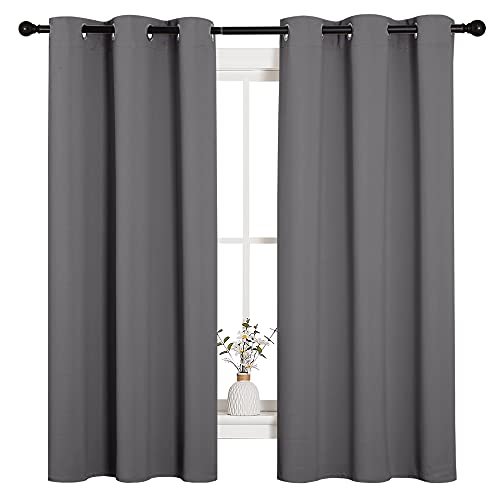
Curtains do far more for a bedroom than most people realize. They control light for better sleep, add privacy, soften the room, insulate against heat and cold, and frame the windows as a key part of the decor. The right curtains can make a bedroom feel finished and restful; the wrong ones leave it feeling unfinished or let in light that ruins your sleep. This guide covers bedroom curtain ideas — types, fabrics, how to hang them, and how to choose.
Also Read



Why Curtains Matter in a Bedroom
The bedroom is where light control matters most. Curtains let you darken the room for sleep, block early sun and streetlights, and create the cozy, private atmosphere a bedroom should have. They also affect temperature (heavier curtains insulate), reduce noise slightly, and visually shape the room — well-hung curtains can make ceilings feel taller and windows grander. For a room dedicated to rest, curtains are both functional and decorative essentials.

Types of Bedroom Curtains
Blackout Curtains
The top choice for bedrooms. Blackout curtains block almost all incoming light, which is ideal for sleeping in, shift workers, light-sensitive sleepers, and bright-windowed rooms. They also help insulate. If better sleep is your priority, blackout curtains are the single most impactful option.
Room-Darkening Curtains
A step down from full blackout, these block most light while keeping a softer feel. Good if you want significant darkness without the room being pitch black.
Sheer Curtains
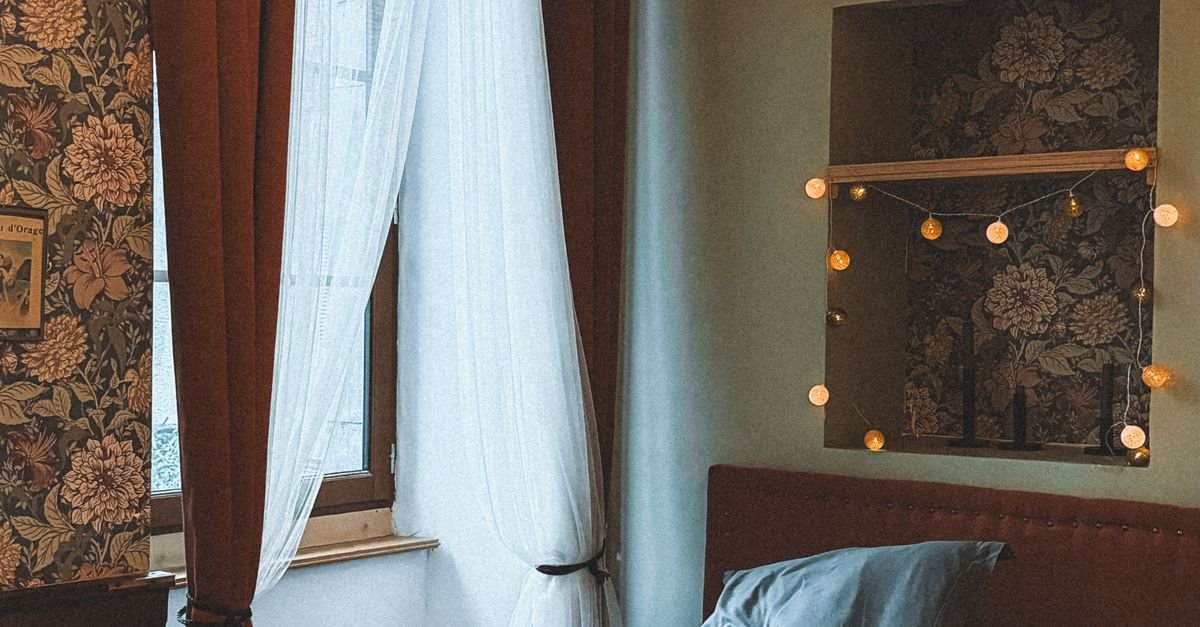
Light, flowing sheers filter daylight gently and add softness and airiness while keeping some privacy during the day. They’re often layered with heavier curtains — sheers for daytime light, blackout for night.
Layered Curtains
Combining sheers with blackout or heavier drapes gives the best of both worlds: soft filtered light by day and full darkness at night, plus a rich, finished look. This double-layer approach is popular for bedrooms because it’s both practical and elegant.
Thermal / Insulating Curtains
Designed to reduce heat loss in winter and heat gain in summer, thermal curtains improve comfort and can lower energy use — a smart choice for drafty or temperature-extreme rooms.
Choosing Fabric & Color
Fabric affects look, light control, and upkeep. Heavier fabrics (velvet, lined cotton) block more light, insulate, and feel luxurious; lighter fabrics (linen, sheer) feel relaxed and airy but let in more light. For color: light, calming tones keep a bedroom serene and airy; deeper colors add coziness and drama and often block light better. Coordinate the curtains with your bedroom’s palette — either blending with the walls for a calm, seamless look, or providing a gentle contrast as an accent. For most restful bedrooms, soft, muted colors work beautifully.
As an Amazon Associate, HomeNeeds24 earns from qualifying purchases.
How to Hang Curtains the Right Way
How you hang curtains dramatically affects how the room looks — and it’s where most people go wrong. Two designer rules:
- Hang high: mount the rod well above the window frame (closer to the ceiling) to make the window and ceiling feel taller.
- Hang wide: extend the rod beyond the window on each side so the curtains stack off the glass when open, making the window look larger and letting in more light.
Also, curtains should be long enough to reach the floor (just kissing it, or a slight break) — short, “floating” curtains look unfinished. And choose a width with enough fabric to look full when closed, not stretched flat. These small choices separate a polished room from an amateur one.
Curtains for Better Sleep
If sleep is the priority, optimize for darkness: choose blackout curtains, hang them wide and high with enough overlap so light doesn’t leak around the edges, and consider a layered setup with a blackout liner. Side light leakage is the most common complaint — extending the rod and overlapping the panels in the center solves most of it. For light-sensitive sleepers, this combination makes a genuine difference to sleep quality.
Frequently Asked Questions
What are the best curtains for a bedroom?
Blackout curtains are the top choice for bedrooms because they block light for better sleep and help insulate. Many people layer sheers with blackout curtains for soft daytime light and full nighttime darkness.
How high should I hang bedroom curtains?
Hang the rod well above the window frame, closer to the ceiling, and extend it beyond the window on each side. Hanging high and wide makes windows and ceilings look bigger and lets in more light when open.
How long should bedroom curtains be?
Long enough to reach the floor — just touching it or with a slight break. Short curtains that float above the floor look unfinished.
How do I stop light leaking around my curtains?
Use blackout curtains, hang the rod wider than the window, overlap the panels in the center, and consider a blackout liner. Extending and overlapping the panels solves most side-light leakage.
Key Takeaways
- Curtains control light, privacy, temperature, and style — essential in a sleep-focused bedroom.
- Blackout curtains are best for sleep; layering sheers with blackout gives day-and-night flexibility.
- Choose fabric and color for light control and a calm, coordinated look.
- Hang high and wide, and use floor-length panels for a polished, larger-looking window.
- For better sleep, optimize for full darkness and prevent side-light leakage.
The right curtains make a bedroom both more restful and more beautiful. Choose blackout or layered curtains for sleep, pick calming fabrics and colors, and hang them high and wide for a finished, spacious look. For more ideas, visit our home guides and the full Bedroom & Bedding collection.

I'm Nasir Uddin Khan, founder of HomeNeeds24 and a senior IT consultant with 18+ years' experience in Oracle database administration, enterprise infrastructure and ERP system design. I write the buying guides here and I build every calculator on the site myself, from published engineering standards rather than opinion. My research is structured rather than lab-based: manufacturer specifications, safety and efficiency standards, and the trade-offs that repeat across large volumes of verified customer reviews. Where I have direct hands-on experience — smart home, networking, energy and anything computer-adjacent — I say so in the guide.