
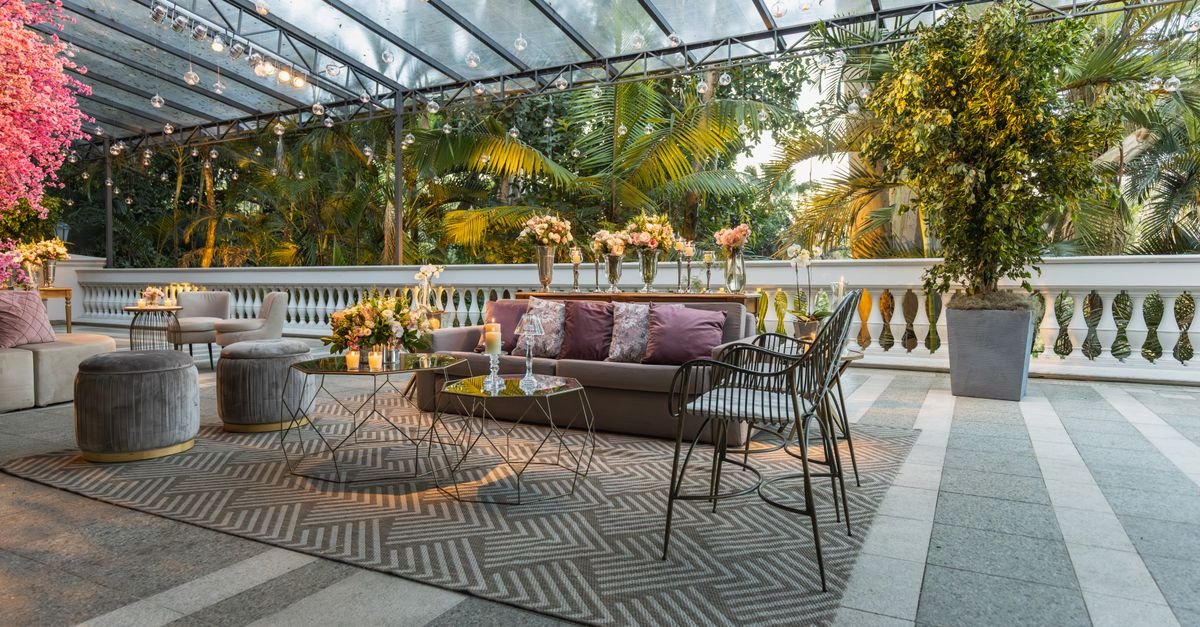
A great outdoor rug is a materials decision first (polypropylene for rain-exposed spaces, natural fibers only under cover), a size decision second (front legs of every seat ON the rug — go bigger than instinct), and a maintenance promise third (hose, mild soap, and a full dry before it goes back down). Get those three right and one rug transforms a bare slab into an outdoor room; get them wrong and you own a mildew farm with a pattern.
Also Read



This is the complete outdoor rug guide: materials decoded honestly, the sizing rules by setup, placement by space, the care schedule, and the buying checklist that separates three-season performers from one-summer regrets.
Key Takeaways
- Polypropylene (olefin) is the workhorse: stain-resistant, fade-resistant, hoseable, and happy in open weather — the default choice for uncovered patios.
- Natural fibers (jute, sisal, seagrass) look beautiful and mold quickly — covered porches only, never open sky.
- Size rule for seating: at least the front legs of every piece on the rug; for dining: 24 inches beyond the table on all sides so chairs stay on when pulled out.
- The rug must dry: elevate or lift it after soaking rains, and never lay one over damp ground or fresh-sealed wood.
- Outdoor rugs under 1,000 grams-per-square-meter feel like tarps; check weight and backing before believing the product photos.
- Searches for outdoor rugs keep climbing because the trick works: it is the single cheapest way to define an outdoor room.
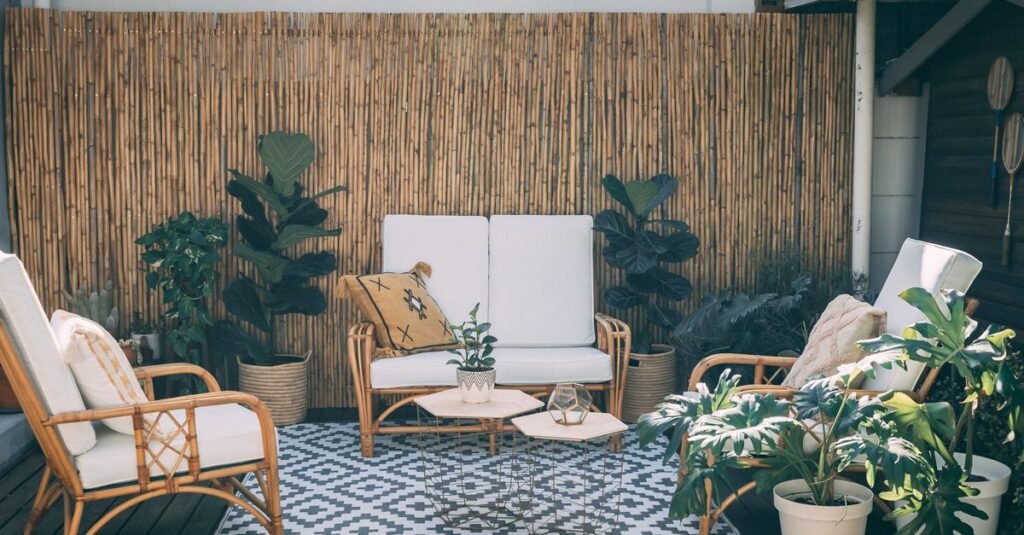
Why an Outdoor Rug Changes the Whole Space
Interior designers reach for rugs first because a rug does what furniture cannot: it declares where the room IS. Outside, that power doubles — a bare concrete slab or deck plank field has no edges, and a rug instantly draws them: here is the conversation area, here is the dining zone, here is the reading corner.
The supporting benefits stack up fast: softness underfoot on hot concrete or splintery decking, visual warmth that makes budget furniture read intentional, color that survives where cushions fade, and a defined footprint that makes even a small balcony feel furnished rather than stored. The whole design logic of our outdoor living guide starts from exactly this move.
Materials: The Decision That Decides Everything Else
Polypropylene (Olefin): The Open-Sky Champion
The synthetic that owns this category, for reasons that survive scrutiny: solution-dyed fibers hold color against direct sun, water passes through or wipes off rather than absorbing, mold gets nothing to eat, and cleanup is genuinely a hose and a brush. Flatweave polypropylene dries fastest; thicker piles feel more luxurious and hold a little more water — both work in the open with drying discipline.
PET and Recycled Synthetics: The Conscience Pick
Rugs woven from recycled plastic bottles perform close to polypropylene — slightly softer hand, similar weather manners — and turn a sustainability story into floor covering. A legitimate first choice, with the same care rules.
Natural Fibers: Beautiful, Covered-Porch-Only
Jute, sisal, and seagrass bring the texture every design photo loves — and drink water like the plants they were. Under a roof with no rain exposure they last seasons; in the open they mold, sag, and shed within weeks. The honest rule: natural fiber goes where rain genuinely cannot.
What to Skip Outside
Indoor rugs promoted to the patio (backing rots, dyes bleed), rubber-backed mats on wood decks (trapped moisture stains and rots the boards beneath), and any rug whose listing dodges the material question entirely — mystery fiber is indoor fiber wearing sunglasses.
Designer Jane Lockhart’s rug masterclass above covers the sizing, placement, and quality rules professionals use — every one of them applies double outdoors, where mistakes weather faster.
Sizing: Where Most Outdoor Rugs Fail First
Outdoor spaces swallow small rugs — the postage stamp floating in front of a sofa reads worse than no rug at all. The rules, by setup:
Seating areas: minimum, the front legs of every sofa and chair sit on the rug with the coffee table fully on; better, all legs on with a few inches of margin. For a standard outdoor sofa grouping that means 8×10 feet as the realistic floor, not the 5×7 the checkout suggested.
Dining sets: the pulled-out-chair rule — rug extends at least 24 inches beyond the table edge on every side, so back legs never drop off mid-dinner. Measure the table, add four feet to each dimension, round up.
Balconies and small patios: invert the logic — go nearly wall-to-wall with a few inches of border, which makes the space read as a room rather than a rug on a ledge. Our small balcony guide leans on this trick heavily.
Layering — the trend with real legs: a large flat neutral base with a smaller patterned rug angled over the seating zone adds designer depth for less than one giant statement rug. Keep both synthetic in the open.
Placement and Orientation (The Five-Minute Decisions)
Run the rug’s long side parallel to the space’s long side — fighting the geometry makes any patio feel narrower. Anchor it to the furniture grouping, not the architecture: center on the seating, not the slab. Leave walking paths OFF the rug edge where possible; edges catch toes and wear first. And under dining tables, orient so chair traffic crosses the weave, not the seams.
Two placement cautions: fresh-stained or sealed decks want weeks of cure time before a rug lies on them (trapped solvents mark), and dark rugs on sun-baked slabs run genuinely hot underfoot — mid-tones spare summer feet.
The Care Calendar (Where Lifespan Is Decided)
Weekly, in season: shake or vacuum off the grit — ground-in dirt abrades fibers and feeds mildew when wet.
Monthly or after storms: lift the rug and let BOTH rug and floor dry fully — the single habit that prevents the deck-stain-and-mildew disasters this category is famous for. Elevating one edge on the furniture for an afternoon does the job.
As needed: hose it on a slope, scrub with mild dish soap and a soft brush, rinse thoroughly, and hang or prop until bone dry — never fold a damp rug or lay it back on a damp floor.
Season’s end: full wash-and-dry, then store rolled (never folded — creases become permanent hills) in a dry space. A stored rug returns in spring as new; an abandoned one returns as a science project.
Stain notes: synthetics shrug off most spills with soap and water; treat bird droppings and berries promptly; and skip bleach on solution-dyed fibers — it wins the stain and costs the color.
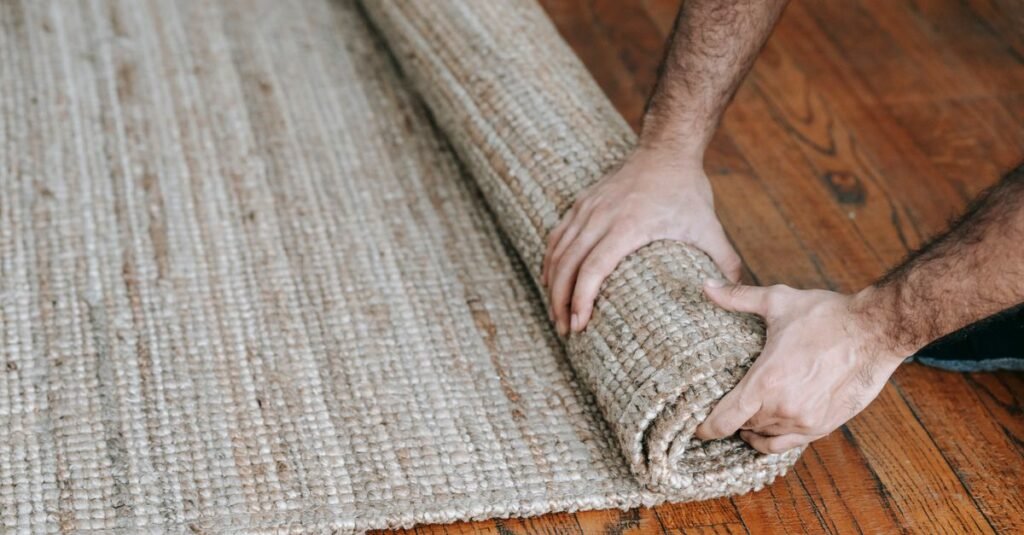
The Buying Checklist (Read Before Checkout)
Material named explicitly (polypropylene/olefin or PET for open weather), weight over ~1,000 gsm for a rug that lies flat and feels like a rug, UV or fade resistance stated (solution-dyed beats surface-printed — patterns woven through the fiber survive sun; printed ones ghost by August), reviews that mention actual rain seasons, and a size one step larger than your first instinct.
Budget honestly: outdoor rugs run cheaper than indoor equivalents, and the gap between a bargain tarp-feel rug and a quality flatweave is often small. Spend at the size you actually need rather than downsizing to upgrade the label — in this category, correct size at mid quality beats small at premium every time.
Pair it right and the whole space assembles itself: rug first, then furniture per our budget patio set roundup, string lights per the lighting guide, and the outdoor room is suddenly, unmistakably a room.
Style Notes for the Current Season (What’s Working in 2026)
The design currents worth knowing before checkout: layered rugs continue to lead (large neutral flatweave base, smaller patterned accent angled under the coffee table — depth without the statement-rug price), warm earth palettes (flax, barley, terracotta) are displacing cool greys as outdoor furniture warms up generally, and vintage-wash patterns — the faded Persian look in weatherproof synthetic — carry indoor polish outside better than any trend in years.
The practical style rules that never rotate: pattern hides what solid announces (leaf litter, pollen, the dog’s contributions — busy patterns forgive weeks between cleanings), borders and geometrics visually organize small spaces while oversized organic patterns want room to breathe, and the rug should converse with the cushions, not match them — pick up one accent color and the whole patio reads curated.
And the budget-styling secret the catalogs bury: a mid-price rug one size UP outstyles a premium rug one size down, every single time. In outdoor rooms, generosity of footprint IS the luxury signal.
Frequently Asked Questions
What is the best material for an outdoor rug?
Polypropylene (olefin) for anything rain-exposed: fade-resistant, mold-resistant, and hoseable. Recycled PET performs similarly. Natural fibers like jute and sisal belong only on fully covered porches — they mold in open weather.
Can outdoor rugs get rained on?
Synthetic ones, yes — the rule is drying afterward: lift the rug after soaking rains so rug and floor both dry fully. A permanently damp rug grows mildew and can stain the deck or patio beneath it.
What size outdoor rug do I need?
Seating areas: front legs of every piece on the rug — usually 8×10 feet minimum for a sofa grouping. Dining: 24 inches beyond the table on all sides. Small balconies: nearly wall-to-wall reads best.
Do outdoor rugs damage decks?
Trapped moisture does — rubber-backed mats and never-lifted rugs stain and rot boards. Choose breathable-backed synthetic rugs, lift them to dry after rain, and let new deck finishes cure before laying anything down.
How do I clean an outdoor rug?
Hose it on a slope, scrub with mild dish soap and a soft brush, rinse, and dry completely before replacing. Weekly shake-offs or vacuuming prevent the ground-in grit that wears fibers and feeds mildew.
Can I leave my outdoor rug out all year?
In dry climates, synthetics survive; everywhere else, roll it (never fold) and store dry for the off-season. Freeze-thaw cycles and months of standing moisture age even the best rug a decade in one winter.
Rug Problems, Solved (The Troubleshooting Table)
The corners curl: sun and storage creases — reverse-roll the corner overnight, weight it flat for a day, and store rolled loose next winter; persistent curlers accept outdoor rug tape or corner weights.
It slides on smooth concrete or decking: an outdoor-rated rug pad (breathable mesh, never solid rubber on wood) adds grip, cushioning, and airflow underneath — the accessory that quietly doubles comfort.
Green tinge in the shade corner: algae starting — move the rug into sun, wash with mild soap plus a splash of white vinegar, dry bone-hard, and fix the drainage or drying rhythm that invited it.
Faded stripes after one summer: surface-printed pattern — the rug told you its quality; the replacement should say solution-dyed.
Musty smell on rolling it out in spring: stored damp — sun-cure it open for two days, baking-soda dust and sweep, and if the smell survives, the mildew is in the backing and the rug is done; the next one gets the full-dry ritual before storage.
Wavy after heavy rain: normal in flatweaves — they relax as they dry; hurry it by hanging over a rail. Every problem on this list traces to moisture or sun — manage those two and the rug simply lasts.
Rug by Space (The Quick Match Table)
The uncovered patio: solution-dyed polypropylene flatweave, sized to the seating rule, lifted to dry after storms — the full-exposure specification.
The covered porch: the whole catalog opens — natural fibers welcome, thicker piles safe, and the layered look at its best because weather stops voting.
The balcony: near-wall-to-wall synthetic, lighter colors against absorbed heat, and a corner-weight or tape solution for the wind-tunnel effect high floors know well.
The poolside: polypropylene only, dark-pattern forgiveness for wet feet and sunscreen drips, and placement clear of the splash line — chlorinated water fades even the good ones faster.
The outdoor dining zone: the 24-inch chair rule, a busy pattern (dinner happens over it), and the hose-down clean as a scheduled event rather than an emergency.
The front porch: the small honest exception where a natural-look weave under full cover greets guests best — the one rug spot where style may outrank spec, because the roof already voted.
The one-sentence purchase test: if you can name the fiber, the rug covers the front legs, and you know where it will dry after rain, buy it — any listing that leaves one of the three unanswered is asking you to fund its experiment.
The Bottom Line
An outdoor rug is the cheapest room you will ever build: pick the fiber for your weather, size it to hold the furniture, and honor the one commandment — let it dry.
Do that, and a rectangle of woven plastic quietly does what a renovation does: turns outside into another place to live.

I'm Nasir Uddin Khan, founder of HomeNeeds24 and a senior IT consultant with 18+ years' experience in Oracle database administration, enterprise infrastructure and ERP system design. I write the buying guides here and I build every calculator on the site myself, from published engineering standards rather than opinion. My research is structured rather than lab-based: manufacturer specifications, safety and efficiency standards, and the trade-offs that repeat across large volumes of verified customer reviews. Where I have direct hands-on experience — smart home, networking, energy and anything computer-adjacent — I say so in the guide.