
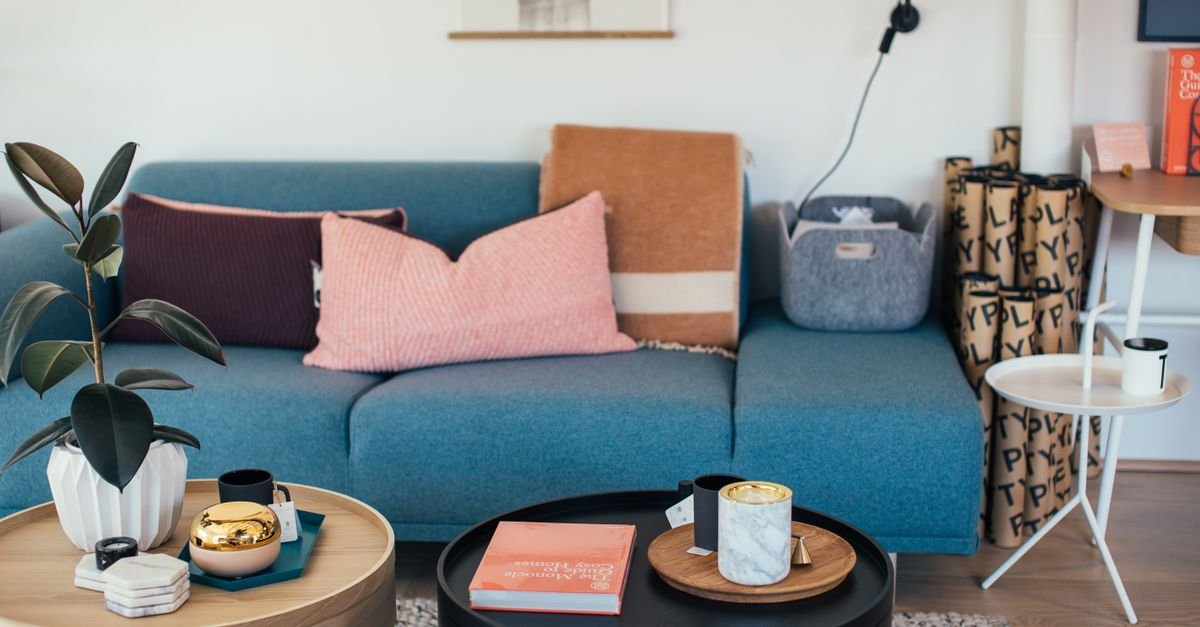
You bought a coffee table you love. Then you set the TV remote on it, added a stray coaster, and… that’s been the look for two years.
Also Read



Meanwhile, every coffee table on Pinterest seems to have gone to finishing school. What do designers know that the rest of us don’t?
Quick answer: Styling a coffee table comes down to one formula: anchor with a tray, stack two or three books, add one organic element (flowers or greenery), one sculptural object, and one candle — then vary the heights and leave breathing room. That’s it. Everything else is variation on the theme.
Key Takeaways
- Use the tray + books + organic + object + candle formula as your base — it works on virtually any table.
- Think in odd numbers: groups of three read as intentional; pairs read as accidental.
- Vary heights: tall (vase), medium (stacked books), low (tray or bowl) creates the “designer triangle.”
- Leave 30–50% of the surface empty — negative space is what separates styled from cluttered.
- Match scale to your table: big table, bigger groupings; small table, one single vignette.
- Real life wins: leave room for actual coffee cups, and choose pieces that survive kids and pets.
Why Does Coffee Table Styling Matter So Much?
The coffee table sits at the exact center of your most-used room. Eyes land on it before anything else — it’s the visual anchor of the seating area.
A styled table quietly signals that the room is finished. An empty or cluttered one makes even expensive furniture feel temporary.
Best part: this is the cheapest high-impact upgrade in decorating. You likely own most of the ingredients already.
What Is the Designer Formula for Styling a Coffee Table?
Nearly every professionally styled table you’ve admired uses the same five elements.
1. The tray (your anchor)
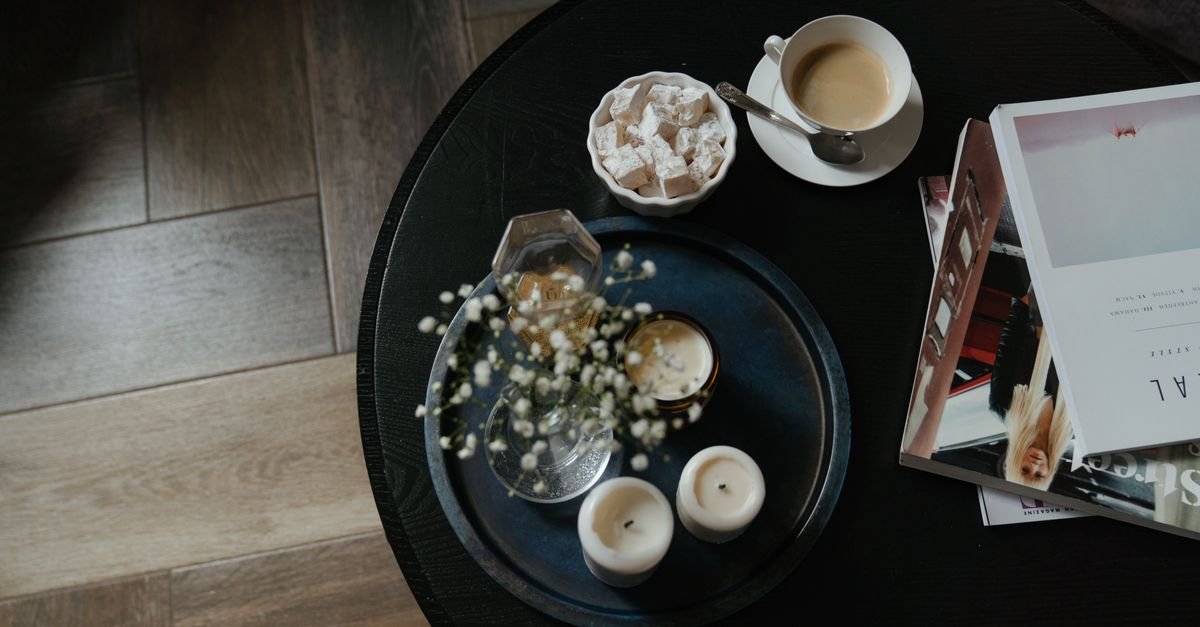
A tray creates a “room within a room” on your tabletop. It corrals smaller objects into one intentional group — and makes cleanup effortless: lift the tray, wipe the table, done.
Rectangular trays suit rectangular tables; round trays soften square ones. Woven trays add warmth, mirrored or metal trays add polish.
2. The book stack (your platform)
Two or three large-format books, stacked with spines facing the main seat, do double duty: they add personality and create a pedestal for smaller items.
Choose books that actually say something about you — travel, design, photography, food. This is decor you can also read.
3. The organic element (your life)
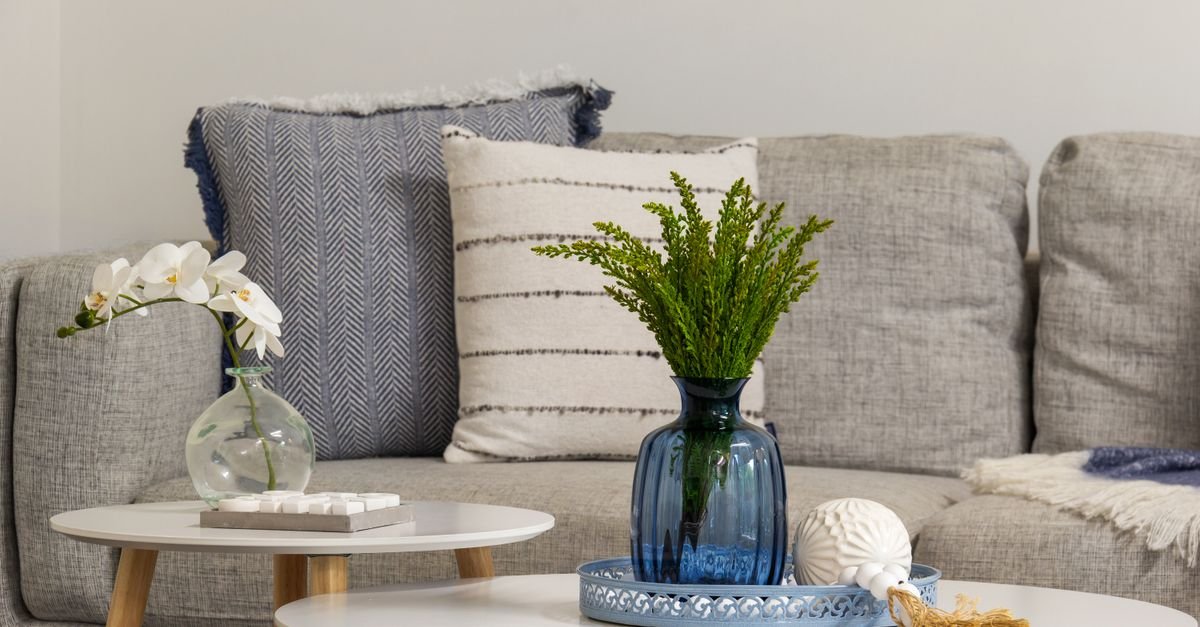
Something that grows: a small vase of fresh stems, a bud vase with a single flower, a tiny potted plant, or quality faux eucalyptus if you’d rather not maintain it.
This single element keeps the arrangement from feeling like a furniture showroom.
4. The sculptural object (your character)
One interesting form: a ceramic bowl, a carved wood chain, a stone object, a small sculpture, a found treasure from a trip.
This is the piece guests pick up and ask about. Make it personal.
5. The candle (your warmth)
A candle adds the suggestion of coziness even unlit — and lit, it transforms the room’s whole mood. A sculptural candle or one in a beautiful vessel pulls decor weight too.
Scent is half the point: our guide on how to make your house smell good pairs perfectly with this step.
How Do You Arrange It All? The Rule of Threes
Designers arrange coffee tables in zones of three — usually three groupings, or one grouping of three on smaller tables.
Odd numbers force the eye to move, which reads as dynamic and intentional. Even-numbered pairs read as static and staged. It’s the same principle professional stylists repeat in Livingetc’s designer styling guide.
Classic three-zone layout on a rectangular table: tray vignette on one third, book stack with an object on the second third, and the organic element on the final third — with empty space between.
Then apply the height triangle: one tall element, one medium, one low. If everything sits at the same height, the arrangement falls flat no matter how nice the pieces are.
How Much Empty Space Should You Leave?
More than feels natural at first: aim for a third to half of the surface staying clear.
Negative space is what makes the styled part look styled. It also keeps the table usable — a table where you can’t set down a mug isn’t decor, it’s an obstacle.
If your household actually uses the coffee table daily (most do), style two-thirds and consciously leave the “landing zone” closest to the main seat empty.
How Do You Style Different Table Shapes?
Rectangular tables
The easiest canvas. Use the three-zone layout across the length, or split into two zones plus deliberate empty space.
Round tables
Think one central vignette: a round tray in the middle with books, a small vase, and an object layered on and beside it. Round tables hate scattered edges — keep everything pulled toward the center.
Square tables
A four-quadrant grid works beautifully: style two diagonal quadrants, leave the other two open. Or center one large tray and build everything on it.
Oval and organic shapes
Follow the curve: a gentle arc of tray → books → vase along the long axis, never a rigid line.
Ottomans used as coffee tables
A firm tray is non-negotiable here — it creates the flat surface soft ottomans lack. Style entirely on the tray, nothing directly on the fabric.
What Height and Scale Rules Should You Know?
A few numbers designers carry in their heads:
- Keep tallest decor under roughly 14–16 inches so it never blocks sightlines (or the TV) across the table.
- Your largest grouping should cover no more than about one-third of the table’s surface.
- Books look best in stacks of 2–3, with the largest on the bottom, edges aligned.
- Choose a tray roughly one-third the length of a rectangular table.
And one placement note that changes rooms: the coffee table itself should sit about 14–18 inches from the sofa — close enough to reach, far enough to walk.
How Do You Mix Materials Like a Designer?
The secret to arrangements with depth: contrast at least three materials.
Pick from wood, ceramic, glass, metal, stone, and woven fibers. A woven tray + glass vase + brass object, for example, gives instant richness.
If your table is glass, prioritize substantial, opaque objects so things don’t visually float. On dark wood, cream ceramics and light stone pop. On marble, warm wood and brass keep it from feeling cold.
Tie the palette to the room: repeat one color that already exists in your pillows or art, and the table instantly belongs. The same principle drives our rug size guide — when the anchors relate, the whole room clicks.
What Are the Most Common Styling Mistakes?
The remote-control graveyard. Remotes kill vignettes. Give them a dedicated small box or hide them inside the tray — contained clutter reads as intentional.
Everything the same height. Flat arrangements disappear. Always build the tall-medium-low triangle.
Too many small objects. Ten tiny things read as clutter; three substantial things read as style. When in doubt, size up and edit down.
Ignoring scale. A lone bud vase on a 60-inch table looks lost; an oversized tray on a small round table looks swallowed.
Styling for photos, not life. If there’s nowhere to put a cup of coffee down, the styling has failed the table’s one job.
Blocking the view. Anything tall enough to interrupt conversation or screen sightlines will annoy you within a week — and get moved, permanently.
How Do You Style a Coffee Table on a Budget?
This might be the most budget-friendly corner of decorating. In order of value:
Shop your house first. Books you own, a bowl from the kitchen, a candle from the bedroom, a sprig cut from the yard. Most homes contain a styled coffee table, scattered across rooms.
Thrift the objects. Secondhand shops overflow with ceramic bowls, vases, and quirky sculptural pieces for a few dollars.
Invest in one hero piece. A genuinely beautiful tray elevates everything placed on it — it’s the one item worth buying new and well.
Free organic elements. Grocery-store flowers split into bud vases, garden clippings, even a bowl of lemons.
Build the base — our favorite Amazon searches:
How Should You Restyle Through the Seasons?
Keep your base (tray, books) and swap the accents — ten minutes, four times a year.
Spring: fresh tulips or daffodils, a lighter candle scent, maybe a pastel book on top of the stack.
Summer: a bowl of citrus or shells, greenery, crisp linen coasters.
Fall: mini pumpkins or dried grasses, amber glass, a spiced candle.
Winter: evergreen sprigs, a chunky knit coaster set, metallics, and the coziest candle you own.
Store the off-season accents in one labeled box and the swap becomes a ritual instead of a chore.
How Do You Keep a Styled Table Practical With Kids and Pets?
Style for your actual household, not an imaginary one.
With toddlers: skip glass and heavy stone objects, choose rounded-corner trays, and keep candles unlit and out of reach — or swap them for LED versions.
With cats (professional table-clearers): heavier objects survive; lightweight bud vases don’t. Woven and wood pieces bounce.
With dogs and their tails: keep breakables in the tray’s center, not the table’s edge.
A styled table that causes daily anxiety isn’t styled — it’s staged. Adjust the formula until it survives your real life.
What If Your Coffee Table Is the Problem?
Sometimes no styling can save a table that’s wrong for the room — too small for the sofa, too tall for the seat height, or simply worn out.
Quick fit-check: the table should be about two-thirds the sofa’s length, and within an inch or two of the seat-cushion height.
If yours fails the test, our roundup of modern coffee tables covers great-looking options across budgets — and then the styling formula above finishes the job.
Styling Recipes by Aesthetic: Modern, Farmhouse, and Boho
The five-element formula stays constant — the ingredients set the style. Three ready-to-copy recipes:
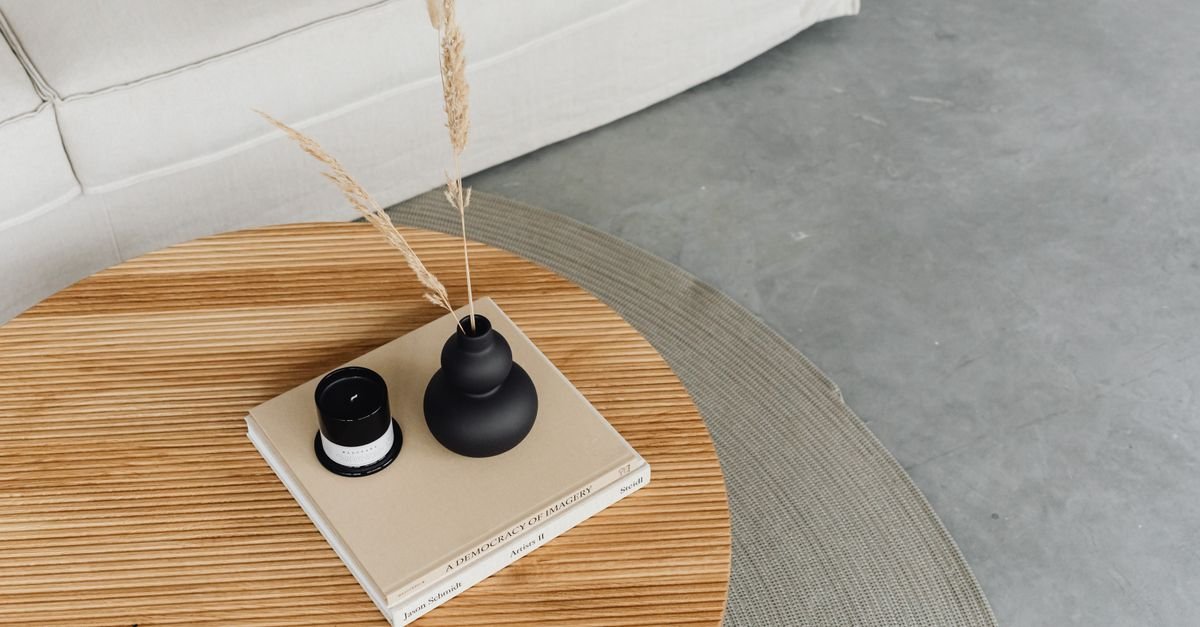
Modern/minimal: a low marble or black tray, two oversized art books in muted tones, a single sculptural ceramic in white or black, and one architectural stem in a glass vase. Strict negative space — leave half the table empty. No clutter, no cute.
Modern farmhouse: a wooden dough-bowl or woven tray, stacked linen-bound books, a small pitcher of fresh or dried greenery, a chunky candle in cream, and something aged — a brass bell, a worn wooden object. Warmth over polish.
Boho: a rattan tray, colorful art and travel books, a trailing plant instead of cut stems, an incense holder or hand-glazed trinket dish, and one global-flavor object with a story. Boho tolerates more pieces — but keep the height triangle or it tips into flea market.
Whatever the aesthetic, the skeleton underneath is the same: anchor, platform, life, character, warmth. That’s why the formula is worth memorizing — it restyles with you through every phase your living room goes through.
Frequently Asked Questions
What should you put on a coffee table?
The reliable formula: a tray to anchor, two or three stacked books, one organic element like flowers or greenery, one sculptural object, and a candle. Vary the heights and leave at least a third of the surface empty.
How do you style a coffee table without making it cluttered?
Use a tray to contain small items, limit yourself to three groupings maximum, and deliberately keep 30–50% of the surface clear. If every zone is full, remove one grouping entirely — empty space is part of the design.
What books look good on a coffee table?
Large-format hardcovers about subjects you genuinely love — travel, interiors, photography, art, food. Stack two or three with the biggest at the bottom. Their personality matters more than their color coordination.
Should a coffee table match the rest of the room?
It should relate, not match. Repeat one color or material that already exists in the room — a wood tone from the shelves, a brass accent from the lamps — and the table will feel connected without being matchy.
How do you style a small coffee table?
One vignette only: a small tray with a candle, one small stack of books, and a bud vase. Skip the multi-zone layouts — on small surfaces, restraint reads as style.
Are trays necessary for coffee table styling?
Not strictly, but they’re the closest thing to a cheat code. Trays corral objects into an intentional group, protect the surface, and let you clear the table in one lift. If you buy just one styling piece, make it a tray.
How high should coffee table decor be?
Keep the tallest piece under about 14–16 inches. Decor should never block the view across the table — whether that’s the TV or the person on the opposite sofa.
The bottom line
A beautiful coffee table isn’t about buying more things — it’s five elements, odd numbers, varied heights, and the discipline to leave space. Steal the formula, raid your own shelves tonight, and give the center of your living room the finish it’s been waiting for.

I'm Nasir Uddin Khan, founder of HomeNeeds24 and a senior IT consultant with 18+ years' experience in Oracle database administration, enterprise infrastructure and ERP system design. I write the buying guides here and I build every calculator on the site myself, from published engineering standards rather than opinion. My research is structured rather than lab-based: manufacturer specifications, safety and efficiency standards, and the trade-offs that repeat across large volumes of verified customer reviews. Where I have direct hands-on experience — smart home, networking, energy and anything computer-adjacent — I say so in the guide.