
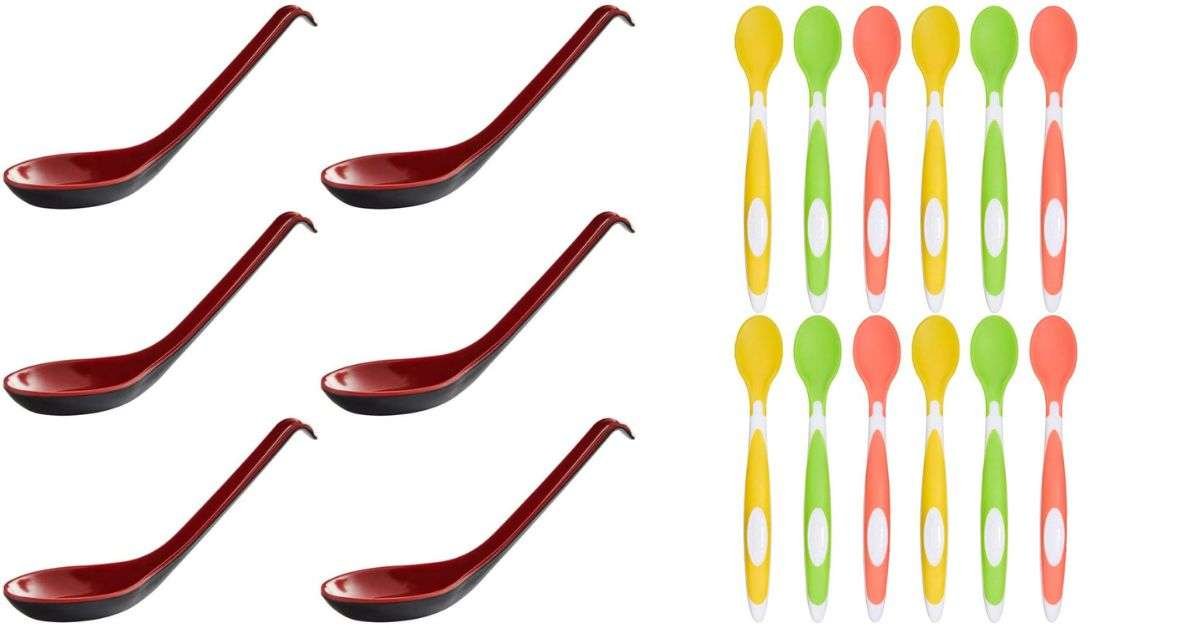
Dinner spoons, soup spoons, long drink spoons and baby-feeding spoons have different jobs. Do not compare them as a single cooking-spoon ranking. Choose the utensil category first, then check dimensions, material and care information for that purpose.
Also Read


Review scope: This is a selection guide, not a hands-on product test. The linked products are unranked references, not verified performance recommendations. Check current model details, availability and terms with the seller and manufacturer.
Start with these checks
- Identify eating, stirring or serving as the task.
- Compare bowl size and handle length.
- Check cooking-surface compatibility where relevant.
- Read washing and intended-use instructions.
Put the comparison into practice
Make separate lists for cutlery and cooking utensils. A long coffee spoon may reach a tall glass but is not automatically suitable for stirring hot food. Compare the tool with the container and follow any cooking-surface restrictions instead of choosing from appearance alone.
Further buying considerations
There are a few aspects to take into account while looking for the finest spoon to make sure you receive a product that suits your demands. The following considerations should be examined while choosing a spoon:
Material
Stainless steel, plastic, and wood are just a few of the materials used to make spoons. Each material has benefits and faults of its own. While plastic is light and inexpensive, stainless steel is robust and simple to clean. Wooden spoons are kind to cooking utensils and won’t damage non-stick coatings.
Size
It’s crucial to choose a spoon that is the right size for you as they come in various sizes. While a bigger spoon works better for cooking and serving, a smaller one is perfect for stirring coffee or tea.
Handle
A spoon’s handle should be cozy to hold and simple to grasp. In order to avoid breaking or bending with usage, look for a spoon with a strong handle.
Additional Features
A built-in measuring tool or a flat edge for scraping are two extra functions that some spoons have. Before making a purchase, think about whether you would find these features beneficial.
You may choose the ideal spoon for your requirements by taking into account these variables.
Before deciding
Record the exact item, the requirements it must meet and the source of each answer. Leave missing details marked unknown and ask the seller to clarify them. Check the complete delivered cost and the return conditions for that specific item; neither a similar model nor a listing photo resolves unanswered questions.
Unranked product references
These links identify options mentioned in the original article. They are not a tested shortlist, and a listing title is not an independently checked specification. Use them only after applying the criteria above.
- BEWOS 24 Pieces Dinner Spoons Set
- CMC Products Asian Soup Spoons
- Rainspire Long Coffee Spoons
- Solimo Soft Tip Baby Spoons
- Amazon Basics Stainless Steel Dinner Spoons with Pearled Edge
Affiliate disclosure: As an Amazon Associate, HomeNeeds24 earns from qualifying purchases. See the affiliate disclosure for details.

I'm Nasir Uddin Khan, founder of HomeNeeds24 and a senior IT consultant with 18+ years' experience in Oracle database administration, enterprise infrastructure and ERP system design. I write the buying guides here and I build every calculator on the site myself, from published engineering standards rather than opinion. My research is structured rather than lab-based: manufacturer specifications, safety and efficiency standards, and the trade-offs that repeat across large volumes of verified customer reviews. Where I have direct hands-on experience — smart home, networking, energy and anything computer-adjacent — I say so in the guide.