
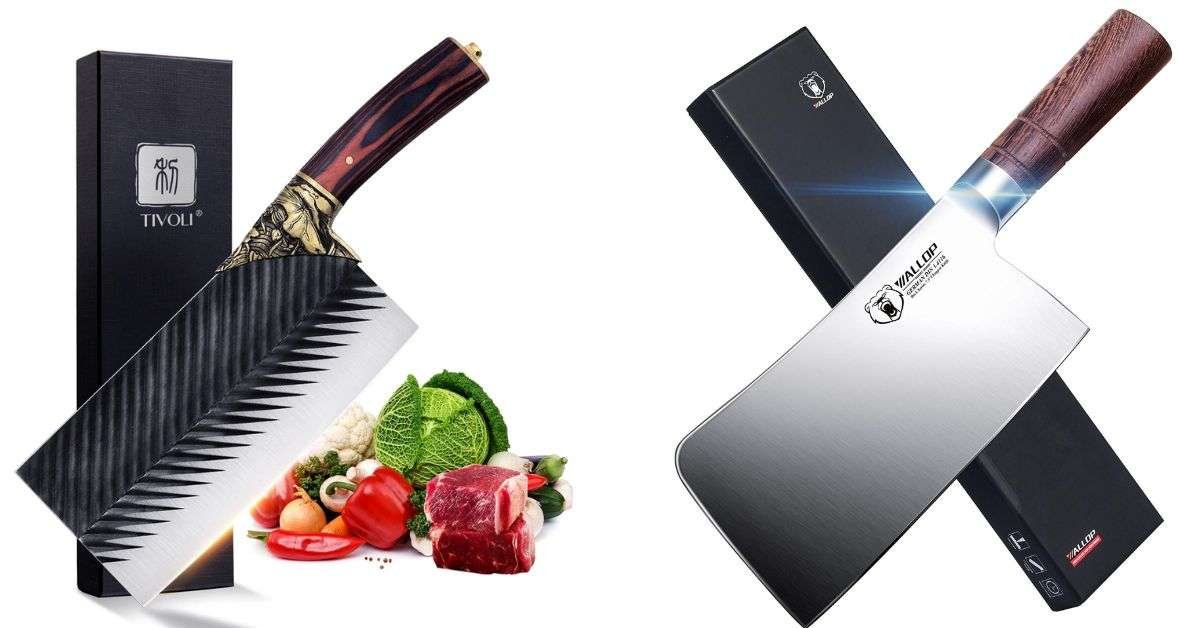
A broad rectangular blade is not automatically intended for chopping bones. Identify whether the manufacturer describes it as a vegetable cleaver, slicing knife or heavy chopping cleaver. Match the intended task and weight to the cook’s handling preference.
Also Read



Review scope: This is a selection guide, not a hands-on product test. The linked products are unranked references, not verified performance recommendations. Check current model details, availability and terms with the seller and manufacturer.
Start with these checks
- Read the stated cutting purpose.
- Compare blade length and weight.
- Check handle dimensions and grip.
- Plan storage and sharpening appropriate to the blade.
Put the comparison into practice
If the intended task is chopping vegetables, compare the knife’s stated purpose with that task instead of choosing the heaviest blade. Ask the seller to clarify ambiguous cleaver descriptions. The cutting board, storage space and handling preference should be part of the same comparison.
Further buying considerations
Blade Material
The blade material is an essential factor to consider when choosing a Chinese chopping knife. High-carbon stainless steel is a common material used in the construction of Chinese cleavers, as it is durable and can hold a sharp edge. Other materials, such as carbon steel, may also be used, but they require more maintenance.
Blade Shape
Chinese chopping knives come in different blade shapes, such as rectangular, curved, and pointed. The shape of the blade affects the knife’s performance, so it’s important to choose one that suits your needs. A rectangular blade is ideal for chopping vegetables, while a curved blade is better for slicing meat.
Blade Thickness
The thickness of the blade is another important factor to consider. A thicker blade is more durable and can handle heavy-duty chopping tasks, while a thinner blade is better for precision slicing.
Weight
The weight of the knife is also an important consideration. A heavier knife can handle tough chopping tasks, while a lighter knife is better for precision slicing.
Before deciding
Record the exact item, the requirements it must meet and the source of each answer. Leave missing details marked unknown and ask the seller to clarify them. Check the complete delivered cost and the return conditions for that specific item; neither a similar model nor a listing photo resolves unanswered questions.
Unranked product references
These links identify options mentioned in the original article. They are not a tested shortlist, and a listing title is not an independently checked specification. Use them only after applying the criteria above.
- TUO Cleaver Knife
- JapanBargain Butcher Knife
- WALLOP Bone Chopper – 7.5 inch Meat Cleaver Knife
- TIVOLI Chopping Knife
- TJ POP Meat Cleaver Knife
Affiliate disclosure: As an Amazon Associate, HomeNeeds24 earns from qualifying purchases. See the affiliate disclosure for details.

I'm Nasir Uddin Khan, founder of HomeNeeds24 and a senior IT consultant with 18+ years' experience in Oracle database administration, enterprise infrastructure and ERP system design. I write the buying guides here and I build every calculator on the site myself, from published engineering standards rather than opinion. My research is structured rather than lab-based: manufacturer specifications, safety and efficiency standards, and the trade-offs that repeat across large volumes of verified customer reviews. Where I have direct hands-on experience — smart home, networking, energy and anything computer-adjacent — I say so in the guide.