

Choosing a kids’ desk is an ergonomics decision disguised as furniture shopping: the desk must meet the CHILD’s height (elbows at 90 degrees, feet flat or on a rest), grow with them (adjustable beats replaceable), and hold a system (storage within reach, light from the correct side, distractions out of the sightline). Get those right and homework happens at the desk instead of migrating to the kitchen table; get them wrong and the desk becomes the most expensive laundry shelf in the house.
Also Read


With back-to-school weeks away, this is the complete buying and setup guide: sizing by age, the desk types ranked honestly, the small-room solutions, the lighting-and-chair pairing that protects growing eyes and backs, and the setup that survives September’s enthusiasm into February.
Key Takeaways
- Fit rule one: elbows at 90 degrees on the desktop, feet flat on floor or footrest, knees clearing the desk — measure the child, not the room.
- Height-adjustable desks (and chairs) cover years of growth spurts — the single best value feature in the category.
- Desk depth matters more than width for laptops-plus-books: 20+ inches keeps the screen at arm’s length.
- Small rooms have real options: loft-bed desks, wall-mounted fold-downs, and corner units — the desk should never cost the floor-play space young kids still need.
- Task lighting comes from the OPPOSITE side of the writing hand; the room’s brightest distraction (window, door, screens) goes out of the sightline.
- The desk is a system: supplies within reach, a launch spot for the backpack, and a homework rhythm — furniture alone changes nothing.

Fit First (The Measurements That Decide Everything)
The ergonomic triangle for a seated child: elbows bent at roughly 90 degrees when forearms rest on the desktop; feet flat on the floor (or a footrest — a sturdy box works); and thighs clearing the desk underside with room to fidget. When those three hold, posture holds — and homework sessions stop ending in slumps and complaints.
The age translation (approximate, always verify against YOUR child): preschool desks run low; early-elementary kids typically want desktop heights in the low 20-inch range; tweens climb toward the adult 28–30 inches. The honest problem: children grow through three desk heights between kindergarten and middle school — which is why adjustability is the money feature.
Chair before desk, always: a height-adjustable chair with foot support fits a fixed desk to a growing child for years, and it costs less than desk replacement. An adult chair a child swims in is the most common ergonomic fail in home study spaces — dangling feet tire kids out faster than the homework does.
The Desk Types, Ranked Honestly
The Height-Adjustable Desk (The Category Winner)
Crank, pin, or electric — a desk that moves from age six to sixteen is the buy-once answer, and models built for kids now cost what fixed desks did a few years ago. Check adjustment range against your child’s current fit and the teen height to come; the frame outlasts several bedroom redesigns. (Grown-up versions rank in our standing desk roundup — teens increasingly use sit-stand too.)
The Classic Fixed Desk With Drawers
The traditional choice, right when bought at the right height with an adjustable chair: solid, storage-rich, hand-me-down-able. Prefer drawers on ONE side (leg room beats symmetry) and rounded corners for shared rooms.
The Loft-Bed Desk (The Small-Room Hero)
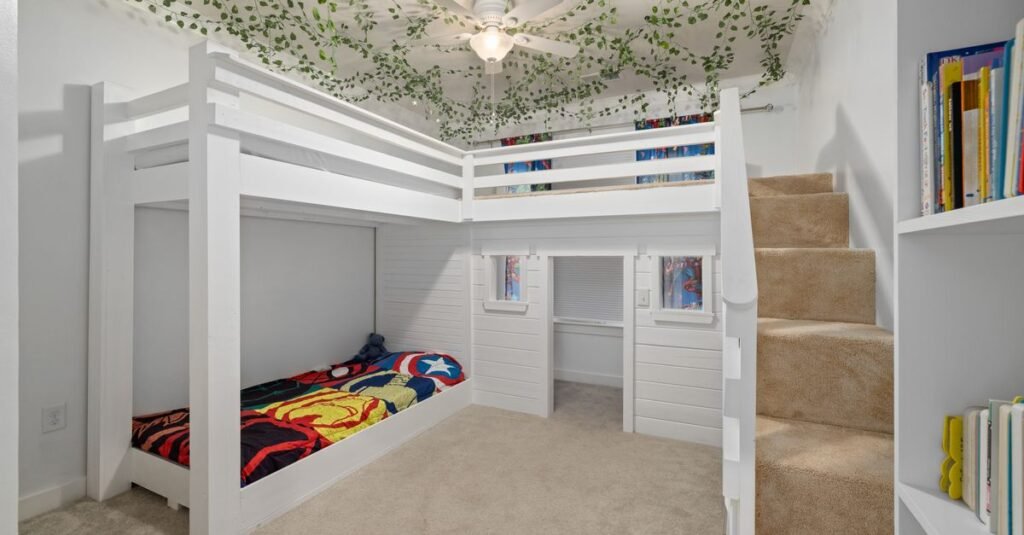
Bed above, study cave below — the space-doubler every shared and small room should consider, with two honest caveats: bottom-bunk desks are dim (add real task lighting) and the cave becomes a clutter magnet without the weekly reset. Age gate per the bed’s rules; the room logic pairs with our toddler room and toy storage systems as kids graduate.
The Wall-Mounted Fold-Down
The studio-apartment trick, sized for kids: a hinged desktop that folds flat when play needs the floor. Anchor into studs, add a wall organizer above, and it converts any bedroom corner into a study nook at zero floor cost.
The Skip Tier
Character-themed desks (outgrown by the second school year, per the toddler-room accent rule), glass tops (fingerprints, glare, and nerves), and adult executive desks “they’ll grow into” — a child at a too-big desk writes with shoulders at their ears.
The study-area design walkthrough above shows the fit, lighting, and layout principles applied to a real kid’s room — the visual companion to every rule here.
Placement and Light (The Free Performance Upgrades)
Position: desk facing a wall or side-on to the window beats facing the window (backlight glare) or facing the room (every passing sibling is an event). If the room allows, the door in peripheral view calms kids who dislike backs to doors — the same instinct the litter-box guide describes in cats applies, amusingly, to eight-year-olds.
Light: daylight from the side, task lamp on the side OPPOSITE the writing hand (right-handed = lamp left) so the hand never shadows the page, warm-to-neutral bulb, and positioned to light the work without glaring the screen. An adjustable-arm lamp earns its cost across a decade of homework.
Screens: monitor or laptop top edge at eye level (a stack of books works), arm’s-length distance — the 20-inch desk depth rule — and charging OUTSIDE arm’s reach for the phone years, which arrive faster than anyone budgets for.
The Storage System (Within Reach, Not On Top)
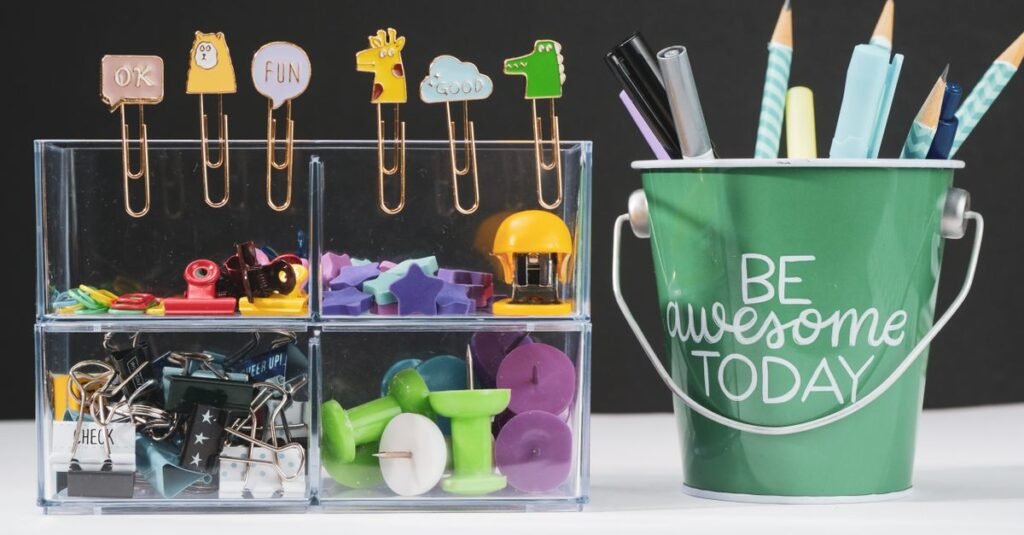
The desktop itself stays nearly bare: lamp, current work, pencil cup — clutter on the surface is friction before every session. Everything else lives one reach away: a rolling three-drawer cart beside the desk (the universal kids-desk companion — supplies top, paper middle, projects bottom), a wall rail or pegboard above (schedules, art, the week’s spelling list), and a single “finished work” tray that ends the crumpled-paper backpack archaeology.
The label rule from our toy-storage system applies at the desk too: picture-or-word labels on every drawer turn tidying into sorting, and the ten-minute Sunday desk reset (with the child driving) keeps September’s system alive through spring.
Setups by Age (The Growth Map)
Ages 4–6: a low table more than a desk — art and play first, no homework pressure; storage in open bins; the “desk habit” is just sitting to draw.
Ages 7–10: the real first desk — adjustable if possible, homework-length sessions short, parents nearby (many kids this age genuinely work better at the kitchen-adjacent desk than isolated in bedrooms — follow the child, not the catalog; our homework station guide covers the whole-family version).
Ages 11–14: privacy starts winning — bedroom desks earn their keep, screens enter, the charging-dock rules matter, and the chair upgrade pays for itself in posture.
Ages 15+: functionally an adult workstation — sit-stand consideration, real monitor, and the desk quietly becomes the college packing list’s first item.
The through-line: buy adjustable at seven and the same frame serves the whole map — one desk, three chairs, a decade of homework.
The Budget Build (The Whole Station Under Real-World Money)
The category rewards thrift better than the catalogs admit. The frame: secondhand desks are everywhere (offices upgrade constantly), and a sturdy adult desk CUT DOWN — legs trimmed to the child’s measurement — is the classic budget move for fixed-height finds; an IKEA trestle-and-top build runs modest and adjusts by trestle setting.
The chair: this is where the budget actually goes — a proper adjustable children’s task chair secondhand beats a new novelty chair every time, and the footrest is a free box until it’s a purchased one.
The extras that cost little and matter: the clamp-arm lamp (buy once, re-clamp for a decade), the rolling cart (the hardest-working furniture in the room), and cable clips that keep the charging story tidy from day one.
Where NOT to save: anchoring anything tall beside the desk (the toddler-room stud rule never expires), chair adjustability, and light quality — the three purchases the child’s body and eyes actually feel. Skip entirely: desk-sized gadget organizers sold per-gadget; one cup and one tray outlast them all.

Frequently Asked Questions
What height should a kids’ desk be?
Whatever puts THEIR elbows at 90 degrees with feet flat — roughly low-20s inches for early elementary, rising toward adult 28–30 inches by the teens. Height-adjustable desks and chairs cover the growth between; a footrest fixes a desk that runs slightly tall.
Are height-adjustable desks worth it for kids?
They’re the category’s best value: children grow through about three desk heights during school years, and one adjustable frame replaces that sequence. Pair with an adjustable chair and the setup fits from first grade to graduation.
Where should a desk go in a kid’s room?
Facing a wall or side-on to the window, with the door in peripheral view and the room’s distractions out of the sightline. Task light comes from the side opposite the writing hand.
What about small rooms with no desk space?
Loft-bed desks double the footprint, wall-mounted fold-downs cost zero floor space, and corner units use the dead angle — all three keep floor-play space, which younger kids still need more than desk hours.
Should kids do homework in their room or at the kitchen table?
By child, honestly: many under-tens focus better near a parent (a proper kitchen-adjacent station beats a lonely bedroom desk), while tweens increasingly need the quiet room. Build the setup where the child actually works, not where the catalog puts it.
What makes kids actually use their desk?
Fit (comfort keeps them seated), a clear surface with supplies one reach away, decent light, and a consistent homework rhythm attached to it. A desk that hurts, dazzles, or buries the work under clutter loses to the kitchen table every time.
The Shared and Sibling Desk (One Surface, Two Students)
Shared desks work when ownership is engineered: split the drawers or carts BY CHILD (one each, labeled — never communal), stagger homework slots where ages differ, and give each child one personal desktop item (their lamp color, their pencil cup) so the territory reads fairly.
The long-desk alternative for shared rooms: a countertop or long top on two file cabinets makes a two-seat workbench cheaper than two desks — with a visual divider (a plant, a lamp, a caddy) marking the border that prevents the elbow wars.
The homework-time reality of shared rooms: one child’s desk session is the other’s play temptation — the sightline and headphone rules from our homework-station system carry double weight, and some families run the simplest fix of all: the shared desk plus one floating kitchen-table slot, rotated weekly.
Screens, Charging, and the Desk’s Teen Future
The desk you buy at seven inherits a screen ecosystem by twelve, so wire the rules early: charging happens at the desk’s dock — but phones charge OUT of reach during homework (the basket trick), gaming setups earn their own zone-or-schedule separate from homework identity, and the cable situation gets clips and a surge strip on day one, because retrofitted cable chaos never fully recovers.
Monitor-arm and sit-stand upgrades land naturally in the teen years on an adjustable frame — one more argument for buying the good bones early. The desk that grows up WITH the child costs less than the sequence of desks that each got outgrown — which is the quiet thesis of this whole guide.
The First-Week Setup Ritual (Making the Desk THEIRS)
A desk becomes used the week it becomes owned, and ownership is buildable: the child helps assemble (even just handing bolts — IKEA duty is bonding), chooses the pencil-cup color and one desk decoration (bounded choice, real stake), labels their own drawers, and christens the desk with something FUN — a drawing session, not a worksheet — so the first association is pleasure, not obligation.
Then the habit anchor: same time, first week, parent nearby, sessions short — and the desk introduced as where good work happens, never where punishment sits (the desk-as-timeout move poisons the furniture permanently).
Week two, the handover: the child runs the end-of-session reset (chair in, surface clear, tomorrow’s stack ready) — ninety seconds that transfers the desk’s management to its actual user, which was the plan all along.
One last measurement note: re-check the elbow-and-feet fit every school year — growth spurts silently break setups that fit in September, and a two-minute chair adjustment each fall keeps the ergonomics honest through graduation.
The Bottom Line
A kids’ desk is bought with a tape measure and kept with a system: elbows at 90, feet flat, light from the correct side, supplies one reach away, and an adjustable frame that grows through the spurts.
Fit the child, wire the habit, and the September desk becomes the February desk — which is the entire return on investment this category has to offer.

I'm Nasir Uddin Khan, founder of HomeNeeds24 and a senior IT consultant with 18+ years' experience in Oracle database administration, enterprise infrastructure and ERP system design. I write the buying guides here and I build every calculator on the site myself, from published engineering standards rather than opinion. My research is structured rather than lab-based: manufacturer specifications, safety and efficiency standards, and the trade-offs that repeat across large volumes of verified customer reviews. Where I have direct hands-on experience — smart home, networking, energy and anything computer-adjacent — I say so in the guide.