
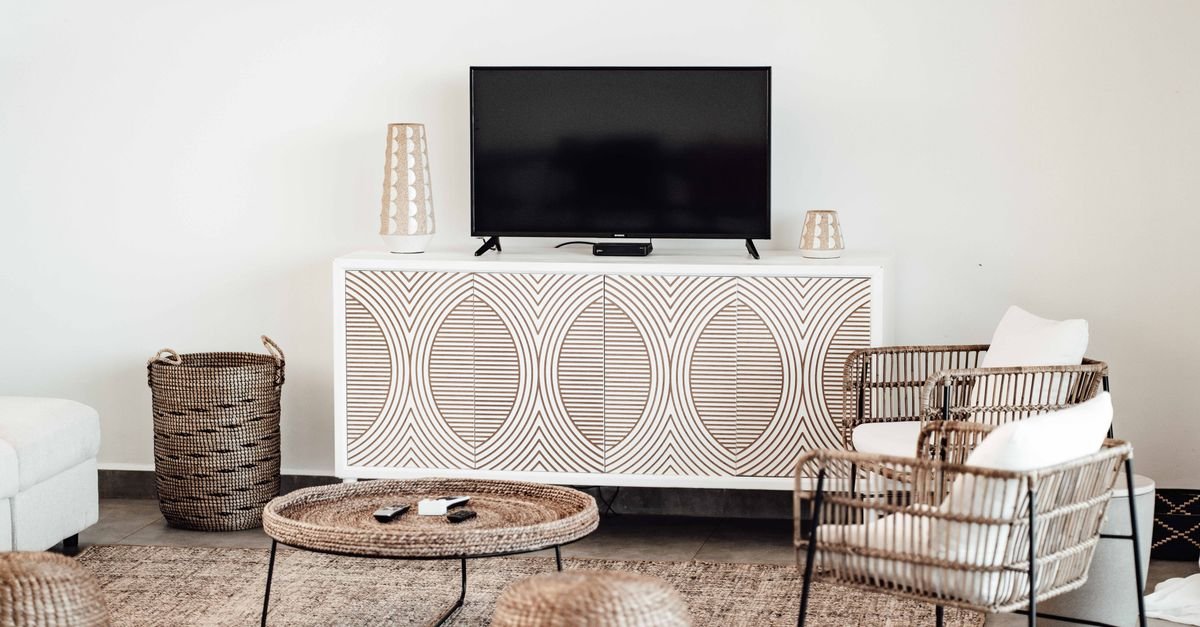
Rattan is having its biggest year in decades — searches up over 60% — and buying it well comes down to three distinctions the listings blur: rattan is a MATERIAL (a climbing palm) while wicker is a WEAVE (any material can be wickered); natural rattan belongs indoors or under full cover while synthetic all-weather rattan owns the open patio; and quality lives in the frame and the weave density, not the styling photos. Learn those three and every rattan purchase — armchair, headboard, pendant, or full patio set — sorts itself.
Also Read



This is the complete rattan guide: material vs. weave decoded, natural vs. synthetic by room, the quality checklist, styling that keeps it 2026 rather than 1976, and the care routine that makes good pieces heirlooms.
Key Takeaways
- Rattan = the material (a fast-growing palm vine); wicker = the weaving technique. “Wicker furniture” can be rattan, willow, bamboo, or plastic.
- Natural rattan: indoors and covered porches only — sun dries and cracks it; rain molds it. Synthetic (resin/PE) rattan: built for open weather.
- Quality tells: a solid rattan or aluminum frame, tight even weave, wrapped (not stapled-only) joints, and real weight in the hand.
- The 2026 styling move: one or two rattan statements per room against calm backgrounds — not the full matching jungle-suite.
- Care is easy: dust the weave, wipe with barely-damp mild soap, never soak, and re-tighten with light humidity if natural rattan gets brittle.
- Cane webbing (the open honeycomb weave) is rattan’s skin — the trending headboards and cabinet fronts all use it.

Rattan vs. Wicker vs. Cane (The Three Words, Finally Sorted)
The furniture aisle’s most persistent confusion, solved in one paragraph: RATTAN is a plant — a solid-core climbing palm that grows fast, bends under steam, and holds astonishing strength for its weight; it is the material. WICKER is a technique — the act of weaving; wicker furniture may be woven from rattan, willow, seagrass, bamboo strips, or synthetic resin. CANE is rattan’s outer bark, peeled and woven into the open honeycomb webbing you see on chair seats, trending headboards, and cabinet doors.
Why the vocabulary matters at checkout: a “wicker” set tells you nothing about weather-worthiness until you know what it’s woven FROM — and “rattan-style” or “rattan-look” in a listing is the tell for synthetic resin, which is exactly what you want outdoors and exactly what you might not want in a living room aiming for natural warmth.
The video below — a hands-on tour of cane and rattan materials — makes the distinctions visible in two minutes.
Natural or Synthetic (The Placement Decision)
Natural Rattan: The Indoor Star
Real rattan brings what the trend is actually chasing: organic texture, honeyed tone, lightweight strength, and the craft feel of a woven thing. Its rules: indoors, sunrooms, and genuinely covered porches; away from radiators and relentless direct sun (which dry it to cracking); and never left wet. Treated well, natural rattan runs decades — vintage pieces from the seventies are being resold right now at premiums, which tells you the lifespan story.
Synthetic (All-Weather) Rattan: The Outdoor Workhorse
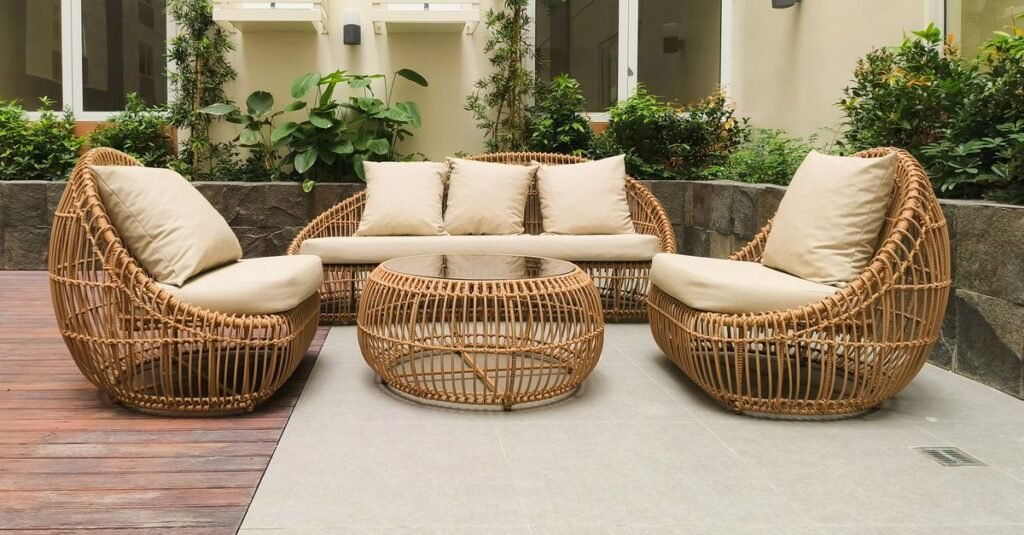
Resin or polyethylene weave over aluminum frames — UV-stabilized, rain-proof, hose-cleanable — is what every “rattan” patio set actually is, and should be. Quality grades vary hugely: flat PE wicker with a powder-coated aluminum frame is the durable tier; thin round plastic over steel is the two-summer tier. The weight test works: quality synthetic sets feel substantial; bargain ones lift like toys.
The hybrid rule for covered-but-open spaces (roofed patios, three-season rooms): synthetic frames with natural-fiber cushions and accessories give the look with the weather insurance — and pair beautifully over an outdoor rug.
The Quality Checklist (Five Checks Before Any Purchase)
One: the frame — solid rattan poles or welded aluminum, not stapled thin steel; wobble the piece gently and listen for creaks that mean loose joints. Two: the weave — tight, even, no gaps or already-fraying strands; density is durability. Three: the joints — wrapped bindings (leather or rattan peel) over structural points beat visible staples and glue blobs. Four: the finish — smooth to the hand, no splinters or cracked lacquer on natural pieces; even color with UV rating stated on synthetic. Five: the sit test — a quality rattan chair flexes slightly and springs back; a poor one crunches.
Price honesty for the trend year: rattan’s popularity has flooded the market with fast, thin pieces at premium prices — the label “rattan” alone no longer signals quality. Vintage and secondhand natural rattan is the category’s best value right now: older pieces were built heavier, and a sound frame with tired cushions costs less than a new hollow one.
Styling Rattan in 2026 (Warm, Not Theme-Park)
The current look uses rattan as PUNCTUATION: one statement armchair against a calm sofa, a cane-front sideboard under a plain wall, a woven pendant over the neutral dining table, a headboard as the bedroom’s single texture event. The seventies sunroom effect — everything matching, everything woven — is exactly what the modern take avoids.
Pairings that work: rattan + linen and bouclé (texture conversation), rattan + deep greens and terracotta (the earth palette it was born for), rattan + black metal accents (keeps it current, not costume), and rattan + abundant plants (the natural alliance — in moderation). The whole-room logic lives in our home styling playbook.
Room-by-room quick hits: living rooms take the accent chair or coffee table; bedrooms take the headboard or pendant; entryways love a woven bench with a mirror; bathrooms handle small rattan (baskets, mirrors) but not furniture (humidity swings); and outdoors, the full synthetic conversation set finally earns the matching treatment our budget patio roundup covers.

Care and Repair (The Decade-Long Ownership Manual)
Routine: dust the weave with a soft brush or vacuum brush attachment monthly (grit in the weave abrades as it shifts), wipe with a barely-damp cloth and a drop of mild soap as needed, and dry immediately — natural rattan’s one enemy is standing moisture.
Seasonal, for natural pieces: if a dry winter leaves the weave brittle or squeaky, a light misting followed by air-drying restores flexibility (rattan is a plant; it likes a LITTLE humidity), and a wipe of boiled linseed oil once a year feeds gloss back into tired frames.
Repairs worth doing: loose wrap bindings re-glue in minutes; sagging cane seats tighten with the classic wet-towel trick (dampen the underside, let it dry taut); and individual snapped strands weave back with repair cane from craft suppliers. Repairs worth outsourcing: full seat re-caning and structural frame breaks — both cheaper than replacing a quality piece.
Synthetic care is almost insultingly easy: hose, mild soap, soft brush, done — plus cushion storage and a winter cover, per the same off-season rules as the rest of the patio.
The Vintage-Hunting Guide (Where the Real Value Hides)
With new rattan prices inflated by the trend, the secondhand market is the category’s open secret — estate sales, marketplace listings, and thrift stores are full of seventies and eighties natural rattan built heavier than most of today’s stock.
The inspection ritual: lift it (real vintage rattan has satisfying heft), press the weave in several spots (springy is healthy; crackly means dried-out — recoverable; crumbly means walk away), check the joints for original wrapping versus amateur glue repairs, and sniff for mildew — the one flaw that rarely fully leaves.
The rehab math that makes it worth it: a sound-framed vintage piece plus new cushions plus an afternoon of cleaning and linseed oil routinely lands a better chair than triple the money buys new. Peacock chairs, bar carts, and full bedroom sets are the classic finds; cane-fronted case pieces are the current-trend jackpot.
The one vintage caution: painted rattan hides sins — flaking paint over weave is a restoration project, not a bargain; factor honest hours or keep hunting.
Frequently Asked Questions
What is the difference between rattan and wicker?
Rattan is a material — a solid climbing palm; wicker is a weaving technique that can use rattan, willow, bamboo, or synthetic resin. All rattan furniture with woven parts is wicker; not all wicker is rattan.
Can rattan furniture go outside?
Natural rattan, no — sun cracks it and rain molds it; covered porches are its limit. Synthetic (resin/PE) rattan over aluminum frames is built for open weather and cleans with a hose.
How can I tell good quality rattan furniture?
Check the frame (solid rattan or welded aluminum), weave tightness, wrapped joints, smooth finish, and overall weight — quality feels substantial and flexes slightly without creaking. Vintage natural rattan is often better-built than new fast-furniture versions.
How do I clean rattan furniture?
Dust the weave regularly with a soft brush or vacuum attachment, wipe with a barely-damp cloth and mild soap, and dry immediately — never soak natural rattan. Synthetic rattan tolerates a gentle hose-down.
Why is my rattan cracking or sagging?
Cracking means it dried out — too much sun or heating-season air; a light misting restores flexibility and relocation prevents recurrence. Sagging cane seats re-tighten by dampening the underside and letting it dry taut.
Is rattan furniture still in style for 2026?
Strongly — searches keep climbing — but the styling has changed: one or two woven statements against calm, modern backgrounds, warm earth palettes, and cane-webbing details. The all-matching woven suite is the one look to skip.
Rattan’s Cousins (The Woven-Furniture Family Tree)
The aisle mixes several materials under the woven umbrella, and each has its own rules. Bamboo: rigid poles rather than bendable vine — strong, straight-lined, less curvaceous than rattan; the two get confused constantly and care for similarly. Seagrass and water hyacinth: soft, rope-like weaves for baskets, headboards, and light seating — beautiful texture, lower structural strength, strictly indoor. Willow: the classic basket wicker — rustic, cottage-coded, and happiest as accessories.
Paper cord and Danish weave: the mid-century chair seats — durable, refined, and repairable by specialists; if you inherit one, it’s worth more than it looks. And the synthetics: flat PE “wicker” (the quality outdoor tier) versus round thin PVC (the bargain tier that cracks by summer three) — the flat-weave test is the two-second quality read on any patio floor model.
Why the family tree matters at checkout: listings borrow prestige words freely — “rattan-style,” “wicker-look,” “natural weave” — and the material line in the specs is the only sentence that binds. Read it the way you read a fabric tag, and the woven aisle stops being a gamble.
The Cushion Question (Where Rattan Comfort Actually Lives)
Rattan seating is only as comfortable as its cushions, and the cushion decisions outlast the frame ones: indoor pieces take standard inserts in covers that echo the room’s palette (the earth tones of the current look love rust, cream, and olive), while outdoor synthetic sets demand genuinely outdoor-rated foam and fabric — quick-dry cores and solution-dyed covers, or the cushions mildew inside a month of dew.
The refresh economics: new cushions revive a tired set for a fraction of replacement — the vintage-rattan rehab’s biggest line item and still its best value. Measure the seat platform, buy covers zippered for washing, and store outdoor cushions in the deck box between uses — the habit that doubles their life and keeps the whole set guest-ready.
Rattan and Real Life (Pets, Kids, and the Durability Truth)
The scratching-post problem is real: cats read rattan weave as sisal’s cousin, and a beloved piece needs either a better-placed actual scratcher (the redirect that usually works), citrus deterrent on the tempting corner, or acceptance that the side table is now textured. Puppies in the chewing year and natural rattan should simply not share rooms unsupervised.
Kid-resilience is better than the delicacy reputation suggests: quality rattan flexes where hard furniture chips, weighs little enough to survive toppling, and its rounded forms are friendlier than most coffee-table corners — one reason the woven toy basket and kids-room pendant are the family home’s safest rattan entries.
The real-life placement rule: high-traffic homes lead with rattan ACCENTS (baskets, pendants, mirrors, case-piece fronts) and graduate to seating as the household calms — the trend survives contact with actual living when it enters by the accessory door.
The parting checkout rule: read the material line, lift the piece, press the weave — thirty seconds that outperforms every product photo ever staged, in a category where the photos do most of the lying.
The Bottom Line
Rattan rewards exactly three disciplines: know your words (material vs. weave vs. bark), place by weather (natural in, synthetic out), and buy by frame and weave rather than photo styling.
Do that, dust it occasionally, and the trend piece of 2026 quietly becomes the vintage piece someone fights over in 2046 — which has always been rattan’s actual trick.

I'm Nasir Uddin Khan, founder of HomeNeeds24 and a senior IT consultant with 18+ years' experience in Oracle database administration, enterprise infrastructure and ERP system design. I write the buying guides here and I build every calculator on the site myself, from published engineering standards rather than opinion. My research is structured rather than lab-based: manufacturer specifications, safety and efficiency standards, and the trade-offs that repeat across large volumes of verified customer reviews. Where I have direct hands-on experience — smart home, networking, energy and anything computer-adjacent — I say so in the guide.