

Working from outside — searches up over 20% this year — succeeds or fails on four solvable problems: screen glare (shade and screen position beat brightness sliders), power (one outdoor-rated extension solves most setups), WiFi reach (usually fine; a cheap extender when not), and comfort that lasts past the first hour (real chair, real table height, weather micro-management). Solve those four and the patio becomes the best office you’ve ever had; skip them and the dream dies by the second video call.
Also Read


This is the complete outdoor office guide: the three setup tiers from “laptop on the patio table” to the garden office shed, the glare-and-power playbook, the meeting-readiness checklist, and the seasonal rhythm that stretches outside-work from April to November.
Key Takeaways
- Glare is the number-one dream-killer: face INTO the shade with the bright sky behind the screen, never behind you.
- Tier one costs nothing: existing patio table, supportive chair swapped in, laptop stand, and a shaded corner — test the lifestyle before buying it.
- Power safety is non-negotiable: outdoor-rated (and GFCI-protected) cords only; daisy-chained indoor strips on dewy patios are how surge stories start.
- The webcam test decides meeting-readiness: light on YOUR face, wind out of the mic, and a background that reads “garden” not “glare.”
- Comfort math: laptop stands + separate keyboard fix the hunch; a cushion fixes nothing about a bistro chair’s third hour.
- The garden office shed is a real tier — but it’s earned by months of tier-one habit, not bought ahead of it.
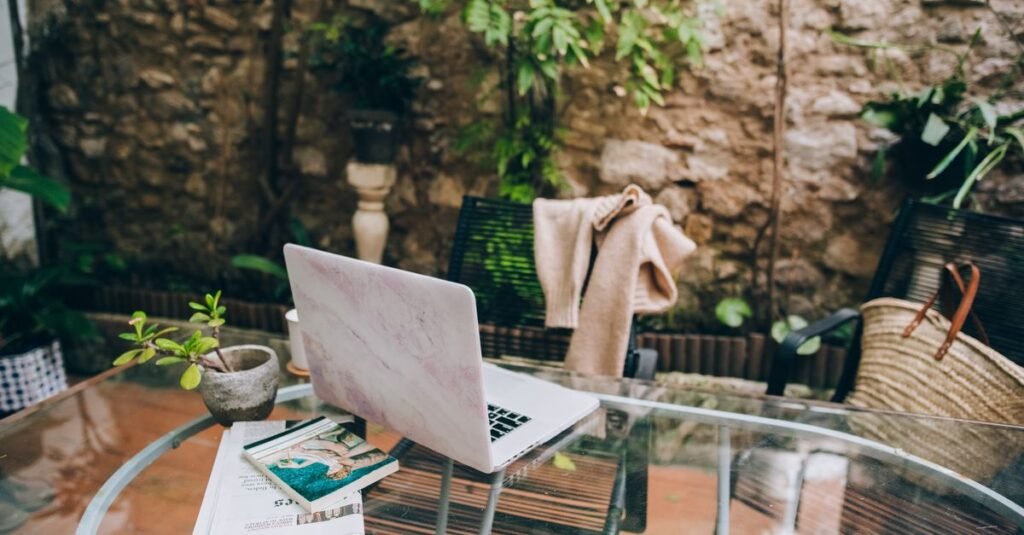
Tier One: The Zero-Dollar Test (Start Here, Today)
Before any purchase, run two weeks on what you own: the existing patio or balcony table, the most supportive indoor chair you can carry out (dining chair with cushion beats every bistro chair made), the laptop on a stand or book-stack with a cheap external keyboard, and a position chosen by shade first, view second.
The two-week test answers the only question that matters: do you actually work well out here? Track honestly — deep-work sessions thrive outside for most people; heavy spreadsheet-and-multi-monitor days often don’t. The answer designs your tier two: full-time outdoor mornings justify real furniture; occasional sessions justify a better chair and nothing else.
The instant fixes that upgrade tier one for pocket change: a clip-on umbrella or parasol angle-adjusted to kill screen glare, the outdoor rug that turns a slab corner into a “room,” and a bug plan per our mosquito playbook — a fan across the workspace does double duty as summer comfort.
The Glare-and-Screen Playbook (The Physics Half)
The rule that fixes 80% of outdoor screen misery: put the brightest light BEHIND the screen and IN FRONT of you — you face into shade (a wall, hedge, pergola interior), the sky lights your face for calls, and the screen shows you pixels instead of your own reflection.
The supporting moves: max screen brightness (outside is the one place it earns its battery cost), dark-mode interfaces (less mirror effect), a matte screen protector for glossy laptops (the single best cheap purchase in this genre), and working during the soft-light bookends of the day — morning and late afternoon outshine high noon for both screens and comfort.
Shade architecture, in escalating commitment: position (free), umbrella (flexible), shade sail (cheap, permanent-ish, and the modern look), pergola with cover (the room-maker — and where the string lights turn late work sessions pleasant), and finally the roofed structure that graduates into tier three.
The backyard-office build above shows the full tier-three journey — and, usefully, everything its owner learned about power, WiFi, and weather on the way.
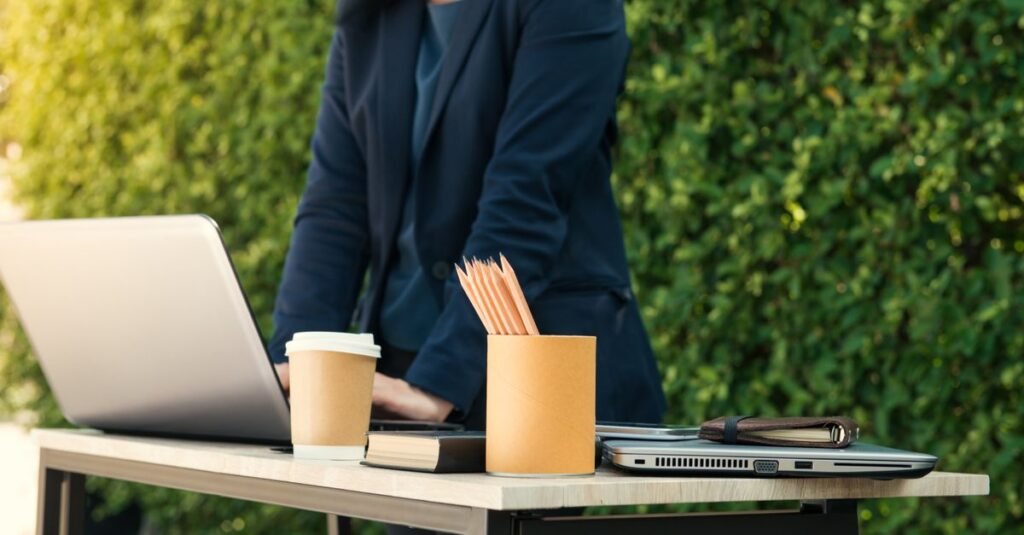
Power, WiFi, and the Meeting Checklist (The Logistics Half)
Power: one outdoor-rated extension cord from a GFCI-protected outlet, routed where nobody trips, powering a small weatherproof power strip at the table — laptop, phone, fan. Indoor cords and dew are a genuinely bad marriage; the outdoor-rated upgrade costs little and retires the risk. High-use setups eventually earn a proper exterior outlet — an electrician hour, worth it at tier two.
WiFi: test first (most patios sit fine on the house signal); a plug-in extender by the nearest indoor wall fixes weak spots; and hotspotting the phone covers the deep-garden edge cases. Video calls want 10+ Mbps up — run one test call before promising the boss anything.
The meeting checklist, learned the embarrassing way by everyone: face light (sky in front of you, not behind), wind out of the mic (a foam windscreen or earbuds — breeze reads as roaring on calls), neighbors’ noise scouted (the leaf-blower hour is real and it is scheduled), a background check on camera (laundry line out of frame), and notifications on the LAPTOP silenced — birdsong is charming on calls; your doorbell camera alerts are not.
Comfort That Survives Hour Three
The ergonomic truths follow you outside: screen at eye height (stand + external keyboard, always), chair with actual back support at proper table height (patio dining chairs run low — a firm cushion fixes height; nothing fixes a sagging sling chair), feet flat, and the same posture rules as the kids’ desk guide — adults just ignore them with more confidence.
Micro-climate management: a fan for still heat, layers for the morning shift, and the patio heater that extends the season’s edges — the outdoor office is the quiet second justification for that fall purchase. Hydration sits in shade (laptops and iced drinks share tables badly — lids, always lids).
And the screen-break dividend nobody engineers but everyone gets: outside, the 20-20-20 eye rule happens naturally — the garden IS the twenty-foot view. It is the one ergonomic habit the outdoor office does for you.

Tier Three: The Garden Office (When the Habit Has Earned the Building)
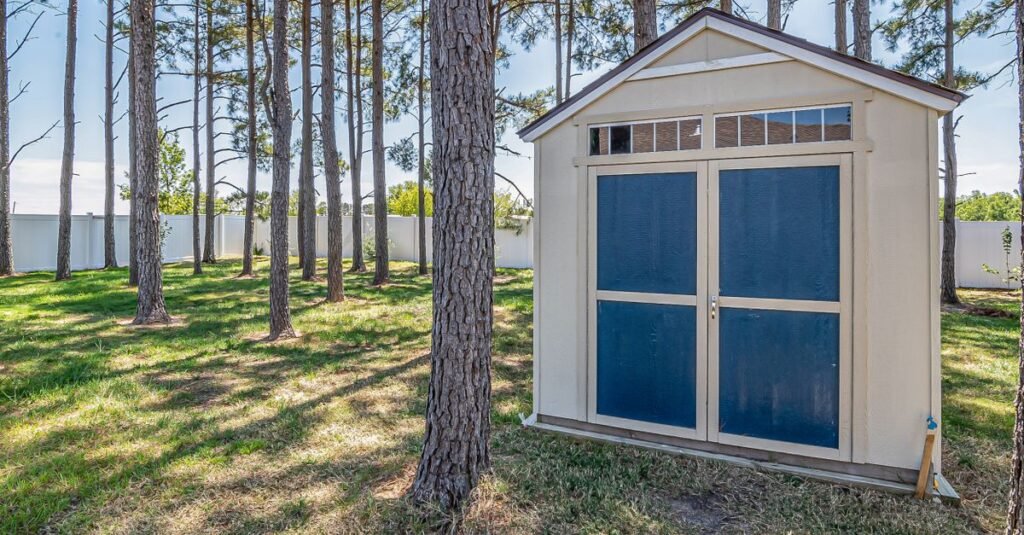
Months of consistent outdoor work justify the real structure: a shed-office, pod, or converted outbuilding with power, insulation, and a door that closes. The honest math from the builders’ videos: budget conversions of existing sheds run modest; new insulated builds climb quickly (the featured build landed around $22k) — against which the daily-commute-to-the-garden lifestyle has to genuinely weigh.
The checklist the builds agree on: power trenched properly (the same trench takes ethernet — run it), insulation before aesthetics (an uninsulated shed is a greenhouse with a desk), windows placed for light without screen glare (north-facing glass is the office trick), and local permitting checked before the slab is poured, not after.
The middle path most households actually want: the covered, powered patio corner — pergola, shade, outlet, weatherproof storage box for the gear — delivering 80% of the shed at 10% of the cost, upgradable the year the habit demands walls.
The Gear Bag (The Outdoor Office That Deploys in Two Minutes)
The habit survives on friction, and the winning setup lives in one carryable kit: a tote or crate holding the laptop stand, external keyboard and mouse, the outdoor-rated extension, a microfiber cloth (pollen and screens), sunscreen (the forgotten office supply), earbuds, and a lidded water bottle. Kit goes out, kit comes in — two minutes each way, no re-gathering, no gear left to dew.
The weather-watch additions by season: the clip fan and a cooling towel for July, the fingerless-glove-and-thermos tier for October’s edges, and a dry-bag pouch for the laptop when the forecast waffles.
The indoor twin rule: nothing in the bag is your ONLY one — the desk inside keeps its own charger and mouse, so the outdoor kit never gets cannibalized and the two-minute deploy stays true. A hook by the patio door for the bag completes it: the office commute becomes literally grabbing a bag and opening a door — which, on the right morning, is the entire argument for this whole genre.
Frequently Asked Questions
How do I see my laptop screen outside?
Face into shade with the bright sky behind the screen, max the brightness, and add a matte screen protector — the anti-glare trio that fixes most setups. Morning and late-afternoon light beats high noon for screen work.
Is it safe to run an extension cord to a patio?
With outdoor-rated cord from a GFCI-protected outlet, routed trip-safe — yes. Indoor cords and power strips don’t belong in dew and rain; heavy regular use eventually justifies a proper exterior outlet.
How do I take video calls outside without looking terrible?
Sky in front of your face (never behind you), wind kept off the mic with earbuds or a windscreen, background checked on camera, and one test call before the important one. Shade behind, light in front is the whole formula.
What furniture works for an outdoor office?
A table at proper desk height, a chair with real back support (dining-style beats sling and bistro), a laptop stand with external keyboard, and shade you control. Comfort at hour three, not hour one, is the test.
Is a garden office shed worth it?
After months of proven outdoor-work habit, often yes — but budgets run from modest shed conversions to five figures for insulated builds. The powered, covered patio corner delivers most of the benefit first, at a fraction of the cost.
How do I keep bugs away while working outside?
A fan across the workspace (doubles as comfort), the standing-water audit from the mosquito playbook, and repellent on the ankles for peak season. Screens or netting graduate the setup for bad-bug regions.
The Season Map (Where Outdoor Work Actually Lives)
The outdoor office runs on a calendar smarter than “summer”: late spring and early fall are the GOLDEN quarters — mild light, low bugs, comfortable hours — while July belongs to the morning shift (out by 8, in by noon, the fan running) and October belongs to the afternoon one (out at lunch, heater’s first shift at four).
The weekly rhythm that professionals settle into: deep-work blocks outside (writing, reading, planning — the single-screen work outdoors flatters), meetings and multi-monitor sessions inside, and the transition itself used as the break it naturally is.
The productivity honesty the genre owes everyone: research on nature exposure and attention consistently favors the green office for focus restoration and mood — and consistently notes glare, heat, and notification-free discipline as the deciders. The patio doesn’t make anyone productive; it makes the productive version of you more pleasant to be.
And the boundary dividend nobody advertises: an outdoor workspace gives work-from-home its missing commute — the walk back inside at day’s end closes the laptop AND the workday, which desk-in-the-bedroom setups famously cannot do.
Troubleshooting the First Week
Laptop overheating in warm shade: hard surfaces beat laps and cushions (airflow), the stand helps double, and direct sun on a dark laptop lid is a shutdown timer — shade covers the machine too.
Battery draining fast: max brightness is the cost of outside — the extension cord is the answer, not dimming back into glare.
Neighbors and noise on calls: earbuds with a decent mic solve 90%; the remaining 10% is scheduling around the lawn-care hour, which is knowable and weekly.
Pollen season keyboard: the microfiber wipe-down joins the pack-up ritual, and the gear bag’s zip pocket keeps the cloth where the problem is.
The Shared-Household Treaty (When the Patio Is Also the Family Room)
The outdoor office borrows communal space, and the treaty keeps it borrowed gracefully: work hours announced (the calendar-block version of a closed door), the setup fully struck at day’s end (the gear bag rule doubles as the family-peace rule — a patio that reverts to patio nightly stays lendable), and the noise contract running both directions: your calls don’t own the yard; their cannonballs don’t own your focus hours.
The two-workspace household — increasingly common — splits by strength: the deep-work partner takes the garden shift, the meeting-heavy partner keeps the indoor room, and the swap negotiates weekly. However it divides, the principle holds: outdoor workspace is a shared amenity with a reservation system, and the system is a conversation, not an app.
Start tomorrow morning, not next paycheck: the chair carried out, the shade corner claimed, the two-week test begun — the outdoor office is one of the few upgrades in this library that auditions for free, and the audition is the whole first step.
The garden is open — the office half is your call each morning.
The Bottom Line
The outdoor office runs on four solved problems — glare faced away, power made safe, WiFi confirmed, comfort built for hour three — and it starts today at tier one with furniture you already own.
Test the habit before funding it, upgrade what the habit demands, and let the garden shed remain a graduation gift rather than a leap of faith. The commute, either way, is the best in the industry.

I'm Nasir Uddin Khan, founder of HomeNeeds24 and a senior IT consultant with 18+ years' experience in Oracle database administration, enterprise infrastructure and ERP system design. I write the buying guides here and I build every calculator on the site myself, from published engineering standards rather than opinion. My research is structured rather than lab-based: manufacturer specifications, safety and efficiency standards, and the trade-offs that repeat across large volumes of verified customer reviews. Where I have direct hands-on experience — smart home, networking, energy and anything computer-adjacent — I say so in the guide.