
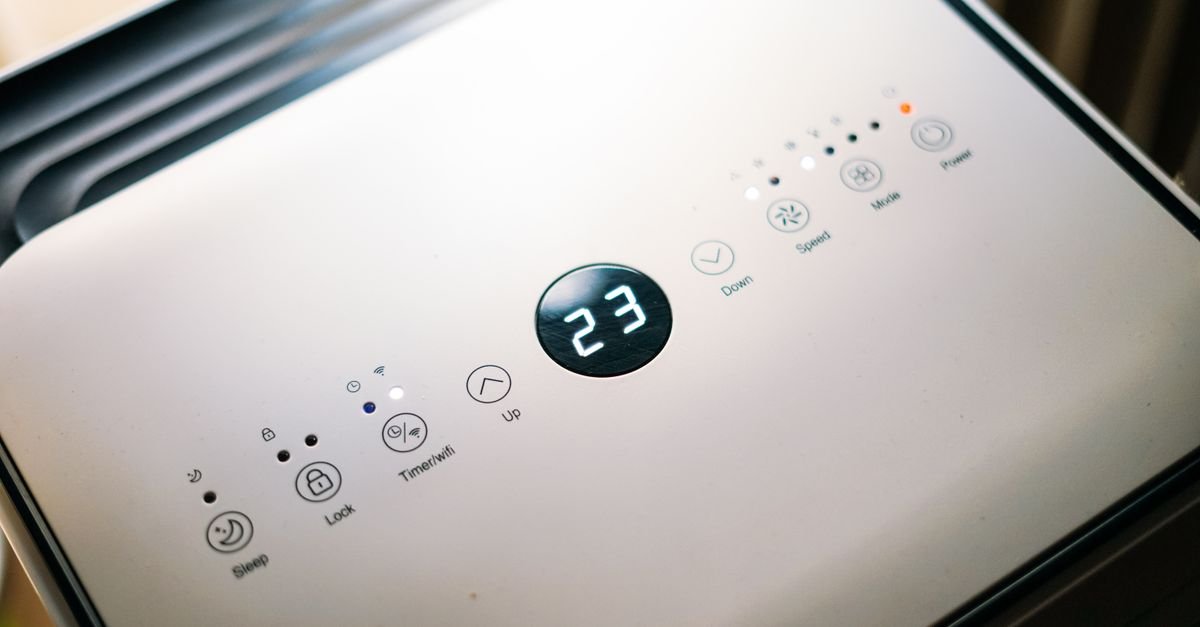
For most rooms, the best portable air conditioner is a properly sized dual-hose model – it cools faster and more efficiently than a single-hose unit, and matching the BTU rating to your room size matters more than any brand. Here are the best portable air conditioners for 2026 by use case, plus how to size, vent and run one.
Also Read



See Top-Rated Portable Air Conditioners on Amazon →
Key Takeaways
- Best type: a dual-hose portable AC cools faster and more efficiently.
- Size it right: match the BTU rating to your room’s square footage.
- Venting matters: every portable AC needs a window kit to exhaust hot air.
- Self-evaporating models mean far less draining to deal with.
- Consider a window AC if you can – it’s usually cheaper and more efficient.
How we picked these portable air conditioners
We focused on what actually keeps a room cool and comfortable.
That means correct BTU sizing, cooling efficiency (dual-hose designs and good ratings), easy venting, low noise, and simple maintenance. We also weighed extra features like heating and smart controls.
Rather than list model numbers that change each season, we’ve grouped picks by how you’ll use them so you can match a unit to your room.
How to choose a portable air conditioner
Choosing comes down to room size, hose design and features.
Work out the square footage you need to cool, decide between single- and dual-hose, and check the noise and drainage details. The This Old House video below is a helpful primer.
With your room size and setup in mind, the use-case picks below make it easy.
The best portable air conditioners by use case
Here are our top portable AC picks for 2026, grouped by what you need.
Best overall: dual-hose portable AC
A dual-hose portable air conditioner is the best all-round choice for efficient cooling.
The second hose brings in outdoor air to cool the compressor, so the unit cools faster and doesn’t create negative pressure that pulls warm air back into the room. Look for the right BTU for your space.
If you want the most effective cooling, start here.
Check Dual-Hose Portable ACs on Amazon →
Best budget: compact single-hose unit
For a smaller room on a budget, a single-hose portable AC gets the job done.
These are cheaper and perfectly fine for modest spaces, though a touch less efficient than dual-hose. Match the BTU to a small or medium room.
An affordable way to beat the heat where you need it.
See Budget Portable ACs on Amazon →
Best for large rooms: high-BTU portable AC
Cooling a big living room or open space calls for a high-BTU unit.
A larger unit (higher BTU rating, ideally dual-hose) can keep up with the heat load of a bigger room. Don’t undersize here, or it will run constantly without cooling well.
Ideal for great rooms and larger bedrooms.
Check High-BTU Portable ACs on Amazon →
Best for bedrooms: quiet portable AC
For sleeping, quiet operation and a good sleep mode matter most.
Look for a lower-decibel model with a sleep or night setting that dims the display and reduces noise. Our dedicated portable AC for bedrooms guide goes deeper.
Prioritize quiet running and a dimmable display.
See Quiet Portable ACs on Amazon →
Best compact: small portable AC
Tight on space? A compact portable AC fits small rooms and offices.
These smaller units are easier to move and store, cooling a modest area without dominating the room. Just keep expectations realistic on capacity.
Great for home offices, dorms and small bedrooms.
Check Compact Portable ACs on Amazon →
Best year-round: portable AC with heat
Want cooling and heating in one? A portable AC with a heat mode covers both seasons.
These units add warmth in cooler months, making them a versatile single appliance. Check the heating capacity if you’ll rely on it.
Handy for shoulder-season comfort in one machine.
See Portable ACs with Heat on Amazon →
Best smart: Wi-Fi portable AC
For app and voice control, a smart portable AC adds convenience.
Wi-Fi connectivity lets you cool the room before you get home and set schedules from your phone. Pair it with other energy-saving smart devices.
Nice if you love a connected home.
Check Smart Portable ACs on Amazon →
What is a portable air conditioner and how does it work?
A portable air conditioner is a freestanding cooling unit on wheels.
It pulls warm air from the room, cools it over refrigerant coils, and blows the cooled air back out – while venting the resulting hot air outside through an exhaust hose in a window.
Unlike a window unit, it sits on the floor inside the room, which makes it flexible but also means it needs that window vent kit to work.
Single-hose vs dual-hose portable AC
The hose design is the biggest efficiency difference.
- Single-hose: uses one hose to exhaust hot air; simpler and cheaper, but can create negative pressure that draws warm air in.
- Dual-hose: one hose brings in outside air, the other exhausts; cools faster and more efficiently, especially in larger rooms.
For small rooms a single-hose is fine; for anything bigger, dual-hose is the smarter buy.
What size (BTU) portable AC do you need?
Sizing by BTU is the key to actually staying cool.
As a rough guide, a small room needs roughly 8,000-10,000 BTU, a medium room around 10,000-12,000 BTU, and a large room 14,000 BTU or more. Sun, high ceilings and kitchens push the number up.
An undersized unit runs nonstop without cooling; an oversized one cools unevenly and wastes energy, so match it to your space.
Understanding BTU, EER and cooling ratings
A few numbers tell you how well a unit performs.
BTU measures cooling capacity – higher means more cooling for bigger rooms. Efficiency ratings like EER (and the newer DOE-adjusted BTU figure) tell you how much cooling you get per unit of electricity.
Note that portable ACs are often listed with two BTU numbers now; the lower DOE-rated figure reflects real-world performance more honestly.
Portable AC vs window AC vs mini-split
Each cooling option has trade-offs.
A window AC is usually cheaper and more efficient but blocks a window and isn’t movable. A mini-split is the most efficient and quiet but needs professional installation. A portable AC is the most flexible – move it room to room – but is generally less efficient.
Choose portable if flexibility or a window you can’t block is your priority.
Key features to look for
A few features make a portable AC nicer to live with.
- The right BTU for your room – the single most important spec.
- Dual-hose design for better efficiency.
- Self-evaporating operation so you rarely drain it.
- A sleep mode and remote for comfort and convenience.
- A washable filter and casters for easy upkeep and moving.
Correct sizing plus self-evaporation will save you the most hassle day to day.
How to install and vent a portable air conditioner
Setup is a straightforward DIY job.
- Position the unit near a window and a power outlet.
- Fit the included window bracket kit to seal the opening.
- Attach the exhaust hose to the unit and the window kit, keeping it as short and straight as possible.
- Power on and set your temperature.
A short, straight hose vents heat best – long, kinked hoses hurt performance.
Do portable ACs need to be drained?
It depends on the model and your climate.
Many modern units are self-evaporating, expelling most moisture through the exhaust so you rarely drain them. In very humid weather, you may still need to empty a reservoir or attach a drain hose.
Check the drainage type before buying if you live somewhere humid.
Are portable air conditioners energy efficient?
Portable ACs are convenient but generally less efficient than window or split units.
Dual-hose models close much of the gap, and right-sizing the unit prevents wasted energy. Cooling only the room you’re in also keeps costs down.
If efficiency is your top priority and you can use a window unit, it’s usually the cheaper long-term choice.
How much does it cost to run a portable AC?
Running costs depend on wattage, runtime and your electricity rate.
Multiply the unit’s power draw (in kilowatts) by your rate and hours of use to estimate the cost. A mid-size unit running for several hours a day adds a noticeable but manageable amount to a summer bill.
Using a timer, sleep mode and zone cooling keeps the cost in check.
How loud are portable air conditioners?
Portable ACs make more noise than window units because the compressor sits inside the room.
Expect a steady hum; quieter models and a sleep mode help, especially in bedrooms. Check the decibel rating if noise matters to you.
Placing the unit a little further from the bed also softens the sound.
Portable air conditioner mistakes to avoid
- Buying the wrong BTU. Too small won’t cool; too big cools unevenly.
- Ignoring the hose count. Dual-hose is far better for larger rooms.
- A long, kinked exhaust hose. Keep it short and straight.
- Poor window sealing. Gaps let hot air back in.
- Skipping filter cleaning. A dirty filter kills performance.
How much should you spend on a portable AC?
Prices vary with capacity and features.
Compact single-hose units are the most affordable, mid-size dual-hose models offer the best balance, and large-capacity, smart or heat-and-cool units cost the most.
For most people, a right-sized dual-hose unit is the best value – efficient cooling without paying for capacity you don’t need.
How to maintain and clean a portable AC
A little upkeep keeps a portable AC cooling well for years.
Clean or rinse the washable filter every couple of weeks during heavy use, wipe the exterior, and drain any reservoir as needed. At season’s end, empty it fully and store it dry.
A clean filter is the single biggest factor in keeping airflow and efficiency high.
Can you use a portable AC in a room without a window?
A portable air conditioner still needs somewhere to exhaust hot air, so a true no-window room is tricky.
People vent them through a sliding door, a drop ceiling, or a wall or dryer vent instead of a window. Without any exhaust route, the unit just moves heat around the room and won’t cool it.
If venting is truly impossible, an evaporative cooler is a better fit for very dry climates.
How long do portable air conditioners last?
A well-maintained portable AC typically lasts several years of seasonal use.
Keeping the filter clean, venting it properly and storing it dry over winter all extend its life. Running an undersized unit flat-out all summer wears it out faster.
If it stops cooling well despite a clean filter, or leaks or smells musty, it’s usually time to replace it.
Frequently Asked Questions
What is the best portable air conditioner?
For most rooms, a properly sized dual-hose portable air conditioner is the best choice – it cools faster and more efficiently than a single-hose unit. Match the BTU rating to your room size, and consider a quiet model with a sleep mode for bedrooms.
What size portable air conditioner do I need?
As a rough guide, a small room needs about 8,000-10,000 BTU, a medium room 10,000-12,000 BTU, and a large room 14,000 BTU or more. Sun exposure, high ceilings and kitchens increase the BTU you need, so size up for those conditions.
Is a single-hose or dual-hose portable AC better?
Dual-hose units cool faster and more efficiently, especially in larger rooms, because they don’t pull warm air back into the space. Single-hose models are cheaper and fine for small rooms. For most people, dual-hose is the smarter buy.
Do portable air conditioners really work?
Yes, when sized correctly and vented properly. A right-sized unit with a short, straight exhaust hose and a well-sealed window will cool a room effectively. They’re less efficient than window units but far more flexible.
Do portable ACs need to be emptied of water?
Many modern units are self-evaporating and rarely need draining, but in very humid weather you may need to empty a reservoir or attach a drain hose. Check the drainage type before buying if you live in a humid climate.
Are portable air conditioners expensive to run?
They cost more to run than window units of the same capacity, but right-sizing, using a timer and sleep mode, and cooling only the room you’re in all keep costs manageable. Estimate cost by multiplying the unit’s kilowatts by your rate and hours of use.
Can a portable air conditioner cool a whole house?
No – portable ACs are designed to cool one room or zone, not an entire home. They work best cooling the space you’re actually using while you leave other rooms alone.
Where should I place a portable air conditioner?
Place it near a window (for the exhaust hose) and a power outlet, with the hose as short and straight as possible. Keep it away from heat sources and make sure the window kit seals well so hot air can’t leak back in.
The bottom line
A portable air conditioner is the most flexible way to cool a room you can’t fit a window unit in.
For most people a right-sized dual-hose model is the sweet spot; go quiet for bedrooms and high-BTU for large rooms.
Size it to your space, vent it properly, and keep the filter clean for reliable summer comfort. For a bedroom-specific pick see our portable AC for bedrooms guide, and for winter, our best space heaters.

I'm Nasir Uddin Khan, founder of HomeNeeds24 and a senior IT consultant with 18+ years' experience in Oracle database administration, enterprise infrastructure and ERP system design. I write the buying guides here and I build every calculator on the site myself, from published engineering standards rather than opinion. My research is structured rather than lab-based: manufacturer specifications, safety and efficiency standards, and the trade-offs that repeat across large volumes of verified customer reviews. Where I have direct hands-on experience — smart home, networking, energy and anything computer-adjacent — I say so in the guide.