
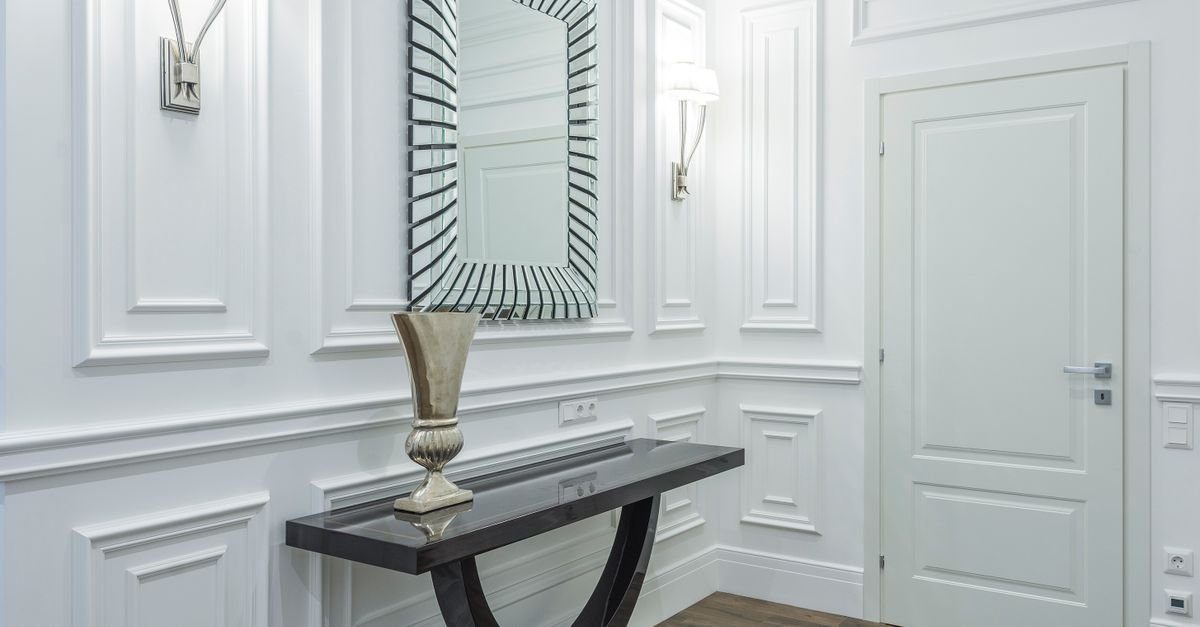
Your entryway gets four seconds to make its case. That’s roughly how long it takes a guest — or you, home from a long day — to cross it, and in those four seconds it announces either “a person with a plan lives here” or “brace yourself.” Styling an entryway comes down to one formula: a landing zone for daily life (tray, hooks, bench), one vertical anchor (mirror or art), one piece of life (plant or flowers), and lighting that doesn’t feel like a hallway at a bus station.
Also Read



The best part: entryways are tiny, so this is the cheapest full-room transformation in the house. Here’s the complete playbook — big foyers, apartment nooks, and the “my front door opens directly into the living room” situation included.
Key Takeaways
- Function first: an entryway that can’t catch keys, mail, shoes, and bags will always look messy, no matter the decor.
- The console formula: lamp or mirror (tall) + tray or bowl (useful) + plant or object (life) — the classic trio, sized to the wall.
- A mirror is the entryway’s best friend — it doubles light, expands the space, and earns its keep with the last-look check.
- Scale beats quantity: one properly sized mirror and runner outperform six small accessories.
- No entry? Fake one: a slim shelf, hooks, and a runner conjure an entryway from four feet of wall.
What Makes an Entryway Feel “Styled”?
Walk into a home that feels pulled together and the entry is doing four quiet jobs at once: it catches (keys, mail, bags land in designed spots, not on the nearest surface), it reflects (light bounces instead of dying at the door), it welcomes (one living thing, one personal object), and it transitions (the palette shakes hands with the rooms beyond).
Miss the first job and the other three don’t matter — clutter eats decor for breakfast. That’s why this guide starts with function and only then gets pretty.
Step One: Solve the Drop Zone Before You Decorate
Every entryway accumulates the same five things: keys, mail, shoes, bags, and outerwear. Give each a designed home and the space stays styled by default; skip this and you’re restyling twice a day forever.
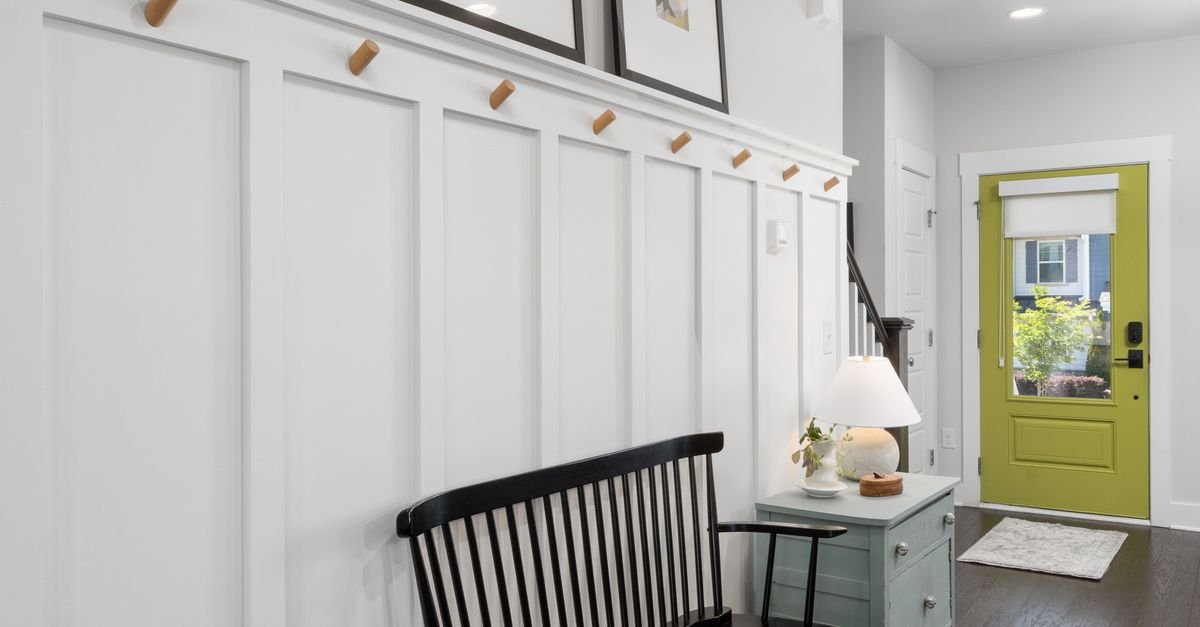
Keys want a bowl or small tray at hand height. Mail wants a single vertical sorter or tray — one, not three. Shoes want a low rack, a bench with storage, or a basket (the basket is the renter’s cheat code — chaos inside, texture outside). Bags want hooks at two heights if kids are involved. Coats want hooks or a slim stand — count your household’s realistic daily jackets and add two for guests.
The Console Table: Command Central
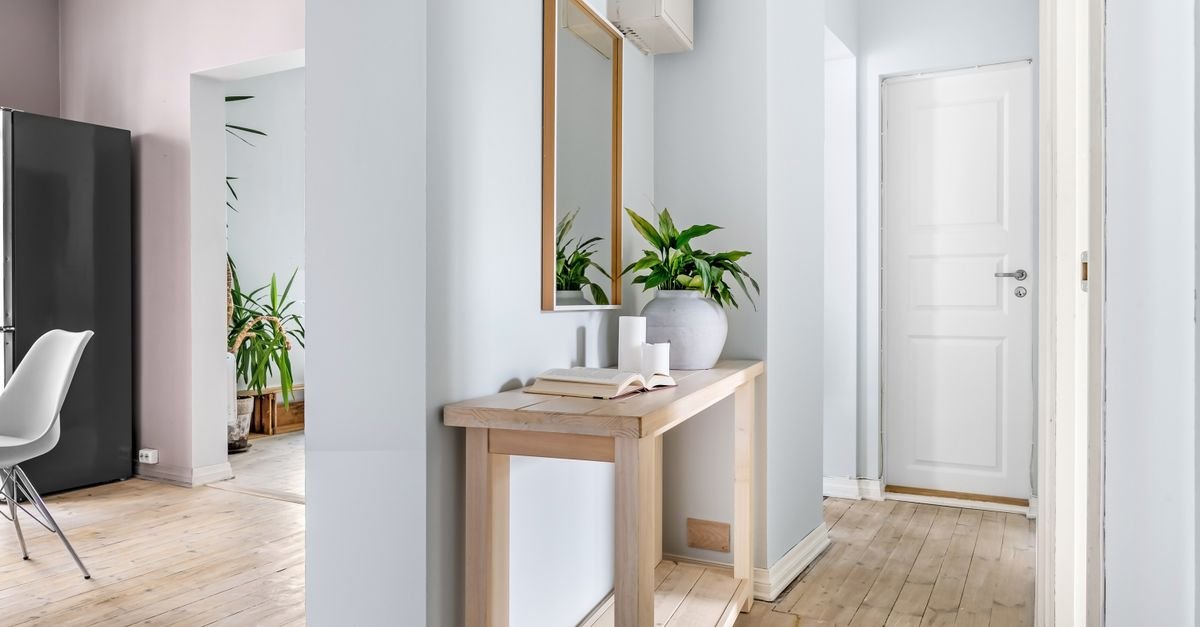
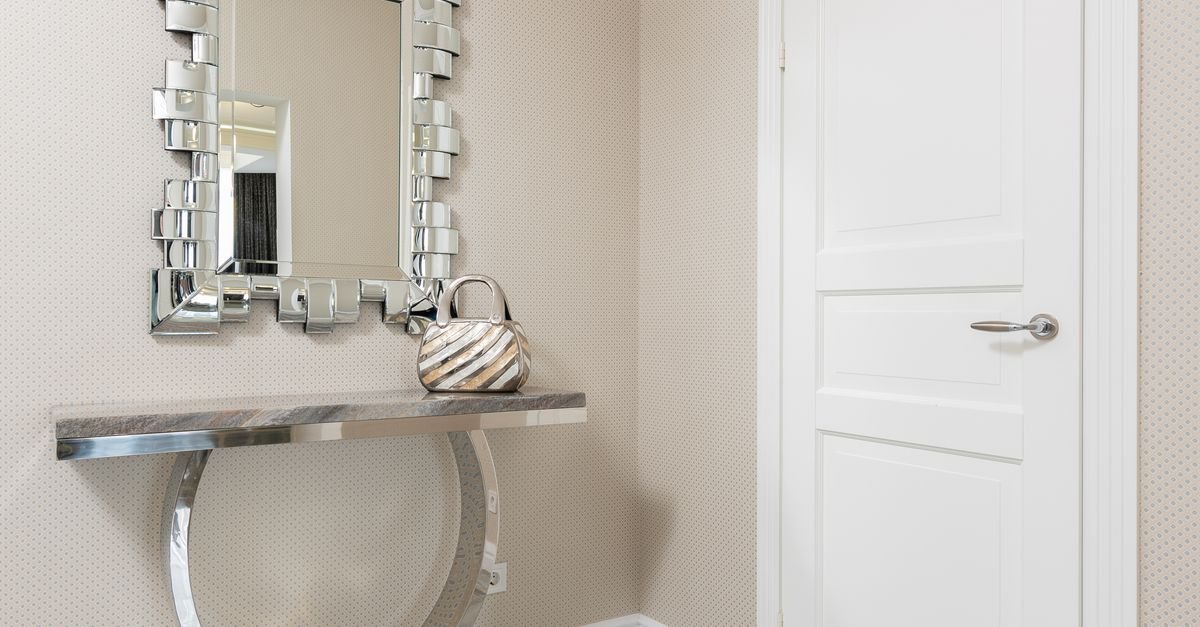
If your entry fits one, a console table is the anchor everything else hangs from. Get the size right first: aim for a console about half to two-thirds the width of the wall it sits on, 29–33 inches tall, and slim enough to leave at least 36 inches of walkway — less depth than 12 inches starts to feel like a shelf on legs, which is fine too in tight quarters.
Style it with the same trio formula we use across this whole styling playbook: something tall (lamp or the mirror above), something useful (the key tray earning its keep), something alive (a plant, stems in a vase). Three zones, varied heights, one-third of the surface left empty so it reads calm instead of crowded.
No Room for a Console? The Slim Alternatives
A wall-mounted floating shelf 10 inches deep does 80% of the console’s job for 20% of the footprint. A demilune (half-moon) table hugs the wall with no corners to bruise hips in tight halls. Even a picture ledge above a shoe bench can hold the tray, the art, and the little life.
Why Does Every Designer Put a Mirror in the Entry?
Because it’s the hardest-working object in the room. A mirror doubles whatever light your entry has (and entries are chronically light-starved), visually pushes the walls apart, gives guests and you the instinctive last-look check on the way out, and provides the vertical anchor the console needs.
Size it generously — roughly two-thirds the console’s width, hung so its center lands around eye level (57–62 inches from the floor). A too-small mirror floating above a console reads like a postage stamp on a package; when in doubt, go bigger.
If the wall across from your front door is the only option, some feng-shui traditions frown on a mirror directly facing the door — but as pure design, reflecting a beautiful view doubles it, and reflecting clutter doubles that too. Point mirrors at things worth seeing twice.
Or Should It Be Art Instead?
If the entry already has light to spare, art brings more personality per square inch. One confident oversized piece beats a cluster here — the entry is a glance space, not a linger space, so it needs a single readable statement. If you’re a collector at heart, a tight small grid works; our gallery wall guide covers spacing and templates that keep it intentional.
The Bench Question: Do You Need Seating?
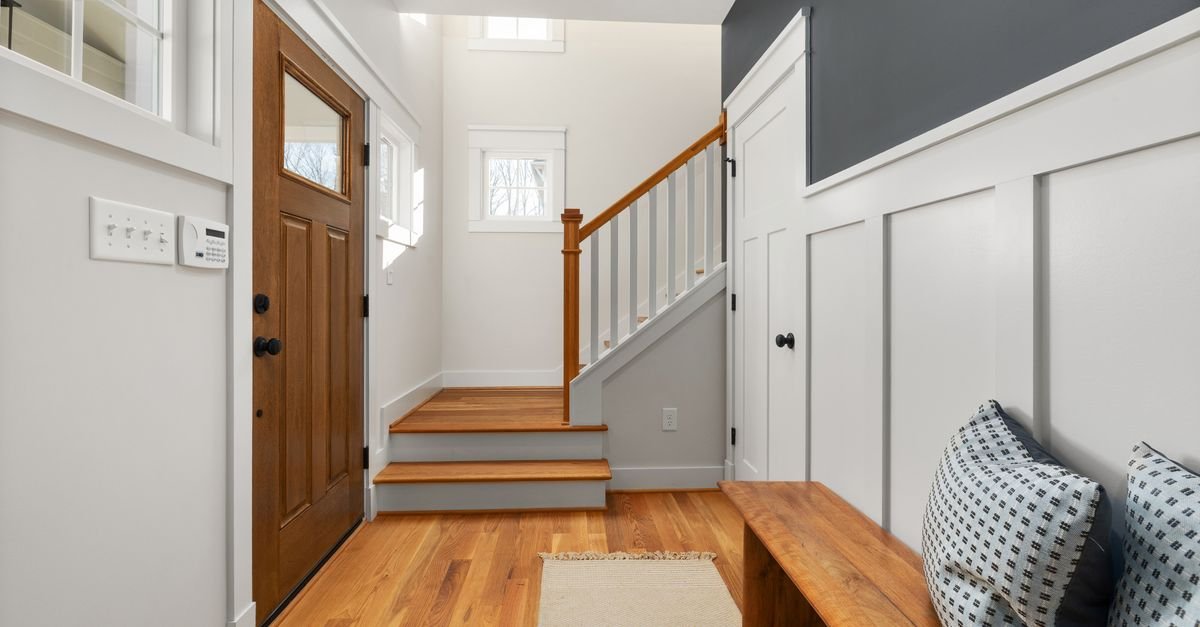
If anyone in your home ties shoelaces, yes — and even if not, a bench adds the layered, furnished look that separates an entry from a corridor. Storage benches hide the shoe situation entirely; open benches with a basket beneath give texture plus function.
In small entries, choose a bench with visible legs over a boxy solid one — the see-through space beneath keeps the little room breathing. Top it with one cushion or a folded throw, not a pillow parade; people need to actually sit.
What Rug Belongs in an Entryway?
A flat-weave or low-pile runner in a pattern that forgives boot traffic — this is the one room where “hides dirt” is a legitimate design criterion. Size it to leave a few inches of floor visible on each side, and make sure the front door clears it without a fight (nothing says welcome like a rug that attacks the door).
Layer a genuinely washable doormat at the threshold to do the dirty work so the runner can do the pretty work. Full sizing math for every hallway width lives in our rug size guide.
How Do You Light an Entryway Properly?
Two layers minimum. Overhead: a flush or semi-flush fixture with presence — the entry ceiling is the one place a slightly bold fixture never fights anything else. Eye level: a table lamp on the console (or a pair of sconces flanking the mirror) for warmth after dark — overhead-only entries feel like elevators.
Bulb temperature matters more here than almost anywhere: 2700K–3000K warm white makes skin, wood, and welcome all look right. Cooler than that and your foyer starts impersonating a dental office — our warm vs cool white guide explains the numbers. A smart bulb or plug that fades the lamp on at dusk is a five-dollar luxury that makes every homecoming cinematic.
The Wall Moment: Paint, Wallpaper, or Molding?
Entries are small enough to be brave in. A saturated paint color on entry walls costs one sample pot of courage and announces a point of view before anyone sees the sofa. Bold wallpaper — botanical, geometric, grasscloth — turns four unremarkable feet of hall into the house’s best moment precisely because nobody lives in it long enough to tire of it.
Renters: peel-and-stick wallpaper and framed oversized art deliver the same moment with a clean exit — the full toolkit is in our renter-friendly upgrades guide.
How Do I Style a Tiny Apartment Entry (or No Entry at All)?
No foyer? Build the idea of one on the first four feet of wall inside the door:
The vertical kit: a row of good hooks (not the sad single nail), a floating shelf above for the tray and one object, a mirror above that. Total depth used: four inches. The floor kit: a runner perpendicular to the door to define the “zone,” a slim shoe cabinet or basket tucked against the wall. The signal: a different rug, a pendant, or that wallpapered strip tells the eye “this is the entry” even when it’s technically the living room’s corner.
In studio-sized spaces, every trick from our small-room guide applies double at the door: mirror, light, legs, and ruthless editing.
Styling the Console Like a Designer: The Five-Minute Method
Clear everything. Then rebuild in order: 1) the anchor above (mirror or art, hung correctly — not leaning against the wall for eight months, we’ve all been there); 2) the lamp at one end; 3) the tray dead-ahead of the door swing where hands naturally land; 4) the tall organic element at the other end — branches or eucalyptus read sculptural and last weeks; 5) one personal object — the photo, the shell, the thing with a story.
Then stop. The entry console is a haiku, not a novel — if the tray has to fight for space, the styling lost to the clutter before it started.
What About Seasonal Switches?
The entry is the easiest room to season because there’s so little of it: swap the vase contents (tulips → branches → eucalyptus → pine), the bench throw, and the doormat, and you’ve re-dressed the whole room for pocket change. Keep the anchors — console, mirror, lamp, runner — constant year-round so the space keeps its identity under the costume changes.
The Five Entryway Mistakes Everyone Makes
1. The doormat-sized rug in a hallway-sized space — undersized floor coverings shrink rooms; runners exist for a reason. 2. Hooks overloaded into a coat sculpture — hooks hold the day’s jackets, the closet holds the wardrobe. 3. The postage-stamp mirror — scale up. 4. Zero lighting beyond the ceiling boob light — one warm lamp changes everything. 5. Treating it as storage overflow — the moment the recycling “temporarily” lives there, the entry stops being a room and becomes a landing strip for chaos.
A Budget Ladder for the Entry
Under $50: hooks, a tray, a doormat upgrade, and a supermarket bunch of flowers — genuinely transformative if the bones exist. Around $150: add the runner, a lamp, and a properly sized mirror — this tier delivers the biggest visible jump. Around $400+: the console or storage bench, the statement light fixture, the wallpaper moment. As always in this playbook: fix the anchors before buying the accessories.
Pulling It Together
Styled entries aren’t about square footage — the four-foot apartment version and the grand foyer run the exact same formula: catch the daily clutter by design, bounce the light, add one living thing, and let a single confident anchor set the tone. Do the function first, add the trio, and your four seconds will say exactly what you want them to.
A few honest workhorses to shop for the drop zone:
The drop-zone workhorses, if you’re starting from zero:
Frequently Asked Questions
What should every entryway have?
Four functional basics — a spot for keys and mail, hooks or a stand for coats, somewhere to handle shoes, and good lighting — plus one mirror or art anchor and one living element. Function first; decor stays tidy on top of it.
How do I style an entryway on a budget?
Start under $50: wall hooks, a key tray, an upgraded doormat, and fresh stems in a vase you own. The next most transformative purchases are a runner, a warm table lamp, and the biggest mirror you can afford.
What size mirror should go over a console table?
Roughly two-thirds the width of the console, with its center around 57–62 inches from the floor. Undersized mirrors are the most common entryway scale mistake — when in doubt, go bigger.
How big should an entryway rug be?
Use a runner or rug that leaves a few inches of visible floor on each side and clears the door swing. Choose flat-weave or low pile in a forgiving pattern — the entry rug’s first job is surviving boots.
What do I do if my front door opens straight into the living room?
Fake an entry on the first stretch of wall: hooks, a floating shelf or slim console, a mirror, and a runner perpendicular to the door to define the zone. A distinct rug or pendant light signals “entryway” without any walls.
Should an entryway table be styled or kept clear?
Both — that’s the trick. Reserve about a third of the surface for daily-life landing (the tray) and style the rest with the trio: lamp, life, one personal object. Fully cleared reads cold; fully covered collects clutter.
What color should I paint a small entryway?
Either bounce light with a warm white — or go confidently dark and moody, which reads intentional in small doses. The entry is the lowest-risk room in the house for a bold color because nobody stays in it long.

I'm Nasir Uddin Khan, founder of HomeNeeds24 and a senior IT consultant with 18+ years' experience in Oracle database administration, enterprise infrastructure and ERP system design. I write the buying guides here and I build every calculator on the site myself, from published engineering standards rather than opinion. My research is structured rather than lab-based: manufacturer specifications, safety and efficiency standards, and the trade-offs that repeat across large volumes of verified customer reviews. Where I have direct hands-on experience — smart home, networking, energy and anything computer-adjacent — I say so in the guide.