
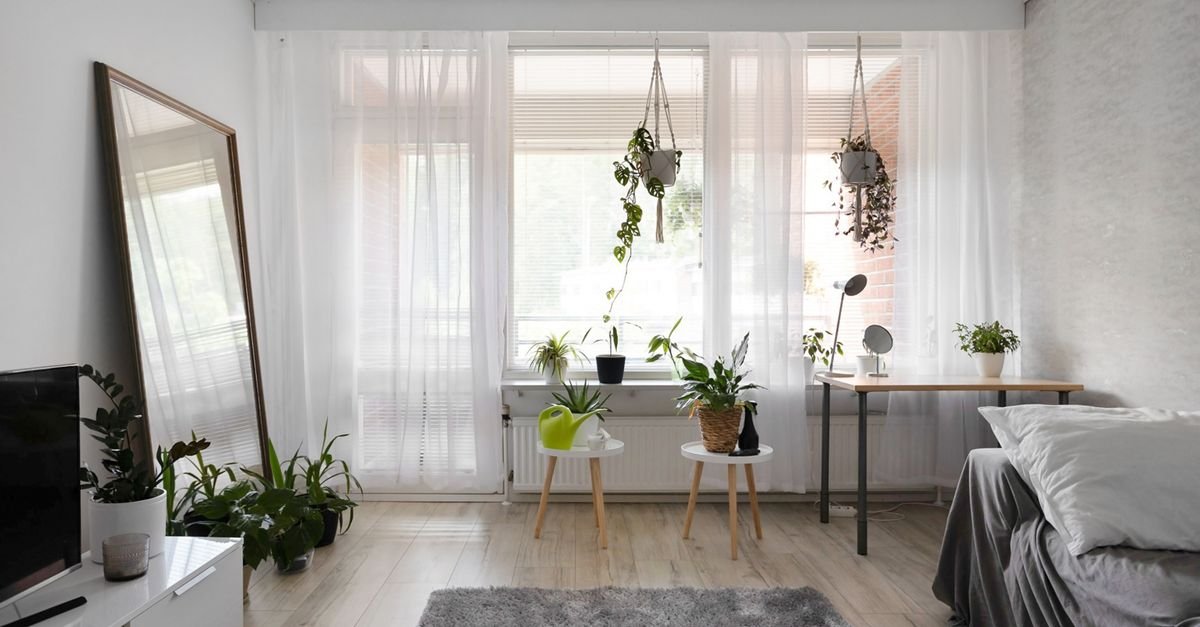
There’s a special kind of decorating grief that only renters know: falling in love with a paint color you can’t use, on a wall you can’t drill, in a kitchen you can’t change, under lighting chosen by someone who apparently hated joy.
Also Read



Here’s the good news that landlords won’t tell you: nearly every high-impact upgrade in modern decorating now has a damage-free version. Your deposit and your style can both survive.
Quick answer: The highest-impact renter-friendly upgrades are: peel-and-stick wallpaper or removable decals for walls, swapped light fixtures and smart bulbs for lighting (keep the originals in a closet), adhesive strips for art and even gallery walls, rugs to fix ugly floors, curtains hung high on tension or damage-minimal rods, and hardware swaps (cabinet knobs, faucet heads, shower heads) that reverse in minutes on move-out day. The rule: everything you change goes in a labeled box, and everything you add comes off clean.
Key Takeaways
- The renter’s golden rule: reversible beats permanent — keep every original part in one labeled move-out box.
- Peel-and-stick wallpaper is the single biggest transformation per deposit-safe dollar.
- Lighting is rental kryptonite — and lamps, smart bulbs, and plug-in fixtures fix it without an electrician.
- Adhesive hanging strips now hold real art — full gallery walls are renter-legal.
- Rugs, curtains, and textiles do the heavy visual lifting and move out with you.
- Swap knobs, faucet heads, and shower heads — ten-minute upgrades with a screwdriver, fully reversible.
What’s the Renter’s Golden Rule?
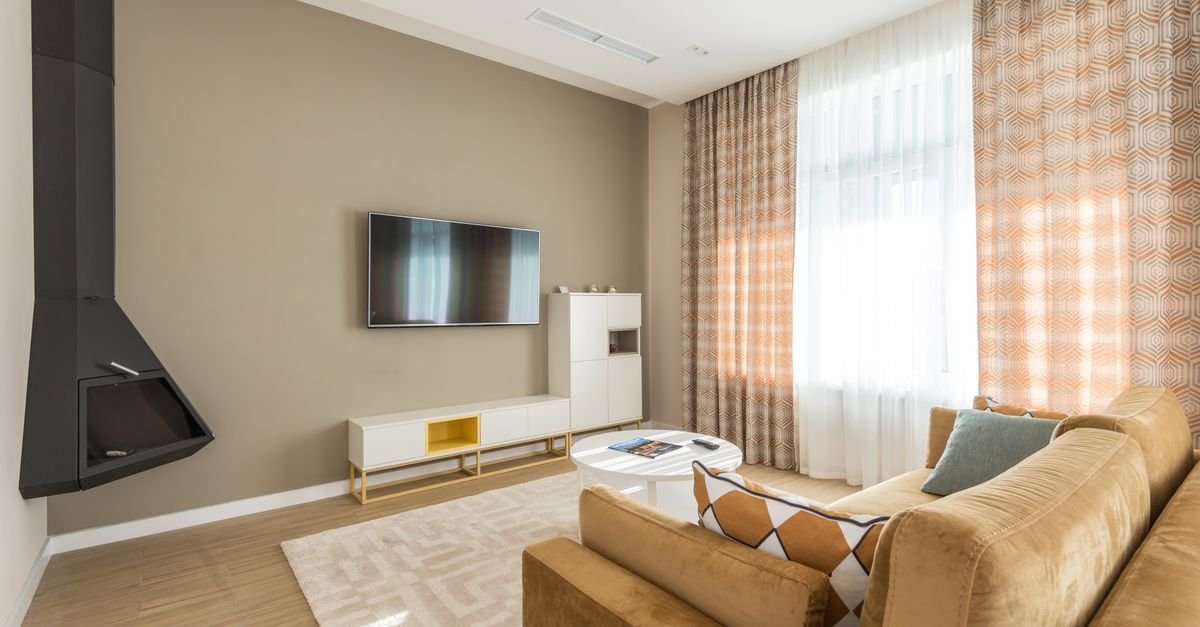
Before the fun list, the principle that keeps deposits intact: every change must be reversible, and every original part must survive.
Get one box. Label it “MOVE OUT.” Every knob you unscrew, every builder-grade light you replace, every vertical blind you exile — into the box, with a sticky note saying where it lives.
On your last weekend in the unit, the box reverses everything in an afternoon, and the landlord inspects a unit identical to day one — while your upgrades ride the moving truck to their next home.
Second half of the rule: when in doubt, ask — in writing. Many landlords happily approve paint or fixture swaps when asked politely; a saved message beats a remembered conversation every time.
How Do You Transform Walls Without Paint?
Walls are the biggest visual surface you “can’t touch” — except you can:
Peel-and-stick wallpaper: the crown jewel
Modern removable wallpaper has become genuinely good — convincing textures, designer patterns, and clean removal from sound paint. One accent wall behind the bed or sofa changes the entire room’s personality for an afternoon’s work.
Renter technique: order a sample first (adhesion varies by wall finish), start at the ceiling line with a level, and smooth outward with a plastic card. Cheap flat builder’s paint occasionally objects — the sample tells you before the whole wall does.
The adhesive gallery wall
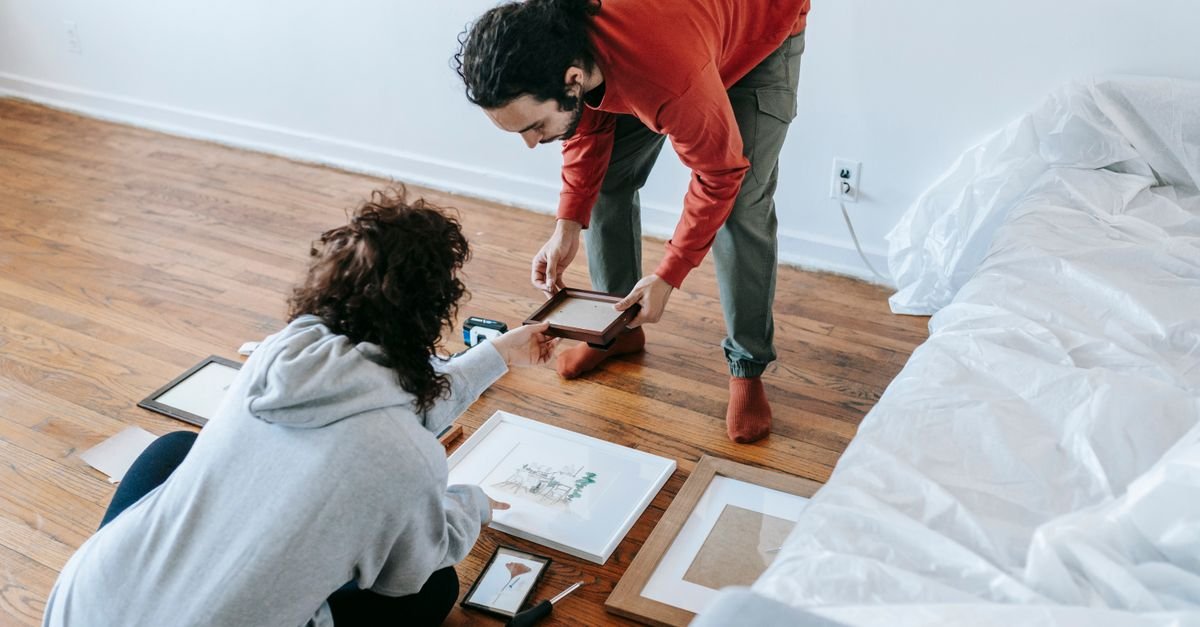
Modern hanging strips hold serious frame weight, damage-free — which makes the full designer gallery wall renter-legal. Our complete gallery wall guide covers the layout method; renters just swap nails for strips (clean the wall with alcohol first and press each strip for the full count — that’s where the holding power lives).
Lean instead of hang
Oversized art propped on the floor against the wall, mirrors leaned in corners, a picture ledge’s worth of frames resting on a console — the “leaning look” is both a designer aesthetic and a zero-hole strategy.
Washi tape and decals for the commitment-free
Removable decals and washi-tape grids handle kids’ rooms and dorm-level commitment; they peel off paint cleanly when the season ends.
How Do You Fix Rental Lighting (Legally)?
The single boob light in the ceiling. The fluorescent kitchen bar. Rental lighting is where good rooms go to die — and it’s the most fixable problem on this list.
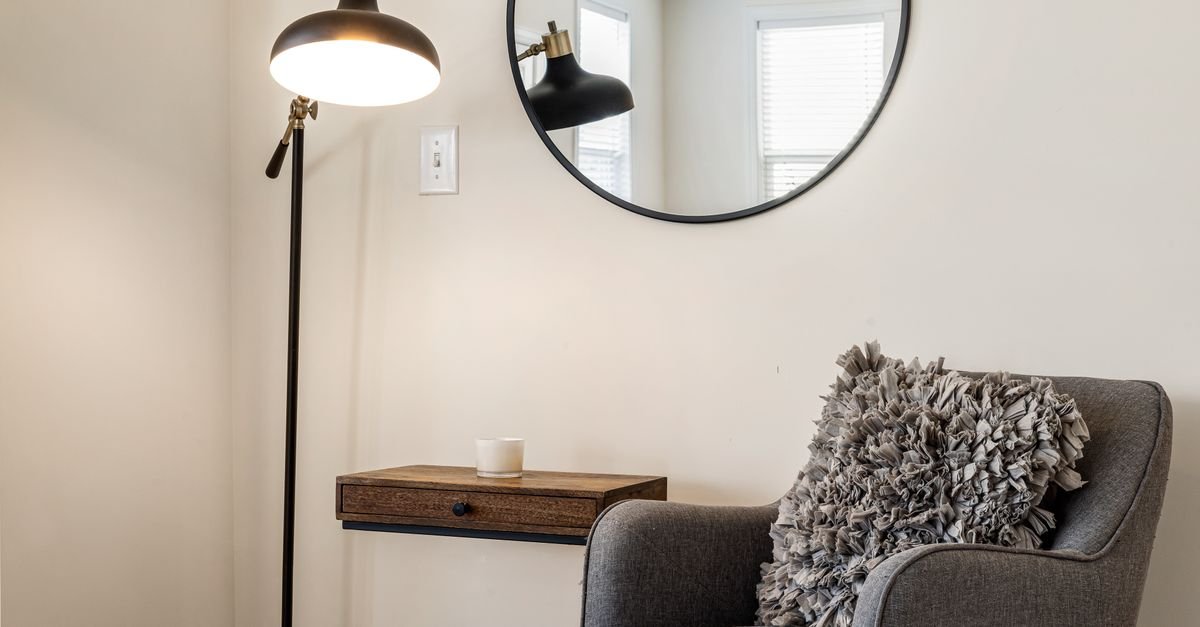
Layer lamps first. Interior designer Kristen McGowan’s renter playbook (video above) starts exactly here: a floor lamp in the dark corner, a table lamp at mid-height, and suddenly the ceiling fixture is optional ambience instead of the whole personality.
Smart bulbs are the renter’s dimmer switch. Warm-white settings, evening scenes, and dimming without touching a single wire — and they unscrew on move-out day like any bulb.
Swap the actual fixture (with the box ritual). Replacing a basic flush mount with something beautiful is a 20-minute job many landlords allow when asked — original into the MOVE OUT box, yours onto the ceiling. Not comfortable with wiring? Plug-in pendants and sconces deliver the same look from an outlet, zero electrician required.
Puck lights under cabinets: rechargeable stick-on pucks give rental kitchens the under-cabinet glow of a renovation for pocket money.
What Can You Do About Ugly Rental Floors?
You can’t replace them — you can absolutely outshout them:
Rugs, sized properly, everywhere. A big enough rug doesn’t just decorate a floor — it visually replaces it. The front-legs-on rule and full sizing math live in our rug size guide; renters should err even larger, because coverage is the point.
Peel-and-stick floor tiles handle the truly cursed bathroom or kitchen floor — vinyl tiles that lay over existing flooring and lift off at move-out. Check removability claims against your floor type, and sample-test in a closet corner first.
Washable runners rescue rental hallways and kitchens — the high-traffic zones where landlord-grade flooring shows its age loudest.
Which Hardware Swaps Give the Biggest Payoff?
The ten-minute screwdriver upgrades that read like renovations:
Cabinet knobs and pulls. Builder-basic kitchen, meet brass (or matte black) personality. Count your holes before ordering (single-hole knobs vs. pull spacing), bag the originals, done. This is the single most renovation-flavored change a renter can make.
The shower head. Rental shower heads are chosen by accountants. A quality rainfall or high-pressure head screws on hand-tight in five minutes — and this one upgrade improves every single day of the lease. Original head: into the box.
Faucet aerators and sprayer heads refresh sad kitchen taps without touching plumbing beyond a twist.
Switch plates and outlet covers — two dollars each, and the cracked almond-beige plastic of 2004 disappears from every wall.
Door handles and hinges for the ambitious: transformative in hallways, still 100% reversible with the box ritual.
How Do Textiles Carry a Rental?
When walls, floors, and fixtures are fixed quantities, fabric becomes your design budget’s best friend — every piece of it moves out with you:
Curtains, hung high. Nothing upgrades rental windows like proper curtains mounted near the ceiling — and tension rods, adhesive-hook rods, or a couple of small (patchable) screw holes make it deposit-survivable. Length rules in our curtain guide; the “high and wide” trick also makes small rentals feel bigger, per the small-room playbook.
The vertical-blind disguise: can’t remove the landlord’s vertical blinds? Curtains mounted in front of them hide the whole crime scene — blinds intact, style restored.
Bedding, throws, and cushions do more per dollar than any furniture purchase — the full formula is in how to layer a bed.
Slipcovers and washable sofa covers reinvent tired rental-furnished sofas — or protect your own from the security-deposit lifestyle.
What About Kitchens and Bathrooms?
The two rooms renters write off — and the two where reversible tricks stack hardest:
Kitchen stack: new knobs + peel-and-stick backsplash tile + under-cabinet puck lights + a runner + open-shelf styling of what you already own (the shelf styling formula works on rental shelving too). Five changes, zero permanent marks, unrecognizable kitchen.
Bathroom stack: shower head swap + adhesive shelving in the shower + a proper mirror leaned or strip-hung over the builder mirror’s edge + matching towels + a plant that tolerates humidity. Rental bathrooms respond to grooming like nowhere else.
The smell dimension: half of “this feels like someone else’s apartment” is scent — our guide to making your house smell good is the cheapest whole-home upgrade on this page.
What Should Renters NOT Bother With?
Honest triage — skip the upgrades that fight the lease:
Anything structural or plumbing-permanent. If it needs a saw or a wrench beyond hand-tight, it needs landlord permission in writing — or a pass.
Regular wallpaper and “removable” paint products that aren’t truly removable on your specific walls. Sample-test everything sticky in an invisible spot; the closet interior is your laboratory.
Cheap adhesive hooks for heavy things. Under-rated strips drop mirrors at 2 a.m. Match the rated weight to the actual object, with margin.
Over-investing in fitted pieces — custom-cut anything (blinds, built-ins, wall-to-wall) stays behind or dies in the move. Spend on what travels: lamps, rugs, art, textiles, and hardware you’ll re-box.
Fighting a dark unit with dark decor — rentals rarely have great natural light; light textiles, mirrors, and layered lamps are the escape route.
The One-Weekend Rental Refresh Plan
The whole article as a two-day sprint:
Saturday morning: the MOVE OUT box ritual — swap cabinet knobs, shower head, and switch plates; originals boxed and labeled.
Saturday afternoon: lighting — smart bulbs in every socket, floor lamp to the dead corner, puck lights under kitchen cabinets.
Sunday morning: the accent wall — peel-and-stick wallpaper behind the bed or sofa (leveled, card-smoothed, admired).
Sunday afternoon: soft goods — curtains up high, the big rug down, bed layered, gallery wall stripped on.
Sunday evening: candle lit, lights dimmed to scene two, deposit fully intact — and the apartment finally looks like someone chose to live there.
The deposit-safe toolkit — solid Amazon searches:
Function Counts Too: Renter-Safe Storage Upgrades
Style gets the headlines, but storage is what makes a rental work — and it’s all reversible:
Over-door organizers turn every door into a pantry, shoe closet, or cleaning cupboard — zero hardware, instant capacity.
Freestanding wardrobes and clothing racks solve the classic rental closet shortage and move out like furniture, because they are.
Tension rods and tension shelving create dividers in deep cabinets, extra shower storage, and under-sink tiers — friction, not fasteners.
Rolling carts are the renter’s built-ins: kitchen island today, bathroom tower next lease, plant stand after that.
Bed risers buy a whole storage floor under the mattress — matching under-bed boxes keep it from becoming the chaos zone.
The theme, as always: capacity you can carry down the stairs on move-out day.
Frequently Asked Questions
How can I decorate a rental without losing my deposit?
Follow the reversibility rule: peel-and-stick wallpaper, adhesive hanging strips for art, lamp-based lighting and smart bulbs, rugs over ugly floors, and hardware swaps (knobs, shower head) with every original part kept in a labeled box for move-out day. Ask in writing before anything semi-permanent.
Does peel-and-stick wallpaper really come off cleanly?
From sound, well-cured paint, quality brands remove cleanly — the risk is cheap flat builder paint or fresh paint, which can lift. Always order a sample and test it somewhere invisible (inside a closet) for a week before committing a wall.
Can you hang a gallery wall in a rental?
Yes — modern adhesive strips hold substantial frames damage-free. Clean the wall with rubbing alcohol, use the rated number of strips per frame with weight margin, press firmly for the full recommended time, and remove by the stretch-tab method at move-out.
How do I fix bad lighting in an apartment I can’t rewire?
Layer plug-in light: a floor lamp, a table lamp, smart bulbs for warmth and dimming, and stick-on puck lights under kitchen cabinets. If the ceiling fixture is the crime, swapping it is usually a landlord-approvable 20-minute job — box the original.
What’s the highest-impact renter-friendly upgrade?
For transformation per hour: a peel-and-stick accent wall. For daily quality of life: the shower head swap. For overall room feel: proper curtains hung high plus a correctly sized rug — textiles carry rentals.
Can I change cabinet knobs and faucets in a rental?
Knobs and pulls, almost always — unscrew, bag the originals, reinstall at move-out. Faucet heads, aerators, and shower heads that twist on hand-tight are equally reversible. Anything requiring plumbing beyond hand tools needs written permission.
Are command strips safe for walls?
Used correctly — clean wall, rated weight with margin, full press time, stretch-tab removal — adhesive strips are the renter’s best friend and remove cleanly from most painted walls. Failures almost always trace to overloading, dusty walls, or yanking instead of stretching.
The bottom line
Renting limits your paperwork, not your style. Stick, swap, layer, and lean your way to a home that looks chosen — keep one sacred box of originals in the closet — and hand back beige walls on move-out day like the whole beautiful year never happened. The deposit returns; the decor rides with you.

I'm Nasir Uddin Khan, founder of HomeNeeds24 and a senior IT consultant with 18+ years' experience in Oracle database administration, enterprise infrastructure and ERP system design. I write the buying guides here and I build every calculator on the site myself, from published engineering standards rather than opinion. My research is structured rather than lab-based: manufacturer specifications, safety and efficiency standards, and the trade-offs that repeat across large volumes of verified customer reviews. Where I have direct hands-on experience — smart home, networking, energy and anything computer-adjacent — I say so in the guide.