
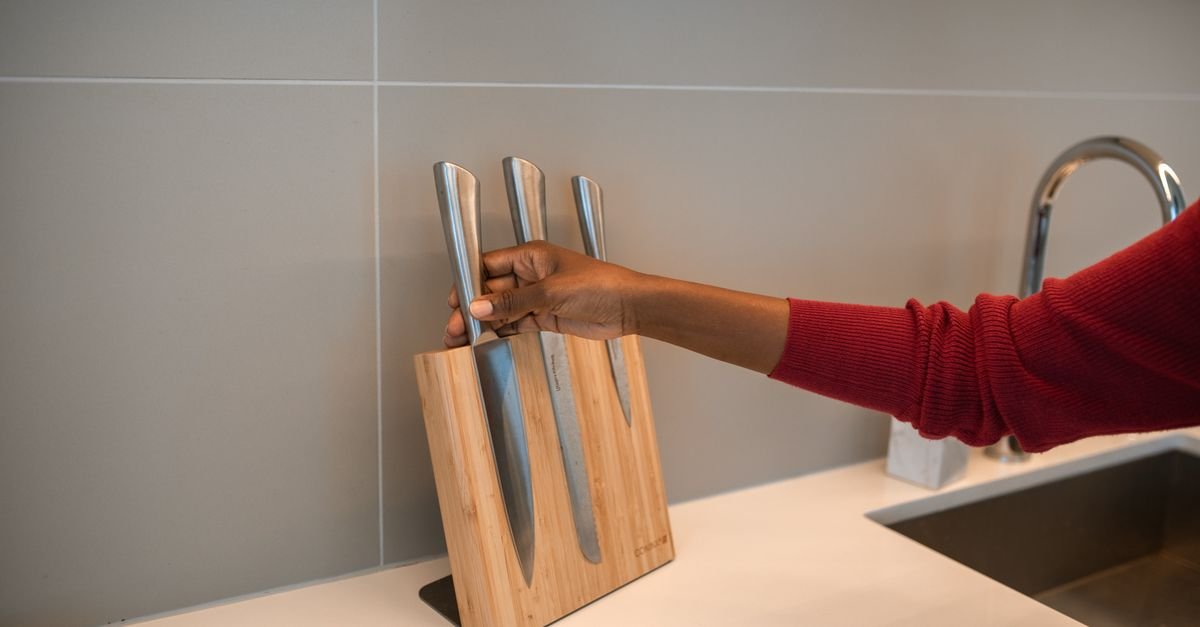
The best kitchen knife set is built around the three knives you’ll actually use every day – a chef’s knife, a paring knife and a serrated bread knife – so choose a set for quality and those essentials, not for a big piece count. Here are the best kitchen knife sets for 2026 by use case, plus how to choose and care for them.
Also Read


See Top-Rated Kitchen Knife Sets on Amazon →
Key Takeaways
- The big three: a chef’s, paring and serrated knife handle 90% of tasks.
- Quality over quantity: a few great knives beat a huge cheap block.
- Forged blades are heavier and more durable; stamped are lighter and cheaper.
- Hand wash only: the dishwasher ruins knife edges and handles.
- Hone often, sharpen occasionally to keep knives performing.
How we picked these kitchen knife sets
We focused on what makes a knife set genuinely useful and long-lasting.
That means the essential knives done well, good steel and construction, comfortable handles, and sensible storage. We also weighed value and how the set suits different cooks.
Instead of naming products that change constantly, we’ve grouped picks by how you’ll use them so you can match a set to your cooking.
How to choose a kitchen knife set
Choosing a set is about the essentials, quality and how you cook.
Decide which knives you truly need, weigh forged versus stamped and German versus Japanese, and pick storage that fits your kitchen. The KnifeCenter buyer’s guide below is a great primer.
With those decisions made, the use-case picks below make it simple.
The best kitchen knife sets by use case
Here are our top knife set picks for 2026, grouped by what you need.
Best overall: quality block set with essentials
A mid-size block set built around quality essentials is the best pick for most kitchens.
Look for a set anchored by a great chef’s knife, plus paring and serrated knives, kitchen shears and a honing steel. You get everyday coverage without paying for pieces you won’t use.
If you’re not sure what to buy, start here.
Check Quality Knife Sets on Amazon →
Best budget: affordable starter set
For a wallet-friendly start, an affordable set covers the basics.
Budget sets get you a functional chef’s, paring and serrated knife to begin with, though the steel won’t hold an edge as long as premium blades. Great for first kitchens.
A sensible, low-cost way to get properly equipped.
See Budget Knife Sets on Amazon →
Best value: 3-piece essentials set
Don’t want a big block? A focused 3-piece set is the smart minimalist choice.
Just the chef’s, paring and serrated knives – the trio that handles almost everything – often at better quality per knife than a large block. No wasted pieces.
Perfect for cooks who value quality over quantity.
Check Essentials Knife Sets on Amazon →
Best for serious cooks: forged German set
Keen home cooks should look at a forged, full-tang German-style set.
These heavier, durable blades feel substantial, hold up to heavy use, and last for years. The weight suits powerful, rock-chopping technique.
Worth it if you cook often and want knives that last.
See Forged Knife Sets on Amazon →
Best Japanese-style: precision knife set
For precision and lighter handling, a Japanese-style set excels.
Harder steel takes a very sharp, thin edge ideal for precise slicing, and the knives are lighter in hand. They reward careful technique and gentle care.
Great for cooks who love fine, detailed knife work.
Check Japanese-Style Knife Sets on Amazon →
Best with storage: knife block set
To keep knives safe and handy, a block set is the classic choice.
A countertop block protects edges and keeps knives within reach, and many include shears and a honing steel. Choose one that fits your counter.
Ideal for a tidy, ready-to-cook kitchen.
See Knife Block Sets on Amazon →
Best self-sharpening: block with built-in sharpener
Hate sharpening? A self-sharpening block keeps edges keen automatically.
Ceramic sharpening slots in the block hone the blade each time you draw a knife, so it stays sharper for longer with no extra effort. A great low-maintenance option.
Perfect for busy cooks who forget to sharpen.
Check Self-Sharpening Knife Sets on Amazon →
Best for small kitchens: compact knife set
Short on counter space? A compact set or in-drawer block saves room.
Slim blocks, magnetic holders or drawer organizers store the essentials without hogging the counter. You get the knives you need in a small footprint.
Ideal for apartments and tiny kitchens.
See Compact Knife Sets on Amazon →
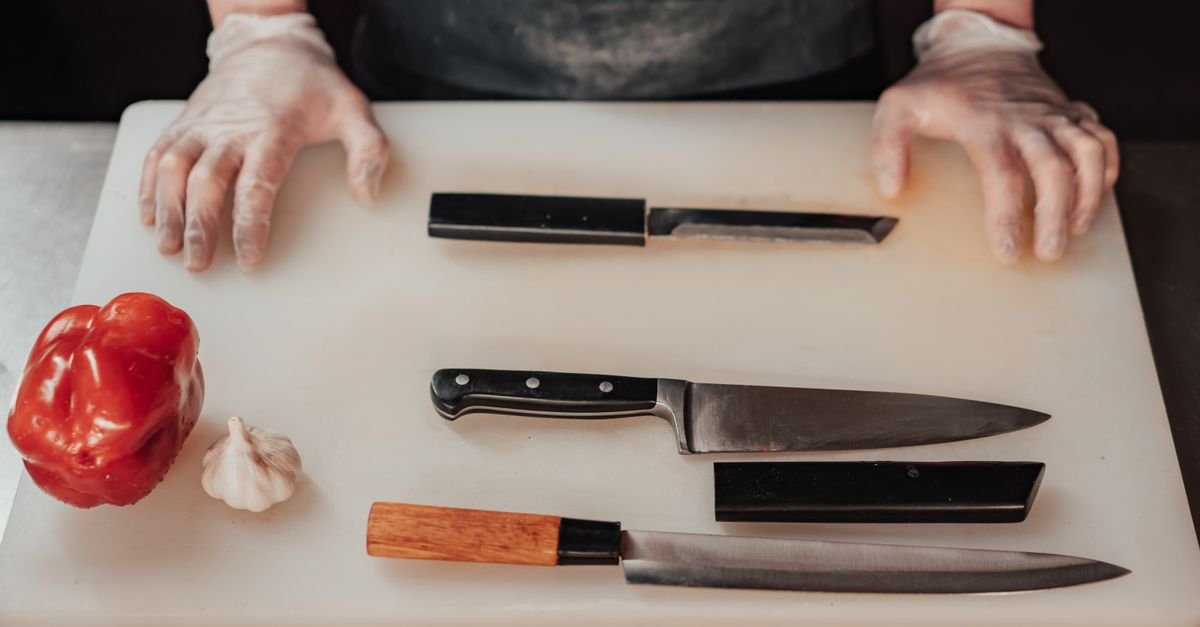
What knives do you actually need?
Most cooks need far fewer knives than a big block suggests.
- Chef’s knife: the workhorse for chopping, slicing and dicing.
- Paring knife: for small, precise tasks like peeling and trimming.
- Serrated (bread) knife: for bread, tomatoes and soft-skinned foods.
A utility knife or santoku is a nice addition, but those three cover the vast majority of kitchen jobs.
Are big knife sets worth it?
A huge block looks impressive, but bigger isn’t better.
Large sets often pad the count with steak knives and rarely-used specialty blades, spreading the budget thin across lower-quality steel. You end up paying for pieces that sit in the block.
You’re usually better off with fewer, higher-quality knives you’ll actually use.
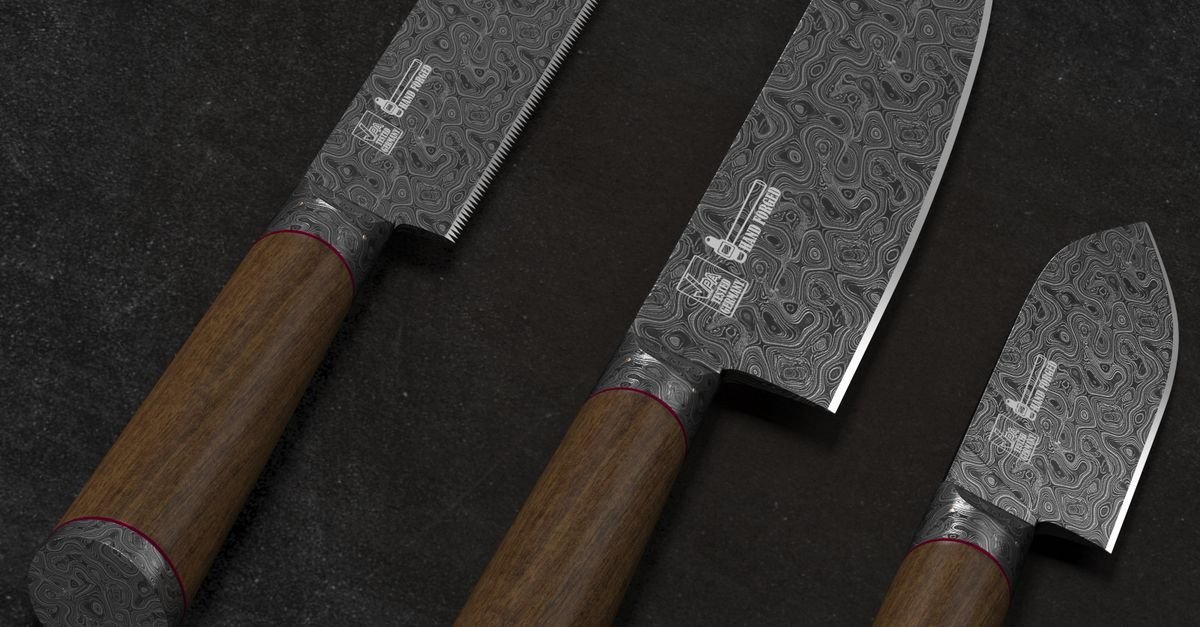
Forged vs stamped knives
How a blade is made affects feel, durability and price.
- Forged: made from a single piece of heated, shaped steel; heavier, sturdier and often with a bolster – typically more durable and pricier.
- Stamped: cut from a sheet of steel; lighter and cheaper, and can still perform well.
Forged suits heavy use and those who like weight; stamped suits lighter handling and tighter budgets.
German vs Japanese knives
The two big knife traditions suit different cooks.
German knives use softer, tougher steel with a heavier, curved blade great for rocking cuts and rough tasks. Japanese knives use harder steel with a thinner, sharper edge for precise slicing, but need more careful handling.
Choose German for durability and power, Japanese for precision and finesse.
What makes a good kitchen knife?
A few things separate a great knife from a frustrating one.
Look for good-quality steel that holds an edge, a comfortable, secure handle, and a blade that feels balanced in your hand. A full tang (the blade running through the handle) adds strength and balance.
Above all, a knife should feel comfortable and controlled when you hold it.
High-carbon vs stainless steel
Blade steel is a trade-off between sharpness and upkeep.
High-carbon steel takes and holds a very sharp edge but can rust or stain without care. Stainless resists corrosion and is lower-maintenance, while high-carbon stainless blends both – sharp and rust-resistant.
For most home cooks, high-carbon stainless is the easy, practical choice.
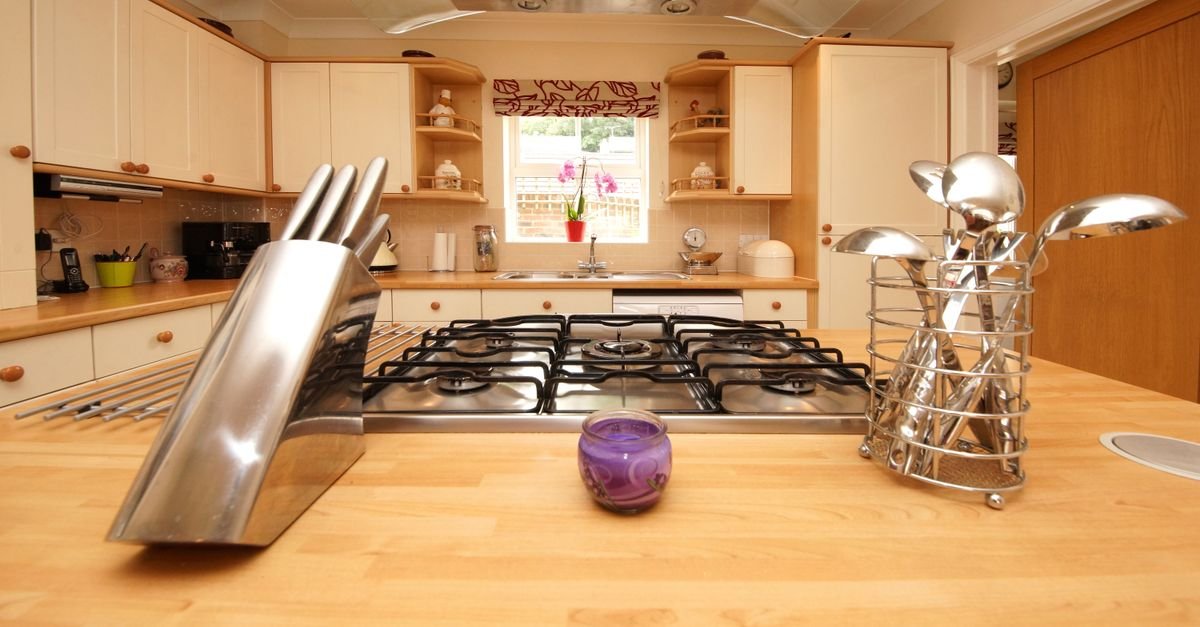
Knife storage: block, magnetic strip or drawer
How you store knives protects both the edges and your fingers.
A block keeps knives handy and edges protected, a magnetic wall strip saves counter space and shows off blades, and in-drawer organizers keep counters clear. Loose knives in a drawer dull and are dangerous.
Pick whichever keeps edges protected and suits your space.
Key features to look for
A few features make a knife set nicer to own.
- The essential knives done well, not a padded count.
- Full-tang, balanced blades that feel secure.
- Comfortable, grippy handles.
- Included shears and a honing steel.
- Sensible storage for your space.
Quality steel and a comfortable handle matter far more than the number of pieces.
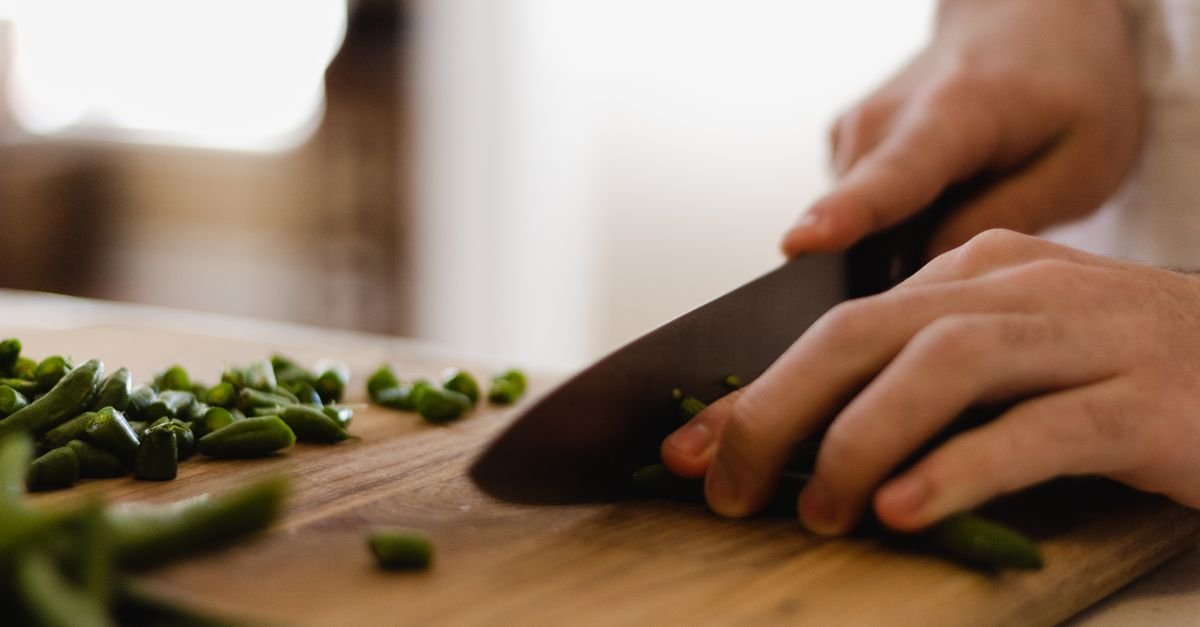
How to keep knives sharp
A sharp knife is safer and more pleasant to use than a dull one.
Hone your knife regularly with a honing steel to realign the edge, and sharpen it occasionally (with a whetstone, pull-through sharpener or a pro service) to restore it. Honing is frequent; sharpening is now and then.
Most cuts happen because a dull knife slips – keeping knives sharp is genuinely safer.
Are self-sharpening knife blocks good?
Self-sharpening blocks are a convenient middle ground.
Built-in ceramic sharpeners hone the blade each time you remove a knife, keeping everyday edges keen with zero effort. They won’t fully restore a badly dull or damaged blade, though.
Great for low-maintenance kitchens, as long as you don’t expect miracles on neglected blades.
Knife set mistakes to avoid
- Buying for piece count. Quality of the core knives matters most.
- Using the dishwasher. It dulls edges and damages handles.
- Never sharpening. Dull knives are less safe and less pleasant.
- Storing loose in a drawer. It damages edges and risks fingers.
- Cutting on glass or stone. Use wood or plastic boards to protect edges.
How much should you spend on a knife set?
You can spend a little or a lot, so match it to your cooking.
Budget starter sets are inexpensive, mid-range forged or quality stamped sets offer the best balance, and premium German or Japanese sets sit at the top.
For most people, a mid-range set (or a great 3-piece plus a block) is the smart buy – quality where it counts without paying for filler pieces.
How to care for and clean kitchen knives
Good care keeps knives sharp and safe for years.
Always hand wash and dry knives immediately – never the dishwasher, which dulls edges and loosens handles. Cut on wood or plastic boards, hone regularly, and store blades protected.
These simple habits do more for knife performance than the price of the set.
How many knives should a good set have?
Quality matters far more than quantity here.
A great starter set can be as small as three knives – chef’s, paring and serrated – while a well-rounded block set adds a utility knife, shears and a honing steel. Beyond that, extra pieces are often filler.
Focus on how good the core knives are rather than how many come in the box.
Do you need a knife sharpener with your set?
Some way to maintain the edge is essential, even if it’s not in the box.
A honing steel realigns the edge for daily upkeep, while a whetstone, pull-through sharpener or a professional service restores a dull blade. Many sets include a honing steel; a separate sharpener is worth adding.
Without any sharpening tool, even the best knives will dull and become frustrating.
Can you buy kitchen knives individually instead of a set?
Yes – and for many cooks, that’s the smarter approach.
Buying a great chef’s knife first, then adding a paring and serrated knife, lets you spend on quality where it counts instead of a padded block. You end up with knives you actually use.
Sets are convenient and often better value up front, but building your own works well too.
Are expensive knife sets worth it?
For frequent cooks, better knives are often worth it – within reason.
Premium steel holds an edge longer and quality construction lasts for years, which matters if you cook daily. But you don’t need the most expensive set; a good mid-range set performs beautifully.
Spend where it counts – the chef’s knife – and don’t overpay for pieces you won’t use.
Frequently Asked Questions
What is the best kitchen knife set to buy?
The best set is built around quality versions of the three essential knives – a chef’s, paring and serrated knife – rather than a big piece count. For most people, a mid-size block set anchored by a great chef’s knife (with shears and a honing steel) is the ideal choice.
What knives do I actually need?
Most cooks only need three: a chef’s knife for chopping and slicing, a paring knife for small precise tasks, and a serrated knife for bread and soft foods. A utility knife or santoku is a nice extra, but those three cover the vast majority of kitchen jobs.
Are big knife sets worth it?
Usually not. Large blocks often pad the count with steak knives and specialty blades while spreading the budget across lower-quality steel. You’re generally better off with fewer, higher-quality knives you’ll actually use.
What’s the difference between forged and stamped knives?
Forged knives are made from a single piece of shaped steel, making them heavier, sturdier and usually pricier, often with a bolster. Stamped knives are cut from a steel sheet, so they’re lighter and cheaper, and can still perform well. Choose forged for durability, stamped for lighter handling and budget.
German or Japanese knives – which is better?
German knives use tougher steel with a heavier, curved blade great for rocking cuts and rough tasks, while Japanese knives use harder steel with a thinner, sharper edge for precision. Choose German for durability and power, Japanese for finesse and fine slicing.
Can you put kitchen knives in the dishwasher?
No. The dishwasher’s heat, detergent and jostling dull the edges, can cause rust, and loosen or damage handles. Always hand wash and dry knives right away to keep them sharp and safe.
How often should you sharpen kitchen knives?
Hone your knives regularly with a honing steel to realign the edge, and fully sharpen them occasionally – every few months for a home cook, or when they feel dull. Honing is frequent maintenance; sharpening is an occasional reset.
What’s the best way to store kitchen knives?
Use a block, a magnetic wall strip or an in-drawer organizer to protect the edges and your fingers. Avoid tossing knives loose in a drawer, which dulls the blades and is dangerous.
The bottom line
A great knife set is about quality essentials, not a giant block of filler.
For most people a mid-range set built around a chef’s, paring and serrated knife is the sweet spot; go forged for durability or Japanese for precision.
Buy quality where it counts, store knives safely, hand wash them, and keep them sharp. Round out your kitchen with our picks for the best stand mixers and best air fryers.

I'm Nasir Uddin Khan, founder of HomeNeeds24 and a senior IT consultant with 18+ years' experience in Oracle database administration, enterprise infrastructure and ERP system design. I write the buying guides here and I build every calculator on the site myself, from published engineering standards rather than opinion. My research is structured rather than lab-based: manufacturer specifications, safety and efficiency standards, and the trade-offs that repeat across large volumes of verified customer reviews. Where I have direct hands-on experience — smart home, networking, energy and anything computer-adjacent — I say so in the guide.