
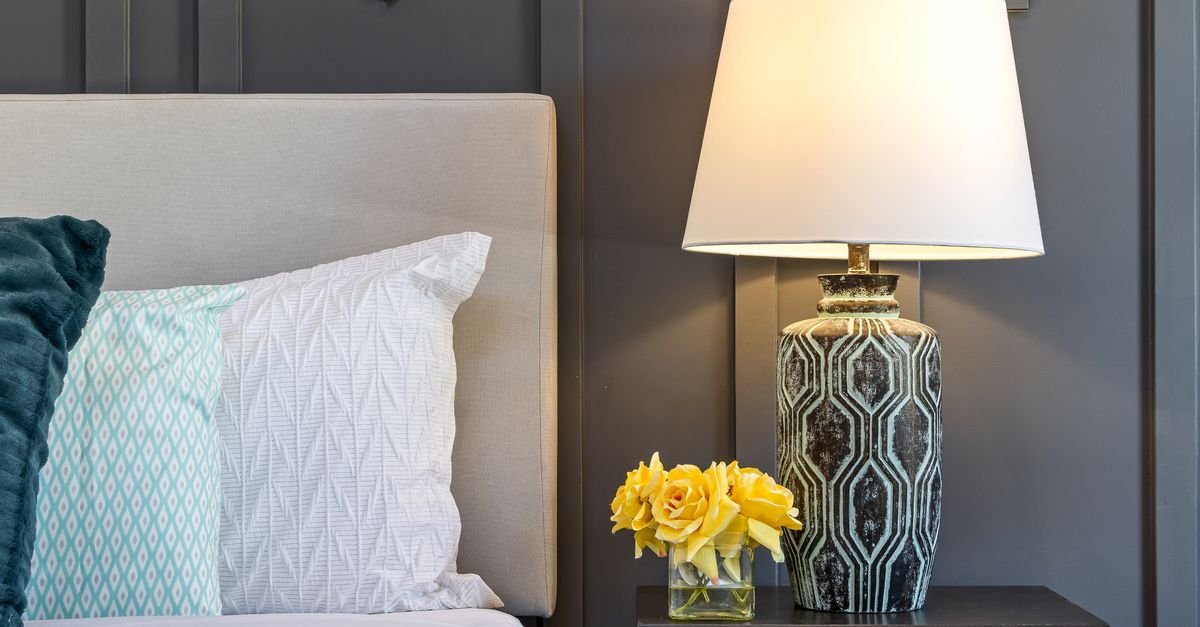
The nightstand is the last thing you see at night and the first thing you see each morning — and in most bedrooms, that view is a charging cable, three water glasses of various vintages, and a lip balm graveyard.
Also Read



Meanwhile, in every beautiful bedroom photo you’ve ever saved, the nightstand looks like a tiny curated altar. The gap between those two nightstands? About fifteen minutes and one formula.
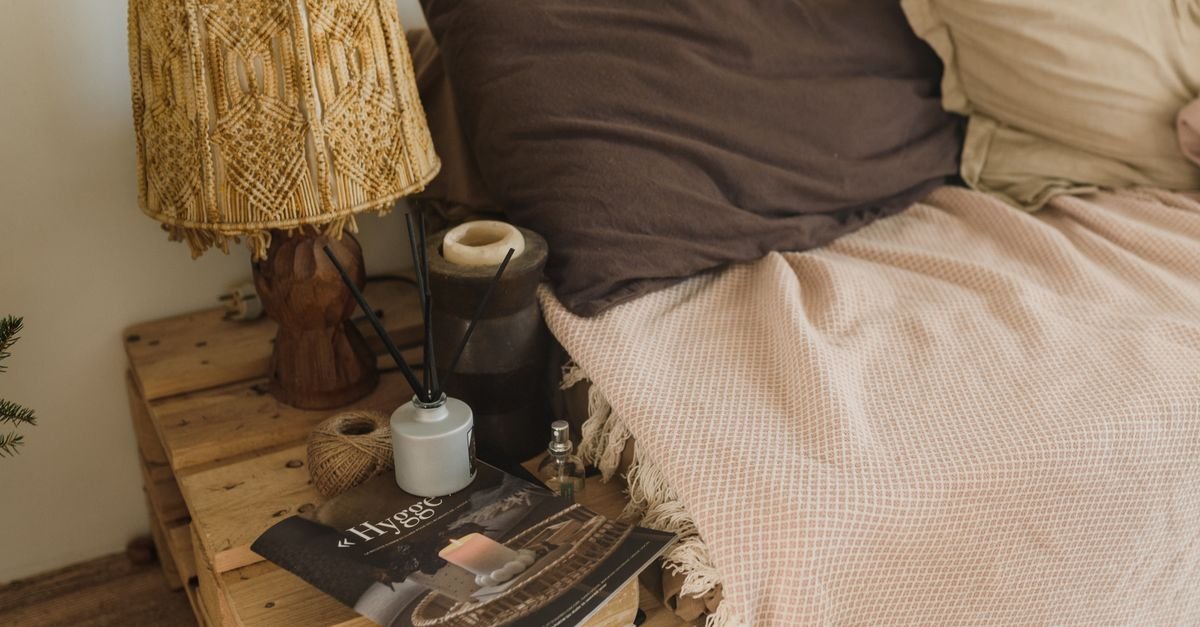
Quick answer: Style a nightstand with the rule of three: one light source (the lamp anchors everything), one useful thing (carafe, clock, book, tray for the daily debris), and one lovely thing (a small plant, art, or personal object) — then stop. Vary the heights (tall lamp, medium object, low tray), corral small items on a tray, hide cables completely, and leave clear space for the glass of water that will arrive nightly whether you plan for it or not.
Key Takeaways
- The formula: one light + one useful + one lovely — three zones, then stop adding.
- The lamp is the anchor — scale it right (roughly a third the width of the nightstand-and-headboard view) and everything else follows.
- A small tray is the secret weapon — it converts daily debris into a styled vignette.
- Heights make it designer: tall lamp, mid book stack, low tray — the same triangle as every styled surface.
- Cables are the tell: visible charging spaghetti undoes everything above it.
- Style for the real user: the water glass, the book, the glasses need a home — or they’ll take the whole surface hostage.
Why Does the Nightstand Matter So Much?
Square inch for square inch, it’s the most personal surface in the house: the launchpad and landing pad of every single day.
Visually, it flanks the bed — the room’s biggest object — so the eye reads bed and nightstands as one composition. A beautifully layered bed beside a chaotic nightstand is a tuxedo worn with one muddy shoe.
Functionally, it’s mission control for sleep: light, water, book, glasses, phone (or ideally, the phone’s exile station). Style that ignores those jobs gets dismantled by real life within a week — which is why the formula below starts with function.
What Is the One-Light, One-Useful, One-Lovely Formula?
Zone 1: The light
The lamp is the nightstand’s anchor and its single biggest style statement. Get the scale right: as a working guide, lamp height around two-thirds the height of your headboard view, and the shade’s bottom near chin height when you’re sitting up — light for reading, not interrogation.
Warm bulbs only (2700K territory) — bedside light should whisper. A wall-mounted sconce or plug-in pendant frees the entire surface, the small-nightstand power move.
Zone 2: The useful
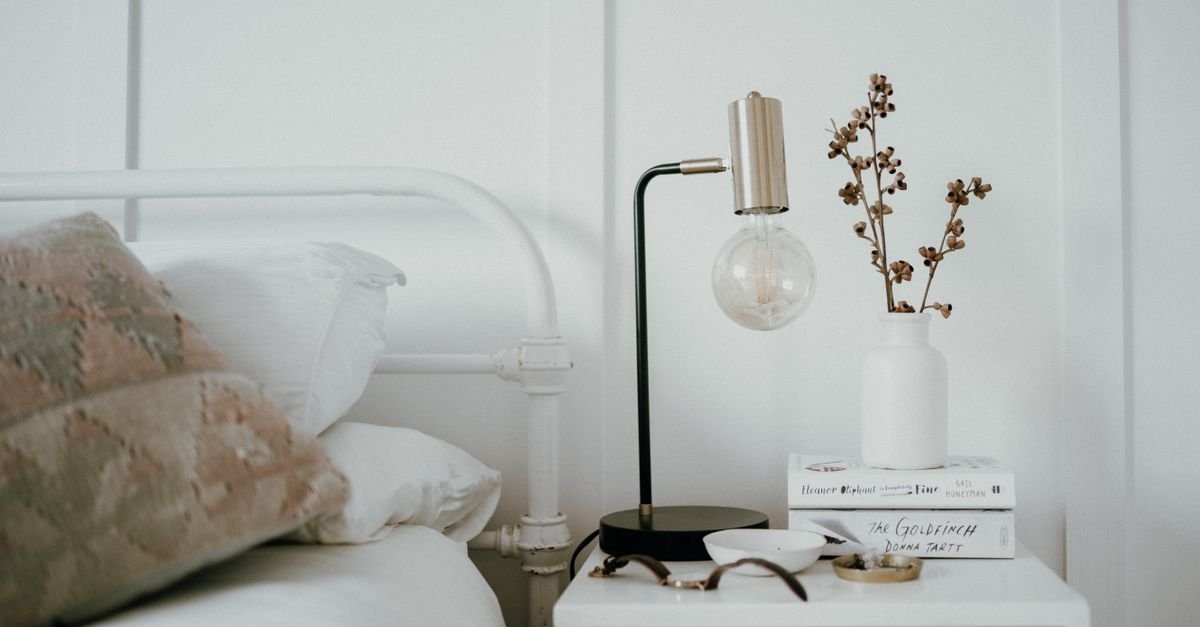
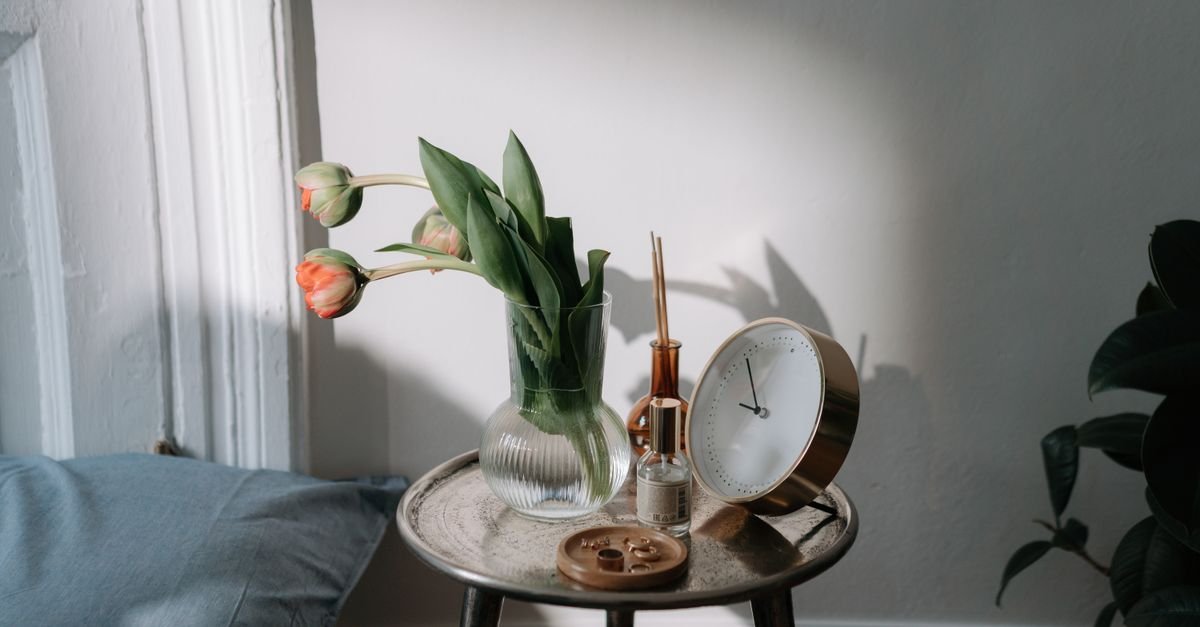
Pick the function you actually use nightly: a carafe-and-glass set (solving the water-glass migration permanently), the current book or two, an analog alarm clock (the phone-free bedroom’s hero), or the tray that catches jewelry, lip balm, and pocket contents.
Zone 3: The lovely
One small piece of life: a bud vase, a tiny plant, a framed photo, a candle, a small object with a story. This is the zone that makes it yours — and one confident piece beats four trinkets.
Then the hard part: stop. A nightstand is a haiku, not an essay — the formula works precisely because it ends.
How Do You Arrange the Three Zones?
Same geometry as every styled surface in your house — the height triangle:
Tall (the lamp, always at the back corner nearest the wall) → medium (books stacked flat with the useful or lovely object on top — the stack-as-pedestal trick from shelf styling) → low (the tray or clock at the front).
Work diagonally: lamp back-left, book stack center-right, tray front-left (or mirrored, per your side of the bed). The diagonal keeps the eye moving and leaves — critically — the front landing zone clear for the nightly water glass and phone.
Twin nightstands flanking a bed should relate, not match: same lamp pair for symmetry (the classic hotel look), then let each side’s zones two and three differ by owner. Matching everything reads staged; coordinating reads designed — the same logic as mixing wood tones, and yes, the nightstands themselves don’t need to match either.
What About the Cables?
The unglamorous section that makes or breaks everything above it.
Visible charging spaghetti is the number-one nightstand crime — no styling survives it. The fixes, cheapest first:
- Adhesive cable clips along the back leg route the wire invisibly from outlet to surface.
- A charging tray or valet with a cable slot turns the phone’s spot into a deliberate station.
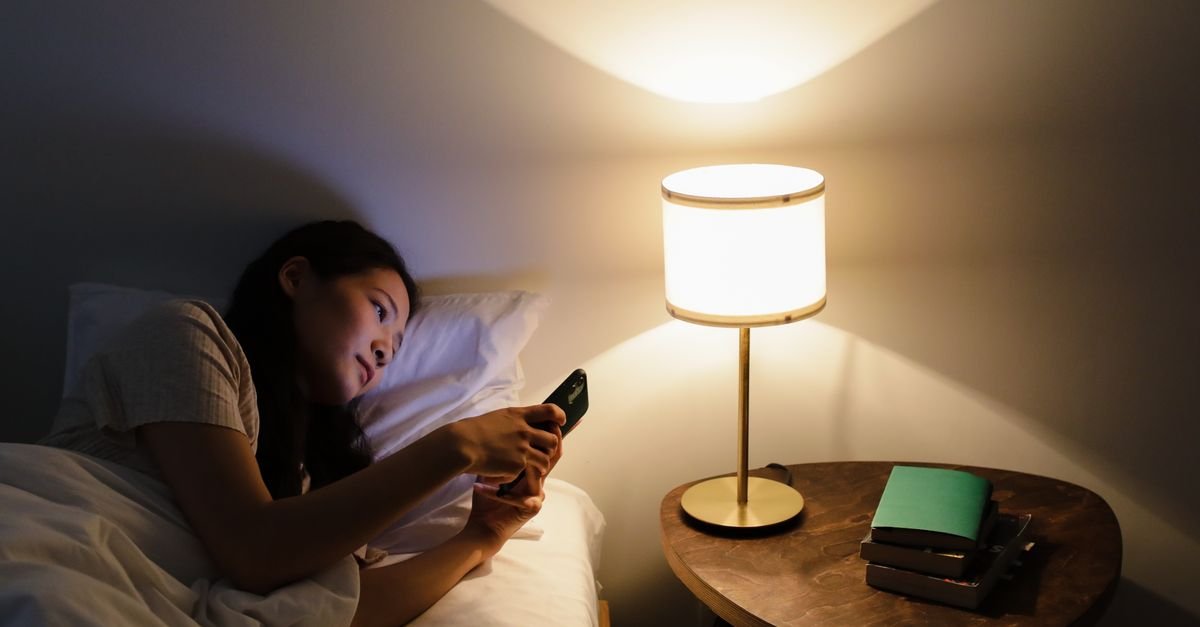
- Drawer charging: drill-free versions run the cable into the top drawer through the back gap — phone sleeps in the drawer, out of sight and out of scroll-reach (the bedtime upgrade our doomscrolling readers would applaud — and your sleep will too).
- The nuclear option: charge the phone across the room entirely — nightstand liberation plus a built-in anti-snooze alarm system.
Whichever route: the surface shows a lamp cord at most, and even that gets clipped to the leg.
How Do You Style Small or Awkward Nightstands?
The tiny nightstand: shrink to two zones — wall sconce (freeing the surface) + one tray holding a bud vase corner. Small surfaces want haiku squared.
The no-nightstand side: a wall shelf, a slim ledge, or even a sturdy stool does the job in narrow rooms — one lamp-alternative (sconce), one cup of surface. Renters: every trick here has a damage-free version.
The mismatched-heights problem (bed too tall, table too short): aim for nightstand surface within about 5–8 cm of the mattress top — if yours misses badly, a stack of large books under the lamp visually bridges, or the piece migrates elsewhere and a right-sized one takes over (our nightstand roundup covers heights and picks).
The nightstand-as-dresser: if it’s a wide chest, treat the top like a mini console: lamp at one end, artwork leaned behind, tray landing zone at the other end — and resist the urge to fill the middle.
What Should Live in the Drawer (and What Shouldn’t)?
The drawer is the styled nightstand’s silent partner — everything unlovely-but-nightly lives there:
Drawer citizens: hand cream, lip balm, earplugs, sleep mask, chargers, medications, the remote, tissues (the box on top ages every room), and the miscellany currently colonizing the surface.
A drawer organizer (or two small trays inside) keeps it from becoming the junk drawer’s bedroom branch — thirty seconds of finding things beats three minutes of archaeology at midnight.
Surface-only residents: the three zones, the water, tonight’s book. That’s the entire guest list.
The weekly maintenance ritual is one minute: migrate strays into the drawer, wipe the surface, refill the carafe. Styled once, maintained in sixty seconds — that’s the sustainable version.
Nightstand Recipes by Style
Minimal/modern: sculptural lamp, single hardcover, small ceramic dish. Empty space is the fourth object.
Warm traditional: classic lamp with pleated or linen shade, book stack with reading glasses on top, bud vase with one stem, woven tray.
Cozy cottage: smaller lamp, stack of well-loved paperbacks, tiny framed print, candle in a jar (flame out before sleep, always — or LED).
The hotel look: matching lamps both sides, carafe-and-glass sets, one hardcover each, absolutely nothing else — and suddenly your bedroom charges $400 a night.
The reader’s reality: sconce for surface space, current stack (capped at three — the rest return to the shelf), clip-on book light, carafe. Function styled proudly.
Nightstand essentials — solid Amazon searches:
What Are the Most Common Nightstand Mistakes?
The everything-surface. Ten small objects, no zones — the surface reads as storage, not styling. Three zones, drawer for the rest.
The doll-house lamp. A tiny lamp beside a big bed disappears — scale up; the lamp is the anchor, not an accessory.
Visible cable spaghetti. Covered above; repeated because it’s in four out of five bedrooms.
The tissue box throne. Naked tissue boxes date a room instantly — drawer, or at minimum a cover.
No landing zone. Fully styled corner-to-corner means the nightly water glass lands on the styling. Leave the front-third clear — designed emptiness beats displaced clutter.
Ignoring the view from the bed. Nightstands get styled standing up and used lying down — do the final check from your pillow, where the lamp shade angle and clock face actually matter.
What Goes on a Guest Room Nightstand?
The guest nightstand is hospitality in miniature — and it follows the same three zones with a twist: useful takes the lead.
The five-star kit: a lamp they can find in the dark, a carafe and glass, a small dish for jewelry and watches, phone-charging (a spare cable is the modern guest towel), and one thoughtful extra — tissues in a cover, a small plant, or a couple of short books actually worth opening.
The luxury touch that costs nothing: a handwritten WiFi card leaning against the lamp. Guests remember it longer than the thread count.
The Five-Minute Nightstand Makeover (Do It Tonight)
The whole article as a checklist:
- Minute 1: clear everything off. Everything.
- Minute 2: triage — drawer citizens into the drawer, trash to the bin, the four mugs to the kitchen (godspeed).
- Minute 3: zones back on — lamp to the back corner, book stack with one object on top, tray at the front.
- Minute 4: cables — clip the route or move charging into the drawer.
- Minute 5: the pillow test — lie down, check the view, adjust the lamp angle, done.
Repeat weekly in sixty seconds. The nightstand stays styled precisely because the system is smaller than the clutter’s attention span.
How Do You Refresh the Nightstand by Season?
Keep the lamp and tray; rotate the lovely zone — a two-minute ritual, four times a year:
Spring: tulips in the bud vase, a lighter candle scent, the winter book pile thinned. Summer: a sprig of eucalyptus, citrus or linen scents, and the carafe earning double duty on hot nights. Fall: amber glass, a spiced candle, the season’s big novel. Winter: a tiny evergreen stem, the coziest lamp bulb warmth, hand cream promoted from drawer to tray.
Same three zones all year — the seasons just change the casting. It’s the cheapest recurring decor pleasure in the whole bedroom.
Frequently Asked Questions
What should you put on a nightstand?
Three zones: one light source (a properly scaled lamp or sconce), one useful thing (carafe and glass, clock, current book, or a catch-all tray), and one lovely thing (small plant, framed photo, bud vase). Keep the front edge clear as a landing zone, and send everything else to the drawer.
How do you style a nightstand like a designer?
Use the height triangle — tall lamp at the back corner, medium book stack with an object on top, low tray at the front — arranged on a diagonal, with cables hidden and at least a third of the surface left clear. Then stop at three zones; restraint is the designer move.
How big should a nightstand lamp be?
Substantial enough to anchor: roughly two-thirds of your headboard-view height, with the shade’s bottom near seated chin height so light falls on your book, not your eyes. Undersized lamps are the most common nightstand scale mistake.
Do nightstands and lamps have to match on both sides?
Lamps matching creates easy hotel-style symmetry, but nightstands and the rest can coordinate rather than match — same height zone and related tones, different pieces. Relating without matching reads collected; identical everything reads staged.
How do you hide charging cables on a nightstand?
Route the cable up the back leg with adhesive clips, use a charging tray with a cord slot, or run the charger into the top drawer so the phone sleeps out of sight. The surface should show a lamp cord at most — visible cable spaghetti undoes any styling.
What height should a nightstand be?
Within about 5–8 cm of your mattress top — level enough that reaching for water half-asleep requires no thought. If yours misses badly, a book stack under the lamp bridges visually, or it’s time for a right-sized replacement.
How do you style a small nightstand?
Cut to two zones: a wall sconce (freeing the whole surface) plus one small tray holding the essentials and one lovely accent. Tiny surfaces reward subtraction — the clear space is the luxury.
The bottom line
One light, one useful, one lovely — heights in a triangle, cables invisible, front edge clear, everything else in the drawer. Fifteen minutes tonight, sixty seconds a week after that, and the first thing you see every morning finally looks like the bedroom you meant to have.

I'm Nasir Uddin Khan, founder of HomeNeeds24 and a senior IT consultant with 18+ years' experience in Oracle database administration, enterprise infrastructure and ERP system design. I write the buying guides here and I build every calculator on the site myself, from published engineering standards rather than opinion. My research is structured rather than lab-based: manufacturer specifications, safety and efficiency standards, and the trade-offs that repeat across large volumes of verified customer reviews. Where I have direct hands-on experience — smart home, networking, energy and anything computer-adjacent — I say so in the guide.