
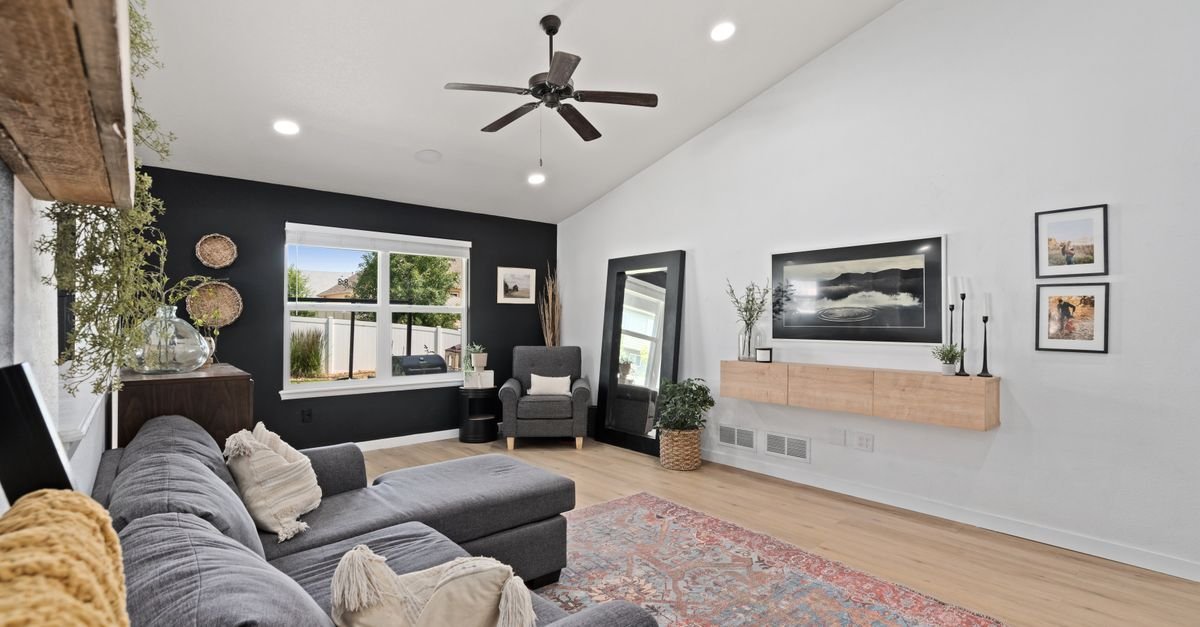
The golden rule of rug size: bigger is almost always better. In a living room, at least the front legs of every seat should sit on the rug; in a bedroom, the rug should extend 18–24 inches beyond the sides of the bed; in a dining room, chairs must stay on the rug even when pulled out. Get those three rules right and every room instantly looks more designed. Here’s the full guide.
Also Read



Key Takeaways
- The #1 mistake is going too small — a floating “postage stamp” rug shrinks the room.
- Living room: front legs of all furniture on the rug (8×10 fits most).
- Bedroom: rug extends 18–24″ beyond the bed’s sides.
- Dining: add ~24″ beyond the table on all sides for chairs.
- Leave 8–18″ of floor showing between rug and walls.
Why does rug size matter so much?
A rug isn’t just decor — it’s the frame that defines a room’s zones.
The right size anchors the furniture into one intentional group, makes the room feel bigger, and pulls the whole scheme together. Too small, and the furniture seems to float awkwardly around a little island.
Designers agree on this more than almost anything: when in doubt, size up.
The video below with interior designer Nina Takesh walks through sizing every room.
The standard rug sizes (and where they fit)
Most rugs come in these standard sizes.
- 5×8 ft: small living rooms, under a queen bed’s lower half, entries.
- 6×9 ft: compact living rooms, small dining sets, queen beds.
- 8×10 ft: the most versatile — most living rooms and king beds.
- 9×12 ft: large living rooms, spacious dining rooms.
- 10×14 ft+: open-plan and generous great rooms.
- Runners (2.5×8 ft or so): hallways, kitchens, beside beds.
Knowing these six sizes makes every rule below easy to apply.
The living room rules: three layouts that work
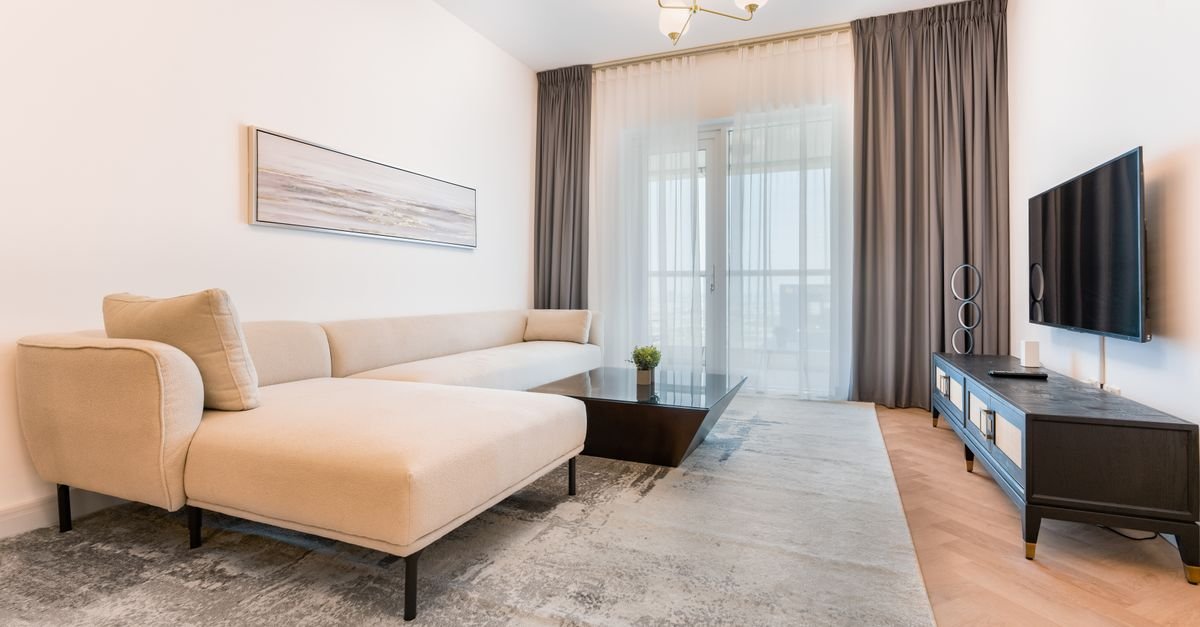
Living rooms have three classic rug arrangements.
All legs on (most luxurious): the rug holds every piece of furniture with room to spare — usually 9×12+.
Front legs on (the designer default): every seat’s front legs sit on the rug — usually 8×10. This visually ties the group together.
All legs off (small rooms only): a rug that floats in the middle — workable, but only if it still spans the seating area’s width.
What size rug for your living room?
Quick matches by room size.
Small (10×12 ft or less): 5×8 or 6×9, front legs on. Average (12×15 ft): 8×10 — the workhorse. Large (15×18 ft+): 9×12 or bigger.
Always leave 8–18 inches of bare floor between rug and walls — that visible border actually makes the room look larger. Tight on space? See our small living room ideas.
Rug size for a sectional sofa
Sectionals need serious rugs.
The rug should extend beyond the sectional’s footprint on the open sides, with at least the front legs on — usually 8×10 minimum, often 9×12.
A small rug in front of a big sectional is the fastest way to make a large sofa look stranded — more on pairing in our modern sectional sofas guide.
What size rug for the bedroom?
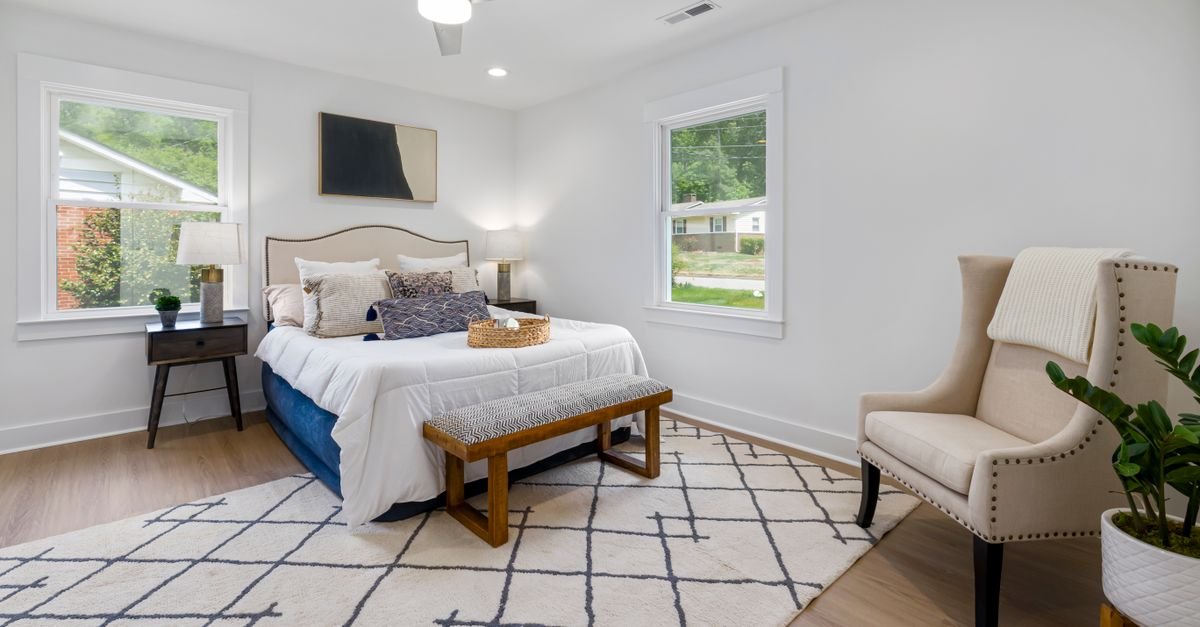
The goal: warm floor under your feet on every side of the bed.
King bed: 9×12 (or 8×10 minimum). Queen bed: 8×10 (or 6×9 minimum). Full/twin: 6×9 or 5×8.
Place the rug under the bed starting just in front of the nightstands, extending 18–24 inches beyond each side and the foot.
Bedroom placement: the two-thirds rule
You don’t need the rug under the whole bed.
The classic placement slides the rug under the lower two-thirds of the bed — nightstands off, generous landing zones on three sides.
Alternative for small rooms: a runner along each side of the bed. Both looks are covered in our bedroom rug ideas.
What size rug for the dining room?
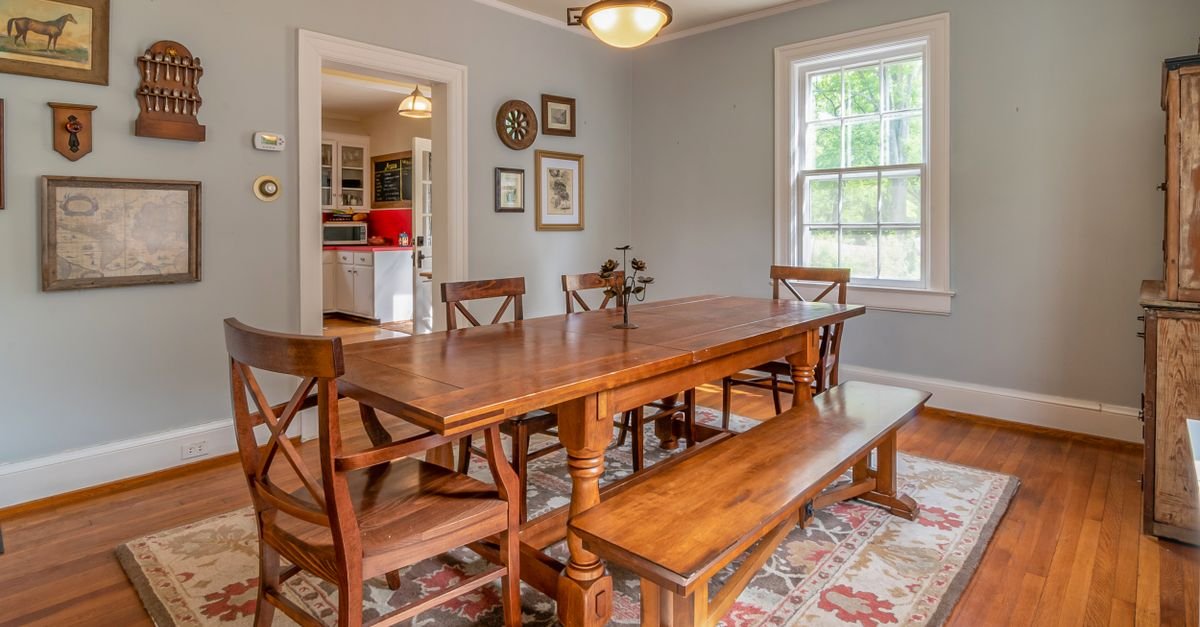
One rule decides it: chairs stay on the rug, even pulled out.
Take your table’s dimensions and add roughly 24 inches on every side. A table for six usually needs at least 8×10; larger tables want 9×12.
Match the rug’s shape to the table — rectangular with rectangular, round with round.
Entryways, hallways and kitchens
Smaller spaces, simpler rules.
Entry: a rug or mat proportional to the door width, with the door clearing it easily. Hallway: a runner leaving 4–6 inches of floor on each side. Kitchen: a runner along the main work zone, washable ideally.
These small rugs take the most abuse — durability beats delicacy here.
How to test a rug size before buying
Never guess — map it.
Use painter’s tape to outline the rug’s exact dimensions on your floor, then live with the outline for a day. Walk around it, pull out chairs, check the furniture legs.
Old bedsheets work too. Five minutes of taping prevents the most expensive decorating mistake.
Reading the room: proportion beats rules
The rules are starting points — proportion is the goal.
The rug should relate to the furniture group, not the room’s walls. Aim for the rug to span roughly the width of the seating or bed area plus a generous margin.
If it looks like a bath mat next to your sofa, it’s too small — no rule required to see it.
Layering rugs: the designer trick
Layering solves two problems at once.
A large, inexpensive flatweave (like jute) sizes the space correctly, while a smaller patterned or plush rug on top adds personality where it counts.
You get correct proportions and the rug you fell in love with — even if it only comes in 5×8.
Rug orientation: which way should it run?
Almost always: parallel to the room’s longest dimension or the main furniture piece.
In living rooms, the rug’s long side usually runs along the sofa. In bedrooms, perpendicular to the bed so it extends on both sides.
Wrong orientation can make even a correctly sized rug feel off.
Common rug size mistakes
- Buying too small — the #1 error, by far.
- All legs off with a tiny rug floating mid-room.
- Dining chairs falling off the back edge when pulled out.
- Rug wall-to-wall with no floor border showing.
- Skipping the rug pad — it prevents slipping and doubles rug life.
- Ignoring door clearance — doors must swing over the rug freely.
Does a bigger rug make a room look bigger?
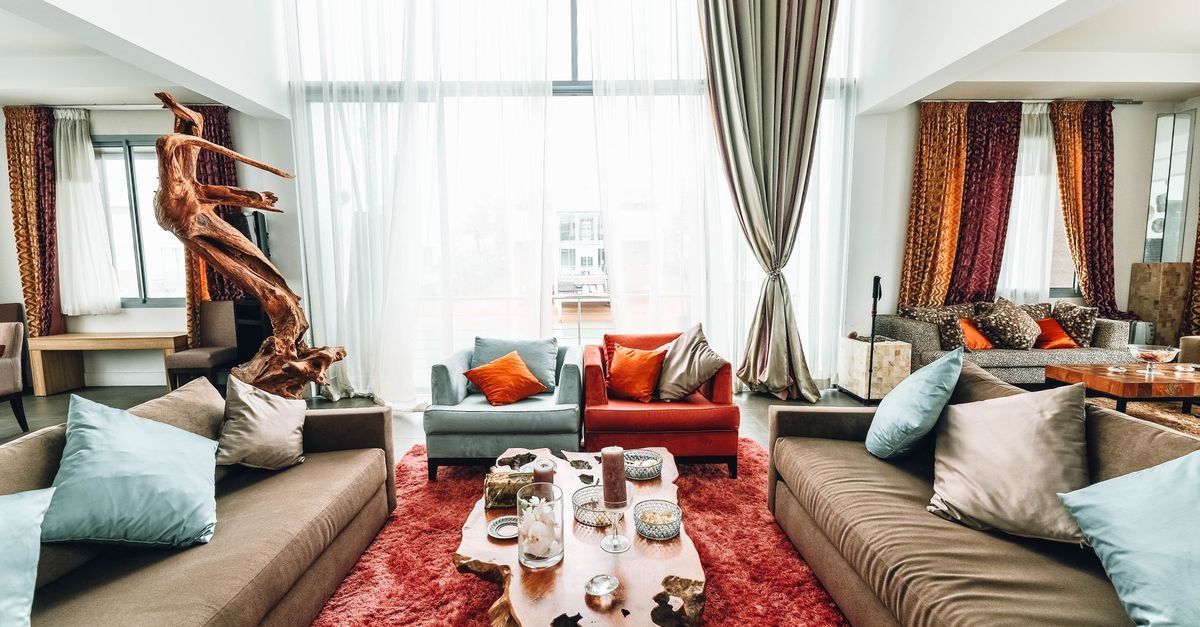
Counterintuitively, yes.
A properly large rug unifies the furniture into one generous zone and stretches the eye across the space, while a small rug chops the floor into fragments.
If you want a room to feel larger, sizing up the rug is one of the most reliable tricks in decorating.
Budgeting: where the money goes
Bigger rugs cost more — plan for it smartly.
Flatweaves and jute deliver big sizes affordably; wool costs more but lasts decades; washable rugs earn their keep in dining rooms and homes with kids or pets.
The layering trick above is the classic budget path to a correctly sized room. Browse styles in our modern rugs roundup, or check popular 8×10 rugs on Amazon.
Don’t forget the rug pad
The invisible upgrade everyone skips.
A quality pad stops slipping, protects floors, adds cushioning, and extends the rug’s life by absorbing the grinding between rug and floor.
Size it about an inch smaller than the rug on all sides so the edges lie flat.
Quick reference: rug sizes by room
- Living room (average): 8×10, front legs on.
- Living room (large/sectional): 9×12.
- Bedroom (king): 9×12 — (queen): 8×10.
- Dining (seats 6): 8×10 — (seats 8+): 9×12.
- Hallway: runner with 4–6″ floor borders.
- Entry: proportional to door width, low profile.
Save this list — it answers 90% of rug shopping on the spot.
Rug size for open-plan spaces
Open layouts need rugs more than any other home.
With no walls, rugs do the zoning: one large rug defines the living area, another anchors the dining zone, each following its own room’s rules.
Leave a clear walkway of bare floor between zones — the gap is what makes the “rooms” read as separate.
Round rugs: when and how to size them
Round rugs follow the same logic with softer geometry.
They shine under round dining tables (table diameter + 48 inches), in entryways, and in reading corners where a round rug hugs a single chair beautifully.
Avoid using a small round rug as a living room’s main rug — it almost always reads as too small.
Runners: the underused problem-solvers
Runners fix awkward spaces nothing else fits.
Hallways, kitchens, bedsides and bathrooms all benefit from a long, narrow rug that adds warmth without swallowing the floor.
Sizing is simple: leave 4–6 inches of floor visible on each side and end runners a few inches before doorways.
What if your room is an unusual shape?
L-shaped and long, narrow rooms bend the rules gracefully.
Treat each functional zone as its own “room” with its own rug, or in a long room, let one generous rug define the main seating area and leave the rest bare.
The constant: the rug relates to the furniture group, never to the walls.
Pile height: the forgotten dimension
Rug size gets the attention, but thickness matters daily.
Low-pile rugs suit dining rooms (chairs slide) and high-traffic paths; plush high-pile belongs in bedrooms and lounging zones; and any rug near a door should be flat enough for the door to clear.
Check pile height in the listing — it’s the difference between a rug you love and one that fights your furniture.
Caring for a correctly sized rug
A rug under furniture lives a harder life — help it last.
Rotate the rug 180 degrees once or twice a year so traffic and sunlight wear evenly, vacuum regularly, and blot spills immediately rather than rubbing.
With a pad underneath and an occasional rotation, a quality rug stays beautiful for decades.
Kids’ rooms and nurseries
Little rooms, softer rules.
A generous soft rug defines the play zone and cushions tumbles — washable rugs earn their keep here more than anywhere in the house.
Size it to the open play area rather than the bed, and skip high pile where small toys tend to vanish.
The one-question shortcut
Overwhelmed? Ask this single question.
“Does the rug connect my furniture into one group?” If every key piece touches it and the group reads as a unit, the size is right — whatever the chart says.
Rules serve that goal; when in doubt, connection wins.
Frequently Asked Questions
What size rug should I get for my living room?
For most living rooms, an 8×10 rug with the front legs of every seat on it is the sweet spot. Small rooms can work with a 5×8 or 6×9; large rooms and sectionals usually want a 9×12. Leave 8–18 inches of bare floor between the rug and the walls.
What is the front-legs-on rule?
It’s the designer default for living rooms: the front legs of every sofa and chair sit on the rug while the back legs stay off. This visually ties the furniture into one group, makes the room look intentional, and lets a mid-size rug (like an 8×10) do the work of a bigger one.
What size rug goes under a queen bed?
An 8×10 rug is ideal under a queen bed (6×9 is the workable minimum). Slide it under the lower two-thirds of the bed — stopping just in front of the nightstands — so it extends 18–24 inches beyond each side and the foot of the bed.
What size rug do I need for a dining table?
Measure your table and add about 24 inches on every side, so chairs stay on the rug even when pulled out. A six-seat table typically needs at least an 8×10; eight seats or more usually calls for a 9×12. Match the rug’s shape to the table’s shape.
Is it better for a rug to be too big or too small?
Too big, almost every time. An oversized rug reads as luxurious and makes the room feel larger, while an undersized rug fragments the floor and makes furniture look stranded. If you’re between two sizes, designers overwhelmingly say size up.
How do I know a rug will fit before buying?
Outline the exact rug dimensions on your floor with painter’s tape (or lay out bedsheets) and live with it for a day. Check that furniture legs land where they should, dining chairs stay on when pulled out, and doors clear the height. It takes minutes and prevents costly mistakes.
Do I really need a rug pad?
Yes. A pad stops the rug slipping, protects the floor underneath, adds comfort, and significantly extends the rug’s life. Choose one about an inch smaller than the rug on all sides so the edges taper flat.
The bottom line
Rug sizing comes down to three memorable rules: front legs on in the living room, 18–24 inches beyond the bed, and 24 inches beyond the dining table.
Tape it out before you buy, err on the larger side, and add a pad — and your rooms will instantly look professionally put together.
Find the style to match in our modern rugs and bedroom rug ideas.

I'm Nasir Uddin Khan, founder of HomeNeeds24 and a senior IT consultant with 18+ years' experience in Oracle database administration, enterprise infrastructure and ERP system design. I write the buying guides here and I build every calculator on the site myself, from published engineering standards rather than opinion. My research is structured rather than lab-based: manufacturer specifications, safety and efficiency standards, and the trade-offs that repeat across large volumes of verified customer reviews. Where I have direct hands-on experience — smart home, networking, energy and anything computer-adjacent — I say so in the guide.