
A small bathroom can feel cramped, cluttered, and impossible to keep tidy — or it can feel calm, spacious, and effortless. The difference rarely comes down to square footage. It comes down to how well the space is organized and which accessories you choose. With a few smart decisions, even the tiniest bathroom can work like one twice its size.
Also Read



This guide covers how to organize a small bathroom from the ground up: how to use vertical space, the storage pieces that genuinely help, the accessories worth buying, and the habits that keep it clutter-free. None of it requires renovation — just a sharper plan.
Start by Understanding the Problem
Small bathrooms feel chaotic for one main reason: too many items competing for too little surface. Every product left on the counter or edge of the tub steals visual space and makes cleaning harder. The goal of good organization is simple — give every item a dedicated home that isn’t a flat surface you also need for daily use.
Before buying anything, empty the room and sort everything into three piles: daily essentials, occasional items, and things you haven’t touched in months. That third pile usually reveals how much space is being wasted on products past their prime. Clearing it out is the cheapest organizing upgrade there is.
Use the Walls: Vertical Storage Wins
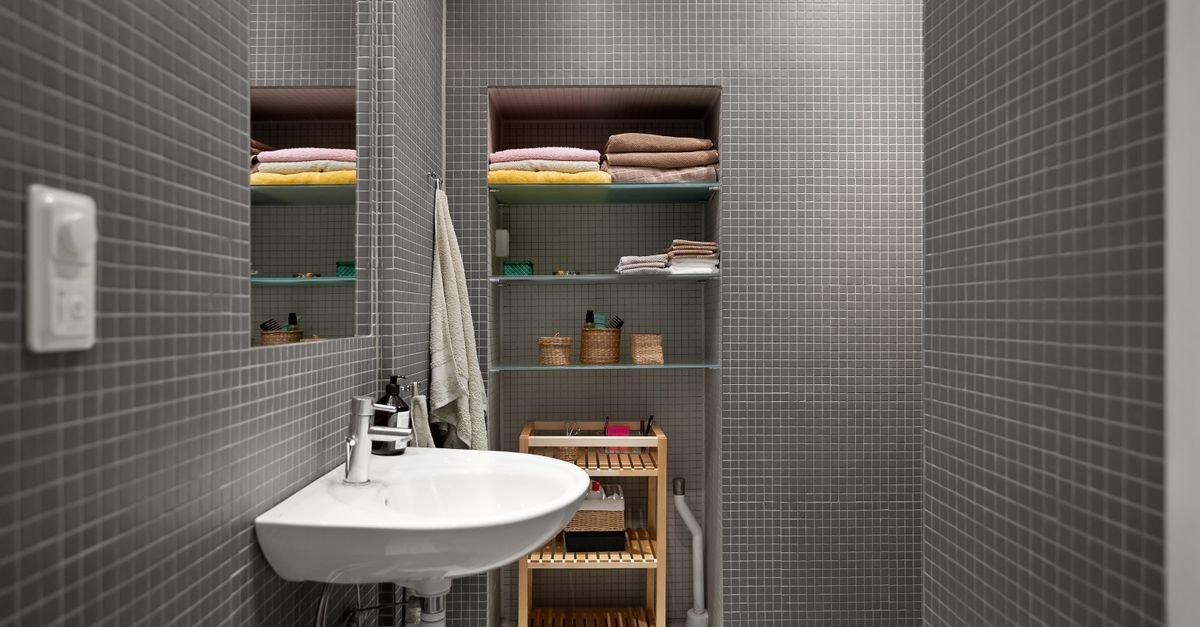
In a small bathroom, the floor is precious and the walls are underused. Going vertical is the single most effective strategy.
Over-the-Toilet Shelving
The space above the toilet is almost always wasted. An over-the-toilet shelf unit or cabinet reclaims it instantly, providing room for towels, baskets, and everyday products without taking a single inch of floor space. Choose open shelving for an airy look or a closed cabinet to hide clutter entirely.
Wall-Mounted Cabinets and Hooks
A slim wall cabinet near the sink keeps daily essentials within reach but off the counter. Hooks — for robes, towels, and loofahs — do more work than bulky towel bars and dry items faster. Mounting a few at different heights makes a surprising difference in a shared bathroom.
Shower Caddies and Corner Shelves
Tension-rod shower caddies and adhesive corner shelves keep bottles off the tub edge, where they collect grime and slow down cleaning. Look for rust-resistant materials — stainless steel or coated metal — since the shower is the harshest environment in the house.
Maximize the Vanity and Under-Sink Space
The cabinet under the sink is often a black hole of half-empty bottles. A couple of inexpensive additions transform it. Stackable bins or drawers turn the awkward space around the plumbing into usable storage. A small tension rod inside the cabinet door holds spray bottles by their triggers, freeing the floor of the cabinet. Clear containers let you see what you have, which prevents buying duplicates.
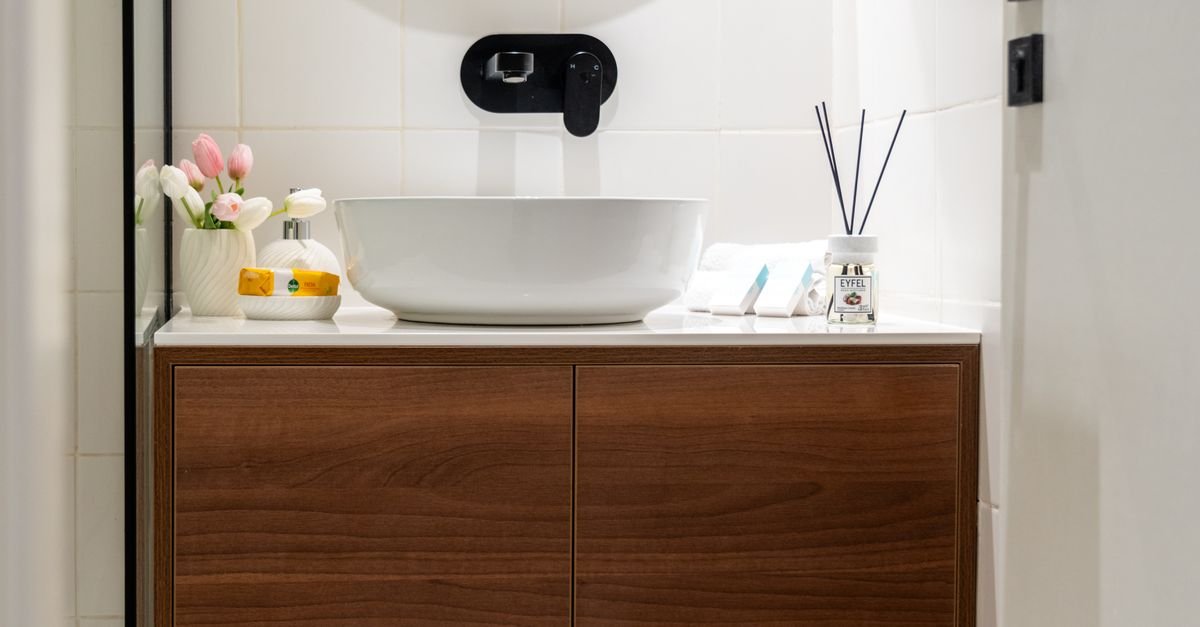
On the countertop itself, restraint is everything. Keep only what you use every day, and corral those few items on a small tray. A tray instantly makes a counter look intentional rather than cluttered, and it makes wiping the surface a one-move job.
Choose Accessories That Save Space and Add Calm
The right accessories do double duty — they organize and they make the room feel considered. A matching set of containers for cotton, swabs, and brushes looks tidier than a jumble of original packaging. A magnetic strip inside a cabinet holds metal grooming tools. A door-mounted organizer adds storage where there was none.
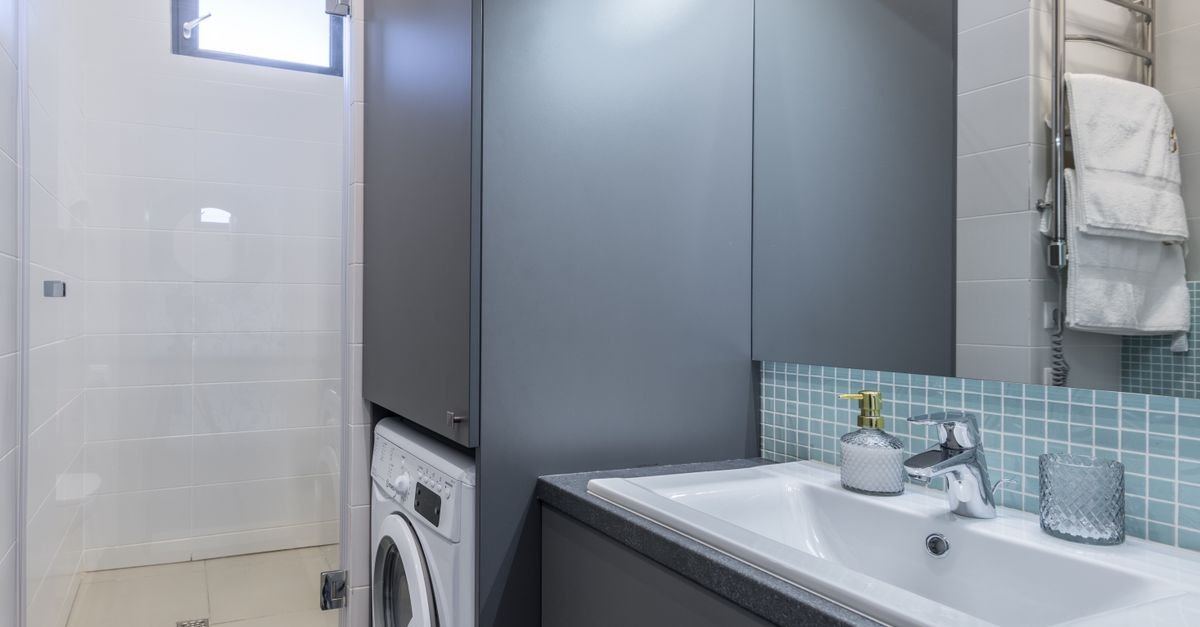
Don’t overlook lighting and mirrors. A larger mirror or a mirrored cabinet bounces light around and makes a small room feel dramatically bigger. Warm, even lighting softens the space and is more flattering than a single harsh overhead bulb. These touches cost little but change how the whole room feels.
Pick Materials and Colors That Open Up the Room
Organization isn’t only about storage — visual choices matter too. Light, consistent colors make walls recede and the room feel larger. Glass and clear acrylic accessories almost disappear, reducing visual clutter. Coordinating your towels and mats in one or two colors creates a calm, hotel-like uniformity that busy patterns destroy. In a small space, simplicity reads as luxury.
Keep It Organized: The Habits That Stick
Even the best system falls apart without a couple of easy habits. Adopt a one-in, one-out rule for products: when a new bottle comes in, an empty one goes out. Do a 60-second reset each evening — everything back to its home, counter wiped. Once a month, revisit that “haven’t touched it” pile and clear what’s expired. These small routines keep a small bathroom feeling spacious permanently, not just the week after you organize it.
The Renter’s Small Bathroom (No Drill Required)
Everything in this guide has a no-drill variant, and renters should shop that aisle first. Tension rods create instant shelving inside shower alcoves and over toilets; adhesive hooks rated honestly (check the weight number, halve it for humid rooms) carry towels, loofahs, and hair tools; suction organizers earn their keep on tile if the surface is glass-smooth and the cups get re-seated monthly. Over-door organizers remain the highest-capacity zero-damage storage in existence — the back of a bathroom door swallows a family’s worth of products in clear pockets.
The freestanding heroes: a slim rolling cart that tucks beside the toilet, a ladder shelf that leans rather than mounts, and a bamboo over-toilet étagère that assembles without touching the wall. Combined with the renter-friendly upgrade doctrine — peel-and-stick mirror frames, swapped (and saved) showerheads, clip-on sconce shades — a rented bathroom reaches ninety percent of the owned-bathroom result with one hundred percent of the deposit intact.
The Shower Zone: Small Bathroom’s Hardest-Working Corner
Shower storage fails more often than any other bathroom zone because water, gravity, and cheap organizers conspire. The hierarchy that survives: a tension-pole caddy (floor-to-ceiling, corner-mounted) out-carries and outlasts every hanging showerhead basket; wall-adhesive shelves rated for wet rooms hold daily bottles at eye level; and the humble shower curtain with mesh pockets remains the sleeper hit for kids’ bath toys and razors alike. Whatever the system, drainage is the design test — anything that pools water grows the orange film within a month.
Two upgrades that punch far above their price: swapping the fixed showerhead for a handheld with a pause button (rinsing the tub, bathing kids and pets, and cleaning the walls all get easier), and replacing the mildewed plastic liner ritual with a quality fabric liner that goes in the washing machine monthly. Small bathrooms concentrate humidity — the shower zone choices ripple into every mold-and-freshness battle the room fights.
The Towel Question (Where Small Bathrooms Win or Lose)
Towels are the largest soft objects in the room, and their storage strategy is visible from the doorway. The space-smart hierarchy: hooks over bars — two towels per person hang in the footprint one bar-folded towel demands, and family members actually use hooks; a ladder leaning on an open wall turns towel storage into intentional decor; rolled storage in baskets or wine-rack-style cubbies converts spare towels from linen-closet cargo to spa styling. Heated towel racks — plug-in versions exist for renters — solve the perpetually-damp-towel problem that small, low-ventilation bathrooms breed.
The inventory discipline matters as much as the hardware: a small bathroom supports two towels per resident plus two guest towels, full stop. The other eleven towels every household somehow owns belong in a hall closet or a donation bag. Fewer, better towels — replaced when they stop absorbing rather than when they disintegrate — is both the storage answer and the quiet luxury upgrade.
Humidity, Mold, and the Freshness Battle
Every small-bathroom storage victory is temporary if humidity wins the war. The physics: less air volume means faster saturation, and saturated air condenses on every cool surface — which is where mold, peeling paint, and the musty-towel smell all begin. The counters, in cost order: run the exhaust fan during and twenty minutes after every shower (a $15 plug-in timer switch automates it); crack the door post-shower — trapped humidity has nowhere to go in a sealed room; squeegee the shower walls — thirty seconds that removes liters of evaporating water per week; and in fan-less or windowless rooms, a compact dehumidifier or renewable mini-dehumidifier pods in the cabinet zone.
The cleaning rhythm that keeps it won: weekly fifteen-minute wipe-down (mirror, sink, toilet, floor), monthly liner wash and drain treatment, seasonal grout inspection with a bleach-pen touch-up before spots become colonies. A small bathroom’s advantage is that every surface is reachable — the whole room deep-cleans in under an hour, which no large bathroom can claim.
Sharing a Small Bathroom Without Warfare
Multi-person small bathrooms fail socially before they fail spatially. The peace treaties that work: a caddy per person — everyone’s daily products live in their own tote that travels to and from the room (the college-dorm solution, embarrassingly effective for families), leaving shared surfaces for shared things only; color-coded towels ending the whose-is-damp mystery; a drawer or shelf per head, ruthlessly enforced, so counter sprawl has an owner; and the morning schedule conversation nobody wants to have once, versus the collision everyone has daily.
Kids’ additions that save sanity: a step stool that folds flat against the vanity, mesh toy bags that drain into the tub, and lower hooks they can actually reach — autonomy is the best clutter-prevention program ever invented. The shared small bathroom runs on systems, not square footage; the households that thrive in them simply decided where everything lives and made it easy to comply.
Small Luxuries That Make a Small Bathroom Feel Bigger Than It Is
Once storage works, a short list of upgrades moves the room from managed to genuinely pleasant: a backlit or well-lit mirror (eye-level lighting flatters faces and doubles apparent brightness — the single best perceived-space upgrade after paint); matching dispensers and containers that turn product clutter into intentional styling; one living plant that tolerates humidity — pothos, fern, or snake plant — softening all the hard surfaces; a proper bath mat upgraded from builder-basic to plush (feet judge rooms first); and scent management via a discreet diffuser or monthly-swapped shower steamers rather than aerosol warfare.
The visual rules from the paint-and-materials section compound here: keep the luxury layer in the room’s two or three chosen tones, and every addition reads as design rather than accumulation. A small bathroom done this way stops apologizing for its size — visitors remember it as the nicest room in the house, and nobody can quite say why.
The Weekend Bathroom Reset (A 2-Hour Working Plan)
Hour one — the purge: everything out of the room and onto a towel-covered bed; expired products binned (sunscreens and liquid makeup age fastest — most bathrooms are museums of 2019), duplicates consolidated, the keep pile forced to justify itself item by item. Wipe every emptied shelf and drawer while they’re bare — the only time it’s ever easy. Hour two — the rebuild: daily items return to prime real estate (counter caddy, eye-level shelf), weekly items to the vanity’s second tier, monthly-or-rarer to the highest shelf or migrate out of the bathroom entirely (backstock, beach towels, and the humidifier live better in a hall closet).
Finish with the labels-and-containers pass: decant cotton pads and swabs into clear jars, corral small tubes into drawer bins, and photograph the finished state — the photo becomes the reset target the next time entropy wins, and it always eventually does. Two honest hours, twice a year, keeps every other week’s maintenance at fifteen minutes.
Lighting a Small Bathroom (The Upgrade Everyone Skips)
Most small bathrooms run on one sad ceiling fixture, which lights the top of your head and shadows the face doing makeup or shaving in the mirror. The fix hierarchy: eye-level light at the mirror — sconces flanking it or a backlit mirror unit — is the transformation purchase; light hitting the face straight-on removes the under-eye theater the ceiling fixture creates. Bulb temperature discipline: 2700–3000K warm white flatters skin and calms the room; the 5000K “daylight” bulbs that came with the fixture make everyone look like a hospital visit. Layering on a budget: even a plug-in sconce or a battery picture-light over the mirror beats the solo ceiling glare.
Renters aren’t excluded: battery-powered wall sconces with remote dimmers, plug-in mirror lights, and swapped bulbs all leave with you. And the mirror itself multiplies whatever light exists — a larger mirror (or a second one opposite) is the oldest small-room trick in the book because it doubles both light and apparent square footage in one screwless afternoon.
What’s Worth Spending On in a Small Bathroom (And What Isn’t)
Spend: the shower experience (a quality handheld showerhead is felt twice daily for years), towels (the two-per-person fleet in genuinely good cotton), the mirror-and-lighting zone (seen more than any artwork in the house), and one honest storage piece sized to the room rather than three hopeful baskets. Save: dispensers and trays (dollar-store glass looks identical to boutique glass once filled), bath mats (they’re consumables — replace cheerfully), shower organizers (mid-price survives; premium rusts at the same rate), and anything trend-shaped — small rooms wear trends loudly and tire of them fast.
The renter’s version compresses further: spend on what transfers (towels, caddies, the showerhead you’ll swap back), save on everything married to this particular room. A small bathroom’s total upgrade budget rarely needs to clear a few hundred dollars — the room is small; let the spending be small and precise too, and put the difference toward the rooms where furniture lives.
The Small-Bathroom Master Checklist
The whole system on one card: Storage — vertical first (wall shelves, over-toilet unit, door organizer), one caddy per person, under-sink zone in stacked clear bins, and nothing on the floor that could live on a wall. Shower — tension-pole caddy or rated adhesive shelves, fabric liner on a monthly wash cycle, handheld showerhead if only one upgrade happens. Towels — hooks over bars, two per person plus two guests, rolled spares as decor. Air and freshness — fan on a timer through twenty post-shower minutes, weekly fifteen-minute wipe-down, squeegee hanging in the shower where it’ll actually get used. Light and mirrors — warm bulbs (2700–3000K), eye-level light at the mirror, the biggest mirror the wall allows. The look — two or three tones total, matching containers, one humidity-loving plant, plush mat.
Twice a year, the two-hour reset re-runs the purge and rebuild. Everything else is fifteen weekly minutes — which is the entire promise of a small bathroom done right: the least square footage in the house, and after this list, the least effort too.
Seasonal Small-Bathroom Adjustments
The room shifts with the calendar more than most people notice. Summer: humidity peaks — the fan timer earns overtime, the dehumidifier pods get swapped monthly instead of quarterly, and sunscreen bottles join the daily caddy (they expire faster in a hot bathroom than anywhere else in the house; the medicine cabinet is cooler than the shower shelf). Winter: the heated-towel-rack season, the humidifier paradox (dry house air but damp bathroom — the door-open habit balances both), and plush-mat weather underfoot. Guest seasons (holidays): the guest-towel pair comes forward, counters clear to hotel-neutral, and the caddy-per-person system proves its worth by making personal clutter portable in ninety seconds.
Twice a year, the seasonal swap doubles as the reset trigger: the same weekend the towels rotate, the two-hour purge-and-rebuild runs. Pairing the rituals means neither gets skipped — the small bathroom stays a system instead of drifting back into a shelf of expired hopes and mystery bottles.
The Five-Minute Daily Habit
Between weekly wipe-downs, five nightly minutes hold the line: squeegee the shower while the conditioner sits, return the two stray products to their caddy, hang the towels square on their hooks, and run the fan timer on the way out. Small bathrooms punish neglect faster than any room in the house — and reward maintenance faster too, because five minutes genuinely covers all of it. The room stays guest-ready by default, which is the quiet definition of an organized bathroom: not a system you run, but one that runs on habits too small to skip.
And if the room still fights you after all of it, remember the honest escape hatch: some things simply do not belong in a bathroom. Backstock, appliances, and anything used monthly can live happily in a hallway closet — the smallest room wins by holding less, not by holding cleverly.
You might also find Skincare & Beauty Storage Ideas to Organize Your Routine helpful.
Frequently Asked Questions
How do I add storage to a small bathroom without renovating?
Go vertical and off the floor: over-the-toilet shelving, wall-mounted cabinets, hooks, shower caddies, and under-sink organizers all add storage without any construction.
What’s the best way to organize bathroom countertops?
Keep only daily-use items out, group them on a small tray, and store everything else in cabinets or wall storage. A clear counter is the fastest way to make a bathroom look bigger and cleaner.
How can I make a small bathroom look bigger?
Use a large mirror, light and consistent colors, clear or glass accessories, and warm even lighting. Reducing visual clutter does as much as adding physical space.
What accessories are actually worth buying for a small bathroom?
An over-the-toilet shelf, under-sink stackable bins, a tension rod for cabinet doors, a rust-resistant shower caddy, hooks, and a counter tray deliver the most organization for the money.
Key Takeaways
- Declutter first — removing expired and unused products is the cheapest organizing win.
- Use vertical space: over-the-toilet shelves, wall cabinets, and hooks free up the floor and counter.
- Tame under-sink chaos with stackable bins, clear containers, and a tension rod on the cabinet door.
- Keep counters nearly empty and grouped on a tray; add a large mirror and warm lighting to feel more spacious.
- Maintain it with a one-in-one-out rule and a quick daily reset so the space stays tidy long-term.
You don’t need a bigger bathroom — you need a smarter one. With vertical storage, the right accessories, and a couple of easy habits, even the smallest bathroom can feel calm and uncluttered every day. For more ideas, browse our home organization guides and the full Bathroom collection.
More Bathroom Guides & Reviews
- Small Living Room Ideas: How to Make a Small Space Feel Bigger (2026)
- Bathroom Trends
- Pressure-Optimized Rainfall Showerhead Kits for Ultimate Water Efficiency and Comfort
- Water-Saving Aerator Faucet Upgrades for Efficient Kitchen and Bathroom Use
- Bathroom Mirror Ideas
- Bathroom Color Schemes
- Waterproof Bathroom Furniture Materials for Durable and Stylish Home Storage
- Bathroom Ventilation Solutions
- Ultra-Slim Stainless Steel Drain Covers for Sleek, Durable Drain Protection
- Glass-Accent Bathroom Design Ideas to Elevate Your Space Elegantly

I'm Nasir Uddin Khan, founder of HomeNeeds24 and a senior IT consultant with 18+ years' experience in Oracle database administration, enterprise infrastructure and ERP system design. I write the buying guides here and I build every calculator on the site myself, from published engineering standards rather than opinion. My research is structured rather than lab-based: manufacturer specifications, safety and efficiency standards, and the trade-offs that repeat across large volumes of verified customer reviews. Where I have direct hands-on experience — smart home, networking, energy and anything computer-adjacent — I say so in the guide.