

To make your house smell good, work in this order: remove odor sources first (trash, drains, fabrics), refresh the air, then layer in scent with slow releasers like reed diffusers plus moments of candles or simmer pots. Perfume over a problem never wins — but a clean-smelling base plus two layers of chosen scent makes a home smell expensive all day. Here’s the complete room-by-room playbook.
Also Read



Key Takeaways
- Odor removal beats odor covering — always fix the source first.
- Fabrics hold most house smells: rugs, sofas, curtains, bedding.
- Layer scent like lighting: a constant base + task moments + accents.
- Every room has a signature fix — kitchen, bath, bedroom differ.
- Less is more: one scent family per zone, not a candle war.
Step one: find the smell before you cover it
Every “how do I make my house smell good” question is really two questions — and this is the one people skip.
Spraying vanilla over a musty rug gives you vanilla-musty. Removing the musty gives you a neutral canvas that any scent can shine on.
So we start with the un-glamorous part: the odor audit.
The video below from Clean My Space’s Melissa Maker covers 11 favorite freshness tricks — a great companion to this guide.
The 10-minute odor audit
Walk in from outside (your nose resets in fresh air) and sniff like a guest would.
- Entry: shoes, coat closet, doormat.
- Kitchen: trash, sink drain, sponge, fridge.
- Living room: sofa fabric, rug, throw blankets.
- Bedroom: bedding, laundry pile, mattress.
- Bathroom: towels, drain, bin, grout.
Whatever you notice in the first ten seconds of each room — that’s your real project.
Why fabrics are the biggest culprits
Soft surfaces are the house’s scent memory.
Rugs, upholstery, curtains and bedding absorb cooking smells, pet dander and everyday mustiness — then re-release them slowly, forever.
The fix is a rhythm: wash what’s washable monthly-ish, vacuum the rest weekly, and sprinkle-vacuum baking soda on rugs and sofas between washes. (Sizing rugs right helps too — see our rug size guide.)
Air first: the free upgrade everyone forgets

Stale air smells stale no matter what you add to it.
Ten minutes of cross-ventilation — two windows on opposite sides — swaps the whole room’s air. Do it daily if you can, especially bedrooms after sleeping.
In closed seasons, run the bathroom and kitchen exhaust fans a little longer; they’re whole-house air movers in disguise.
The layering method: how pros scent a home
Great-smelling homes layer scent the way designers layer lighting.
Base layer (constant, subtle): reed diffusers or plug-ins in key rooms — always on, never loud.
Task layer (moments): a candle for the evening, a simmer pot while hosting, wax melts for an afternoon.
Accent layer (touchpoints): linen spray on bedding, a sachet in the closet, a fresh-smelling soap at every sink.
Layers make scent feel ambient and intentional rather than sprayed-on.
Choosing scents that work together
Pick one family per zone and the house smells curated, not chaotic.
- Fresh & clean: linen, cotton, light citrus — kitchens, bathrooms, entries.
- Warm & cozy: vanilla, amber, sandalwood — living rooms, dens.
- Calm & soft: lavender, chamomile, clean musk — bedrooms.
- Green & airy: eucalyptus, bamboo, sage — offices, bathrooms.
Neighboring rooms should be cousins, not strangers — citrus kitchen next to a green-airy bath works; bubblegum next to campfire doesn’t.
Kitchen: beat the big three
Kitchens fight trash, drain and last night’s dinner.
Trash: a sprinkle of baking soda in the bin, and wash the can itself monthly (the can, not just the bag, holds smell).
Drain: baking soda + hot water weekly; grind citrus peels in a disposal.
Cooking: run the hood DURING cooking, simmer a pot of citrus-cinnamon water after strong meals, and empty the fridge of mystery containers weekly.
Bathroom: freshness that lasts
Bathrooms need moisture control more than perfume.
Run the exhaust fan for 20 minutes after showers (a smart switch automates this), wash towels every three or four uses, and keep the drain hair-free.
Then one good touch: a small diffuser or an every-flush spray — eucalyptus and citrus read “clean” instantly.
Bedroom: the sleep-friendly scent zone
Your nose acclimates to your own bedroom — guests notice what you can’t.
Wash bedding weekly, air the room daily (duvet folded back, window cracked), and vacuum under the bed where dust builds.
Finish with calm scents only: lavender linen spray on pillows, a soft diffuser — nothing energizing. More cozy-room ideas in our cozy bedroom guide.
Living room: the guest-impression room
This is where layering shines.
Base: a reed diffuser on a shelf. Task: a quality candle for evenings. Accent: fresh-vacuumed rug and washed throw blankets doing quiet work underneath.
Bonus points: a bowl of coffee beans near the kitchen doorway absorbs and bridges cooking smells.
Entryway: the first three seconds
Guests form the “your house smells like…” verdict at the door.
A washable doormat, a closed shoe cabinet (with a charcoal pouch inside), and one subtle scent cue — a small diffuser or sachet — set the tone.
First impressions are cheap to win here and hard to win anywhere else.
Reed diffusers: the always-on workhorse
If you buy one scent product, buy this.
Reed diffusers release scent continuously for weeks, need no flame or power, and stay politely subtle. Flip the reeds weekly to refresh.
Place them where air moves — hallways, entries, beside doorways — not sealed corners. See our natural stone diffuser sets, or browse reed diffusers on Amazon.
Shop Long-Lasting Reed Diffusers →
Candles: moments, not marathons
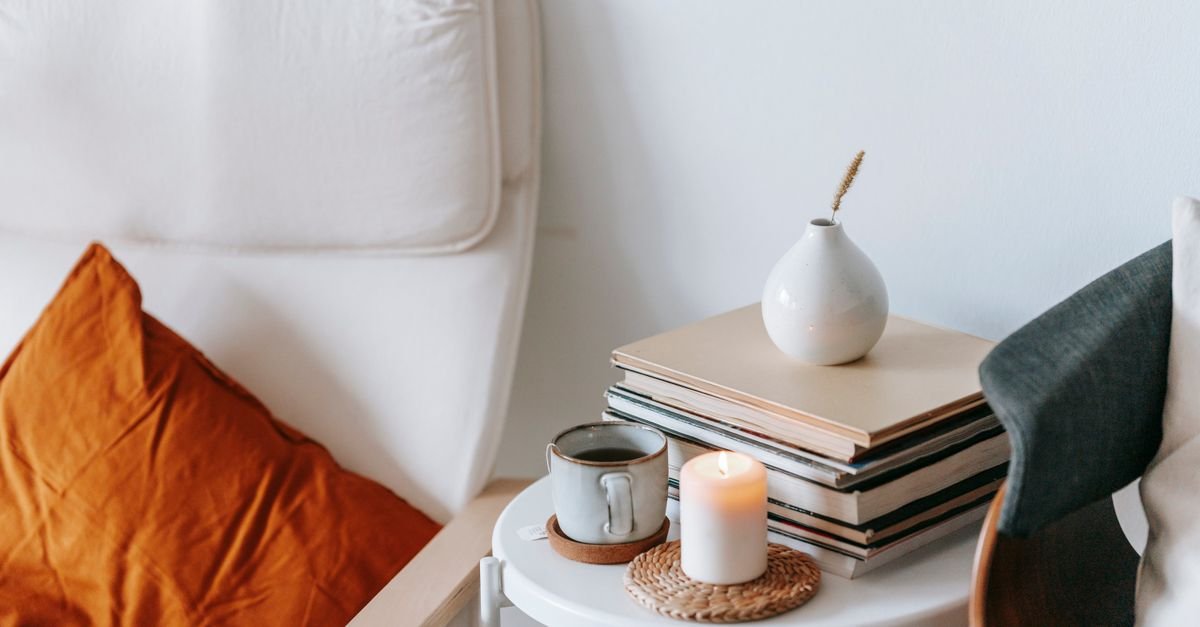
Candles are the espresso of home scent — strong, lovely, occasional.
Burn one for the first evening hour, trim the wick to a quarter inch for clean burning, and let the first burn melt the full top layer so it doesn’t tunnel.
One candle per open area; competing candles cancel each other into noise.
Simmer pots: the five-minute holiday trick

The fastest whole-house scent there is.
Simmer water with citrus slices + cinnamon stick + a few cloves (or apple peels + vanilla, or lemon + rosemary) on the lowest heat, and the house smells like a memory within minutes.
Perfect before guests arrive — just never leave the pot unattended.
Natural helpers: baking soda, charcoal, plants
The quiet absorbers work while you sleep.
Baking soda: open boxes in fridge and closets; sprinkle-vacuum on fabrics.
Activated charcoal pouches: shoe cabinets, gym bags, cars — refresh them in sunlight monthly.
Houseplants: more décor than deodorizer honestly, but fresh soil and greenery read “alive,” and that reads fresh.
Laundry smells: the hidden multiplier

Half of “fresh home” is actually “fresh textiles.”
Leave the washer door open between loads (trapped moisture = musty machine = musty everything), clean the washer monthly, and never let wet laundry sit.
Line-dried or promptly-dried textiles carry freshness into every room they live in.
Pets and smells: love without the odor
You can adore the dog and not smell like one.
Wash pet bedding weekly (it’s the #1 source), brush pets regularly, sprinkle-vacuum baking soda on their favorite fabric spots, and place a charcoal pouch near the litter zone.
Guests should discover you have a pet by seeing it, not by the hallway.
Mistakes that make homes smell worse
- Masking instead of cleaning — perfume-over-problem always loses.
- Scent overload — five competing fragrances read as chemical fog.
- Ignoring soft surfaces while polishing hard ones.
- Closed windows for weeks — no product fixes stale air.
- Forgetting the machines — dishwasher, washer and disposal all need their own cleaning.
Sensitive noses: the low-fragrance path
Great-smelling doesn’t have to mean fragranced.
If scents trigger headaches or you simply prefer neutral: do everything in the removal half of this guide, ventilate daily, and stop there — “clean nothing” is a luxury smell of its own.
Unscented absorbers (baking soda, charcoal) and fragrance-free detergents keep it truly neutral.
Your weekly freshness routine
The whole guide in one repeatable rhythm.
Daily: 10-minute air-out, dishes done, trash as needed. Weekly: bedding, vacuum fabrics + floors, drain flush, towel rotation. Monthly: wash the bins, machines’ self-clean, charcoal refresh, rug baking-soda treatment.
Twenty focused minutes a week keeps the base clean — the layers do the rest.
Rotate scents with the seasons
Noses love novelty — use the calendar.
Spring: linen, green herbs, light florals. Summer: citrus, sea salt, mint. Fall: apple, cinnamon, amber. Winter: fir, vanilla, woodsmoke-adjacent warmth.
Rotating quarterly also defeats nose-blindness — each season’s scent registers freshly instead of fading into wallpaper.
A pet-safety note on essential oils
One caution worth its own section.
Several popular oils — tea tree, eucalyptus, citrus among them — can be harmful to cats and dogs in concentrated or diffused form, especially in small closed rooms.
Diffuse in ventilated spaces pets can leave, keep oils locked away, and when in doubt, ask your vet before adding a new oil to the rotation.
The garbage disposal deep-clean
That mystery kitchen smell often lives in the disposal.
Monthly: a tray of ice cubes with coarse salt (scours the blades), followed by citrus peels ground with cold water.
Between cleans, always run water a few seconds after grinding — stranded food scraps are the smell factory.
Closets, drawers and stored fabric
Closed spaces brew staleness quietly.
Cedar blocks or lavender sachets between folded clothes, a charcoal pouch on the shoe shelf, and a monthly ten-minute door-open airing keep stored textiles fresh.
Wash-before-storing matters most: body oils on “clean-looking” clothes are what sour a drawer over months.
The shoe situation, solved
Shoes are the entryway’s biggest offender.
Rotate pairs so each dries fully between wears, drop in cedar inserts or charcoal pouches overnight, and give washable sneakers an actual wash monthly.
A sprinkle of baking soda overnight (tap out in the morning) rescues emergencies before guests arrive.
Don’t forget the fridge
An open kitchen shares the fridge’s opinions.
Weekly leftover audit, an open baking-soda box swapped monthly, and a quick wipe of shelves with diluted vinegar keep it neutral.
The vegetable drawer deserves special attention — one forgotten cucumber can perfume a whole kitchen, and not in the good way.
Humidity: the invisible smell amplifier
Damp air holds and grows odors.
If rooms smell musty despite cleaning, check humidity: over ~60% encourages the mustiness family. A dehumidifier in basements and laundry zones changes the baseline smell of a whole floor.
Conversely, winter-dry air carries scent poorly — mild humidity actually helps your chosen fragrances bloom.
The welcome-home trick
Engineer the first breath of home.
A smart plug on a wax warmer or diffuser, timed to switch on twenty minutes before you usually arrive, means the entry greets you (and guests) at peak freshness.
It’s the home-fragrance version of porch lights on a timer — small automation, outsized effect.
Hosting timeline: smell-ready in 24 hours
Guests tomorrow? Run this sequence.
Night before: wash guest textiles, empty bins, run the disposal clean. Morning: ten-minute full air-out, vacuum fabrics. T-minus 1 hour: simmer pot on low. T-minus 15: pot off, one candle lit in the living room.
They’ll walk into layered freshness that reads as “this home is cared for” — because it is.
Frequently Asked Questions
How do I make my house smell good all the time?
Combine a clean base with layered scent: remove odor sources weekly (fabrics, trash, drains), air rooms daily, then run subtle constant scent (reed diffusers) topped with occasional candles or simmer pots. Constant freshness comes from the routine, not from stronger fragrance.
Why does my house smell musty even though it’s clean?
Usually trapped moisture or soft surfaces: stale unventilated air, rugs and upholstery holding old smells, a washer with the door kept shut, or damp spots (bath mats, under-sink leaks). Ventilate daily, treat fabrics with baking soda and washing, and check the washing machine first.
What makes a house smell good naturally?
Fresh air first, then simmer pots (citrus, cinnamon, herbs), baking soda and activated charcoal as absorbers, essential-oil diffusers, and clean textiles dried promptly. A naturally fresh home is mostly subtraction — the additions are the final ten percent.
Where should I put reed diffusers?
Where air moves and people pass: entryways, hallways, living room shelves, and bathrooms — not sealed corners. Keep them away from direct sun and radiators (they evaporate faster), and flip the reeds weekly to refresh the scent throw.
How do I get rid of cooking smells fast?
Run the range hood during cooking (not after), then cross-ventilate for ten minutes and simmer a quick pot of citrus and cinnamon. A bowl of baking soda or coffee beans on the counter overnight absorbs what lingers.
Why can’t I smell my own home?
Nose blindness: your brain filters constant smells within minutes, so you stop perceiving your home’s baseline. Reset by stepping outside for ten minutes and sniffing on re-entry, or ask an honest friend. That first-ten-seconds impression is what guests experience.
Are candles or diffusers better for home scent?
They do different jobs: reed diffusers provide constant, subtle background scent for weeks; candles create stronger, cozier moments for an hour or two. The best-smelling homes use both — diffuser as the base layer, candle as the evening accent.
The bottom line
A great-smelling house is 70% removal, 20% air, and 10% well-chosen scent — in that order.
Audit the sources, ventilate daily, layer a diffuser base with candle moments, and keep one scent family per zone.
Make the rest of the room match the freshness with our cozy bedroom ideas and small living room ideas.

I'm Nasir Uddin Khan, founder of HomeNeeds24 and a senior IT consultant with 18+ years' experience in Oracle database administration, enterprise infrastructure and ERP system design. I write the buying guides here and I build every calculator on the site myself, from published engineering standards rather than opinion. My research is structured rather than lab-based: manufacturer specifications, safety and efficiency standards, and the trade-offs that repeat across large volumes of verified customer reviews. Where I have direct hands-on experience — smart home, networking, energy and anything computer-adjacent — I say so in the guide.