
Affiliate Disclosure: HomeNeeds24 is a participant in the Amazon Associates program. We earn a small commission on qualifying purchases at no extra cost to you. All recommendations are based on genuine research.
Also Read


Vacuuming is the chore that never ends — do it Sunday, and by Wednesday the crumbs, dust, and pet hair are back. A robot vacuum breaks that cycle.
It runs on a schedule while you’re at work or asleep, navigates around furniture on its own, and docks itself to recharge. You come home to visibly cleaner floors without lifting a finger.
We compared robot vacuums on suction, navigation smarts, pet-hair handling, app quality, and long-term reliability. Our top pick is the Roborock S7 — precise LiDAR mapping, strong suction, and an app that just works.
Here are the 10 best robot vacuums for 2026 — for floors that stay clean on autopilot.
🤖 Key Takeaways
- A robot vacuum cleans your floors on a schedule, navigates around obstacles, and recharges itself — genuinely hands-free maintenance cleaning.
- Best overall: Roborock S7. Best budget: Eufy RoboVac 15C. Best for pet hair: iRobot Roomba j7.
- LiDAR mapping is the feature worth paying for — mapped robots clean in neat rows and finish 2–3× faster than random-navigation models.
- Self-empty docks mean you handle the dustbin once a month instead of after every run.
- They shine on hard floors and low-pile carpet; thick shag rugs, loose cables, and stairs are their weak spots.
Building a hands-free home? Pair a robot vacuum with our guides to the best robot mops and best smart doorbells.
In This Guide
- What a robot vacuum actually does
- Are robot vacuums worth it?
- How to choose
- Quick comparison table
- The 10 best robot vacuums
- Setup and maintenance
- Frequently asked questions
What a Robot Vacuum Actually Does
A robot vacuum is a low, disc-shaped cleaner that drives itself around your home, sweeping debris into a spinning brush and suction channel. When the battery runs low or the job is done, it returns to its dock and recharges.
The good ones map your home with lasers or cameras, clean methodically in rows, remember where they’ve been, and let you say “clean the kitchen” from an app. The cheap ones bounce around randomly — they still work, just slower and with more missed patches.
Think of it as maintenance cleaning: it keeps the everyday dust, crumbs, and pet hair under control so your “real” vacuuming drops from weekly to occasionally.
Are Robot Vacuums Worth It?
For most homes with hard floors or low-pile carpet — yes, decisively. Running one daily removes the constant background layer of dust and hair, and the difference is obvious within a week.
They’re most valuable for pet owners (hair never accumulates), busy households (cleaning happens while you’re out), and anyone who hates the chore. They’re least valuable in homes with thick carpet everywhere, lots of floor clutter, or multiple levels with no easy way to move the robot.
How to Choose a Robot Vacuum
Navigation: The Feature That Matters Most
LiDAR (laser) mapping is the gold standard — the robot builds an accurate floor plan, cleans in tidy rows, and lets you set room-by-room schedules and no-go zones. Camera-based navigation is nearly as good and often adds obstacle recognition. Random navigation (bump-and-turn) is fine for small, simple spaces but wastes battery in bigger homes.
Suction Power
Measured in Pascals (Pa). Around 2,000 Pa handles hard floors well; 2,500+ Pa is better for carpet and embedded pet hair. Numbers aren’t everything — brush design matters as much — but very cheap models under 1,500 Pa struggle on rugs.
Your Floors
Hard floors: almost anything works. Low-pile carpet: get good suction and a strong brush roll. Thick or shag carpet: robots struggle — consider keeping your upright vacuum for those rooms. Dark floors can confuse older cliff sensors, so check reviews if your flooring is very dark.
Self-Empty Dock
A self-empty base sucks the robot’s small bin into a large sealed bag after each run. It turns bin-emptying from an every-run job into a monthly one — genuinely worth it for pet homes, optional for everyone else.
Battery & Coverage
Most run 90–180 minutes per charge — enough for 1,000–2,500 sq ft. Mapped robots resume where they left off after recharging, so even big homes get fully covered.
Quick Comparison Table
| Robot Vacuum | Navigation | Best For |
|---|---|---|
| Roborock S7 | LiDAR | Best overall |
| Eufy RoboVac 15C | Sensors | Best budget |
| iRobot Roomba j7 | Camera AI | Pet homes |
| Ecovacs Deebot X2 | LiDAR + AI | Smartest navigation |
| Shark IQ Robot Self-Empty | Row-by-row | Value self-empty |
| Roborock Q5 | LiDAR | Mid-range mapping |
| Samsung Jet Bot | LiDAR | SmartThings homes |
| iRobot Roomba 694 | Sensors | Trusted starter |
| Dreame D10 Plus | LiDAR | Budget self-empty |
| Wyze Robot Vacuum | LiDAR | Cheapest LiDAR |
The 10 Best Robot Vacuums for 2026
1. Roborock S7 — Best Overall
The Roborock S7 nails the fundamentals: precise LiDAR mapping, 2,500 Pa suction, and an app that makes room schedules and no-go zones genuinely easy to set up.
It cleans in neat, methodical rows, lifts its mop pad automatically on carpet (a bonus if you use the mopping function), and rarely gets stuck. Roborock’s reliability record is among the best in the category.
For most homes, this is the robot that quietly does its job every day without drama.
- ✅ Accurate LiDAR mapping and room scheduling
- ✅ Strong 2,500 Pa suction
- ✅ Excellent reliability and app
- ❌ Self-empty dock costs extra
Best for: Most homes wanting set-and-forget cleaning.
2. Eufy RoboVac 15C — Best Budget
The Eufy 15C skips the fancy mapping and pours its budget into what matters: quiet, consistent cleaning. It’s slim enough to slide under sofas, surprisingly quiet, and picks up daily dust and hair reliably on hard floors.
Navigation is random, so it takes longer to cover a room — but run it daily on a schedule and your floors stay clean regardless.
For small apartments and simple layouts, it’s the best cleaning-per-dollar in the category.
- ✅ Very affordable
- ✅ Slim and quiet — slides under furniture
- ✅ Reliable daily cleaner
- ❌ Random navigation, no mapping or room control
Best for: Small homes and first-time buyers on a budget.
3. iRobot Roomba j7 — Best for Pet Homes
The Roomba j7’s camera AI recognises obstacles — cables, shoes, socks, and crucially, pet accidents. iRobot even guarantees it will avoid pet waste (their “P.O.O.P. promise”), which every dog owner who’s heard the horror stories will appreciate.
Its dual rubber brush rolls resist hair tangling far better than bristle brushes, making it the strongest pet-hair performer here. The self-empty dock option seals hair and dust into a bag — great for allergies.
- ✅ Recognises and avoids pet messes and cables
- ✅ Tangle-resistant rubber brushes for hair
- ✅ Optional sealed self-empty dock
- ❌ Premium price
Best for: Homes with shedding pets.
4. Ecovacs Deebot X2 — Best Advanced Navigation
The Deebot X2 combines LiDAR with AI obstacle recognition — it maps fast, identifies furniture by type, and steers around clutter that traps lesser robots.
Suction is top-tier (8,000 Pa class), the square-ish body cleans corners better than round rivals, and the dock handles emptying. If your home is complex — lots of rooms, furniture, and floor-level obstacles — this is the robot that copes best.
- ✅ Class-leading obstacle avoidance
- ✅ Very strong suction
- ✅ Reaches corners better than round robots
- ❌ Expensive flagship pricing
Best for: Complex, cluttered layouts and tech enthusiasts.
5. Shark IQ Robot Self-Empty — Best Value Self-Empty
Shark’s IQ Robot brings the self-empty dock down to a sensible price. The robot cleans row by row, handles pet hair well with its self-cleaning brush roll, and the bagless base empties the bin after each run.
The app is simpler than Roborock’s but covers scheduling and room selection. If a self-empty dock is your priority and the flagships are out of budget, this is the smart pick.
- ✅ Self-empty base at a value price
- ✅ Self-cleaning brush roll resists hair wrap
- ✅ Methodical row cleaning
- ❌ Mapping is slower and less precise than LiDAR
Best for: Hands-free emptying on a mid-range budget.
6. Roborock Q5 — Best Mid-Range Mapping
The Q5 gives you Roborock’s excellent LiDAR navigation and app in a simpler, cheaper package — no mop, smaller feature list, same tidy row-by-row cleaning and room scheduling.
It’s the sweet spot if you want proper mapping without flagship extras. Add the self-empty dock later if you want it; the Q5 supports it.
- ✅ Full LiDAR mapping at mid-range price
- ✅ Same great Roborock app
- ✅ Self-empty dock optional upgrade
- ❌ No mopping function
Best for: Smart mapping without paying flagship prices.
7. Samsung Jet Bot — Best for SmartThings Homes
Samsung’s Jet Bot maps with LiDAR, cleans thoroughly, and slots natively into the SmartThings ecosystem — automations with your other Samsung devices work out of the box.
Build quality is excellent and the washable dustbin is a nice touch. If your home already runs on SmartThings, it’s the frictionless choice.
- ✅ Native SmartThings integration
- ✅ Solid LiDAR navigation
- ✅ Washable dustbin
- ❌ Less compelling outside the Samsung ecosystem
Best for: Samsung smart homes.
8. iRobot Roomba 694 — Best Trusted Starter
The Roomba 694 is the entry point to the most established name in robot vacuums. Navigation is adaptive rather than mapped, but the three-stage cleaning system picks up impressively, and iRobot’s build quality means it lasts.
Spare parts and support are everywhere — a real advantage over no-name budget brands when a brush or filter needs replacing in year three.
- ✅ Trusted brand, long service life
- ✅ Strong pickup for the price
- ✅ Parts and support widely available
- ❌ No mapping or room-by-room control
Best for: A dependable first robot vacuum.
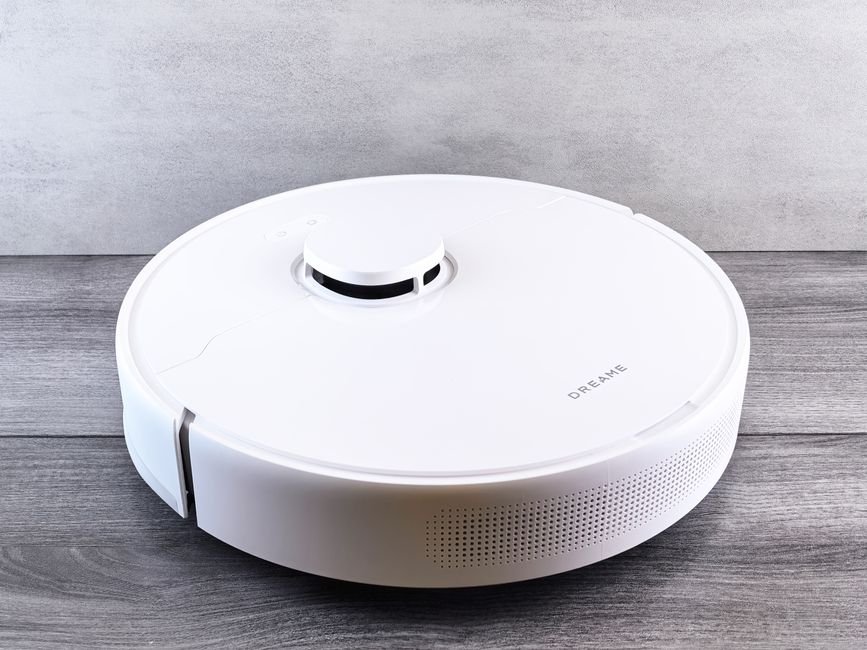
9. Dreame D10 Plus — Best Budget Self-Empty
The Dreame D10 Plus is the cheapest way to get both LiDAR mapping and a self-empty dock in one box. The 45-day dust bag means you barely think about it, and the mapping supports zones and no-go areas.
Dreame (a Xiaomi-ecosystem brand) punches above its price — this is the value package of the year for full automation.
- ✅ LiDAR + self-empty dock at a budget price
- ✅ 45-day dust bag capacity
- ✅ Solid app with zones
- ❌ Brand less established than iRobot/Roborock
Best for: Maximum automation per dollar.
10. Wyze Robot Vacuum — Best Cheapest LiDAR
Wyze’s robot vacuum brings genuine LiDAR mapping — with room selection and virtual walls — to near-budget pricing. Suction is respectable at 2,100 Pa and the app is clean and simple.
It lacks the polish and accessory ecosystem of the big brands, but as a pure “mapped robot for the least money” play, nothing beats it.
- ✅ True LiDAR mapping at the lowest price
- ✅ Room selection and virtual walls
- ✅ Decent 2,100 Pa suction
- ❌ Smaller accessory/parts ecosystem
Best for: Mapped cleaning on the tightest budget.
Setup and Maintenance
- Pick a good dock spot. Against a wall, with about 1.5 feet clear on each side and 3 feet in front, near an outlet. Don’t tuck it under furniture.
- Do a floor sweep first. Cables, charging cords, socks, and string are the classic robot-killers. Tidy them once and the robot handles the rest.
- Run the first mapping cleanly. Open all interior doors and let the robot do a full run so the map is complete, then name rooms and set no-go zones in the app.
- Empty the bin and clear the brush weekly. Hair wraps around the brush roll; a quick cut-and-pull keeps suction strong. Self-empty docks stretch this to monthly.
- Wash or replace the filter monthly. A clogged filter is the #1 cause of “my robot stopped picking things up.”
- Wipe the sensors. A dusty cliff sensor makes robots refuse to move or behave erratically — a monthly wipe with a dry cloth prevents it.
Frequently Asked Questions
Do robot vacuums actually clean well?
On hard floors and low-pile carpet, yes — a good robot picks up the daily layer of dust, crumbs, and hair as well as a quick pass with an upright. The trick is frequency: because it runs daily, dirt never accumulates the way it does between weekly manual sessions.
What they don’t replace is deep cleaning. Edges, thick carpet, stairs, and upholstery still need a manual vacuum occasionally — think of the robot as eliminating 90% of the chore, not 100%.
Is LiDAR mapping worth paying for?
If your home is bigger than a small apartment, yes. Mapped robots clean in efficient rows, finish faster, never miss patches, and let you send them to specific rooms or block off areas — all things random-navigation robots can’t do.
Random robots compensate with time: they eventually cover everything, but they take 2–3× longer and drain more battery doing it. In a small, simple space that’s fine; in a family home it’s frustrating.
How do robot vacuums handle pet hair?
Very well, if you choose right. Rubber brush rolls (Roomba j7, Shark’s self-cleaning roll) resist tangling far better than bristles, and daily runs mean hair never builds into tumbleweeds.
For shedding-heavy homes, a self-empty dock is close to essential — a robot’s internal bin fills fast with hair, and the dock means you deal with it monthly via a sealed bag instead of daily.
Can they handle carpets and rugs?
Low and medium-pile carpet: yes, especially models with 2,500+ Pa suction and carpet-boost modes. Thick, shag, or very plush carpet: no — robots bog down, and their brushes can’t reach deep pile anyway.
Rug edges and tassels are the other trap; most robots learn to cope, but tasselled rugs may need a no-go zone or a rug swap.
Do robot vacuums fall down stairs?
No — every model here has cliff sensors that detect drops and turn the robot away. Falls are extremely rare and usually involve a dirty sensor.
What they can’t do is clean multiple floors by themselves. You can carry the robot upstairs (most store multiple maps), but it can’t move between levels on its own.
How long do robot vacuums last?
Quality models from iRobot, Roborock, Shark, and Ecovacs typically last 4–6 years. Batteries degrade first (replaceable on most models for a modest cost), and brushes/filters are cheap consumables you’ll swap a couple of times a year.
Ultra-budget no-name robots often die in 1–2 years with no parts available — one reason the established brands are worth their premium.
Are they loud?
Moderately — most run at 55–65 dB, quieter than an upright vacuum but noticeable in the same room. Eufy’s 15C is among the quietest at around 55 dB.
In practice noise barely matters, because the best schedule is when you’re out of the house. Many owners never actually hear their robot run.
Robot vacuum or robot mop — which first?
Vacuum first. Dry debris — dust, crumbs, hair — is the everyday problem in every home, and a robot vacuum solves it completely. Mopping is a lighter-duty, hard-floors-only supplement.
If you want both, combo units like the Roborock S7 vacuum and mop in one pass, or see our full robot mop guide for dedicated moppers.
The Bottom Line
A robot vacuum is the rare gadget that genuinely deletes a chore. Set a daily schedule, and clean floors simply become your home’s default state.
For most homes, the Roborock S7 is the one to buy — great mapping, strong suction, proven reliability. Go Eufy 15C on a tight budget, Roomba j7 for a pet-filled house, Dreame D10 Plus for self-emptying on a budget, and Deebot X2 if your home is a maze. Clear the cables, set the schedule, and forget vacuuming was ever your job.
Shop Robot Vacuums on Amazon →

I'm Nasir Uddin Khan, founder of HomeNeeds24 and a senior IT consultant with 18+ years' experience in Oracle database administration, enterprise infrastructure and ERP system design. I write the buying guides here and I build every calculator on the site myself, from published engineering standards rather than opinion. My research is structured rather than lab-based: manufacturer specifications, safety and efficiency standards, and the trade-offs that repeat across large volumes of verified customer reviews. Where I have direct hands-on experience — smart home, networking, energy and anything computer-adjacent — I say so in the guide.